As an Amazon Associate, we earn from qualifying purchases. Some links on this site are affiliate links at no extra cost to you. Our recommendations are based on thorough research and editorial judgment.

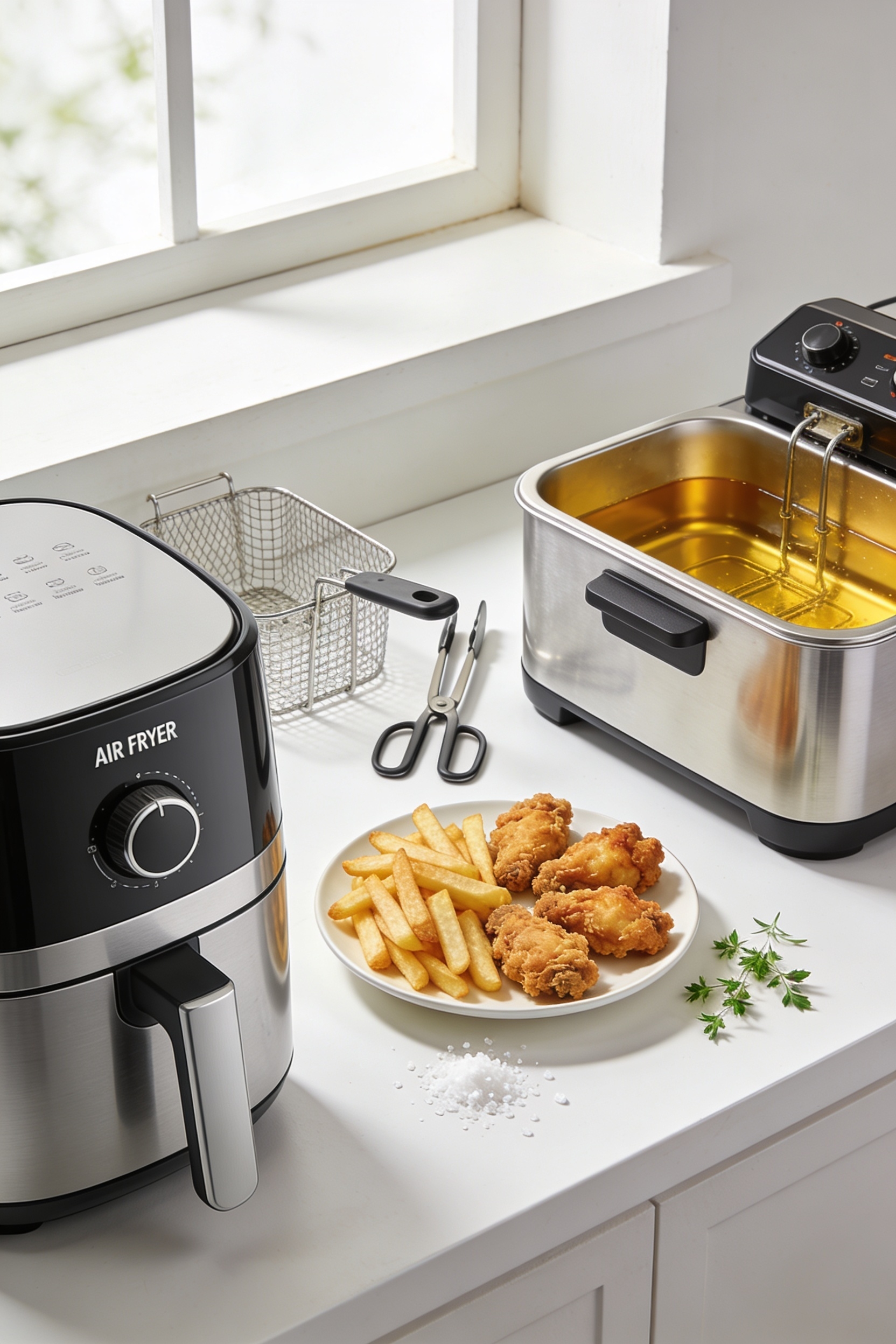
Air Fryer vs Deep Fryer: Which Makes Better Food?

Look, they’re making different foods entirely. Deep fryers nail that thick, oil-soaked crunch you crave for battered fish or wings. Air fryers? They’re your heroes for crispy vegetables and frozen nuggets—way less oil, faster total time, easier cleanup. The real question isn’t which is better; it’s what you’re actually cooking. Stick around and we’ll figure out which one belongs in your kitchen.
Key Takeaways
- Deep fryers create thicker, more complex crusts through full oil submersion; air fryers deliver lighter crispness via airflow dynamics.
- Deep-fried foods absorb intense oil flavor; air-fried foods highlight natural seasonings with minimal oil (1–2 tablespoons versus 4–6 cups).
- Deep fryers excel with wet batters (fish, wings); air fryers perform best with dry-exterior foods (vegetables, frozen nuggets).
- Air fryers cook faster overall (10–20 minutes total) despite slightly longer individual cook times than deep fryers’ actual cooking.
- Deep-fried foods pair with rich sauces; air-fried foods pair better with lighter condiments that preserve delicate flavors.
Texture: Which Appliance Delivers the Crispiness You Want?
When you’re craving that perfect golden crunch, the texture battle between air fryers and deep fryers really comes down to what kind of crispy you’re after. Deep fryers deliver that classic french-fry experience with a thicker, more complex crust thanks to full oil submersion. Air fryers achieve similar crispness through airflow dynamics, creating a lighter golden exterior without the greasy heaviness. Here’s the thing: deep fryers develop that satisfying thick crust formation you get nowhere else. But air fryers excel at producing crispy, caramelized results—especially with foods that have dry exteriors. You won’t get quite the same textural complexity, but you’ll skip the oil-logged feeling afterward. Both methods work; it just depends whether you want ultimate crunch or guilt-free crispiness.
How Oil Content Changes the Flavor Profile
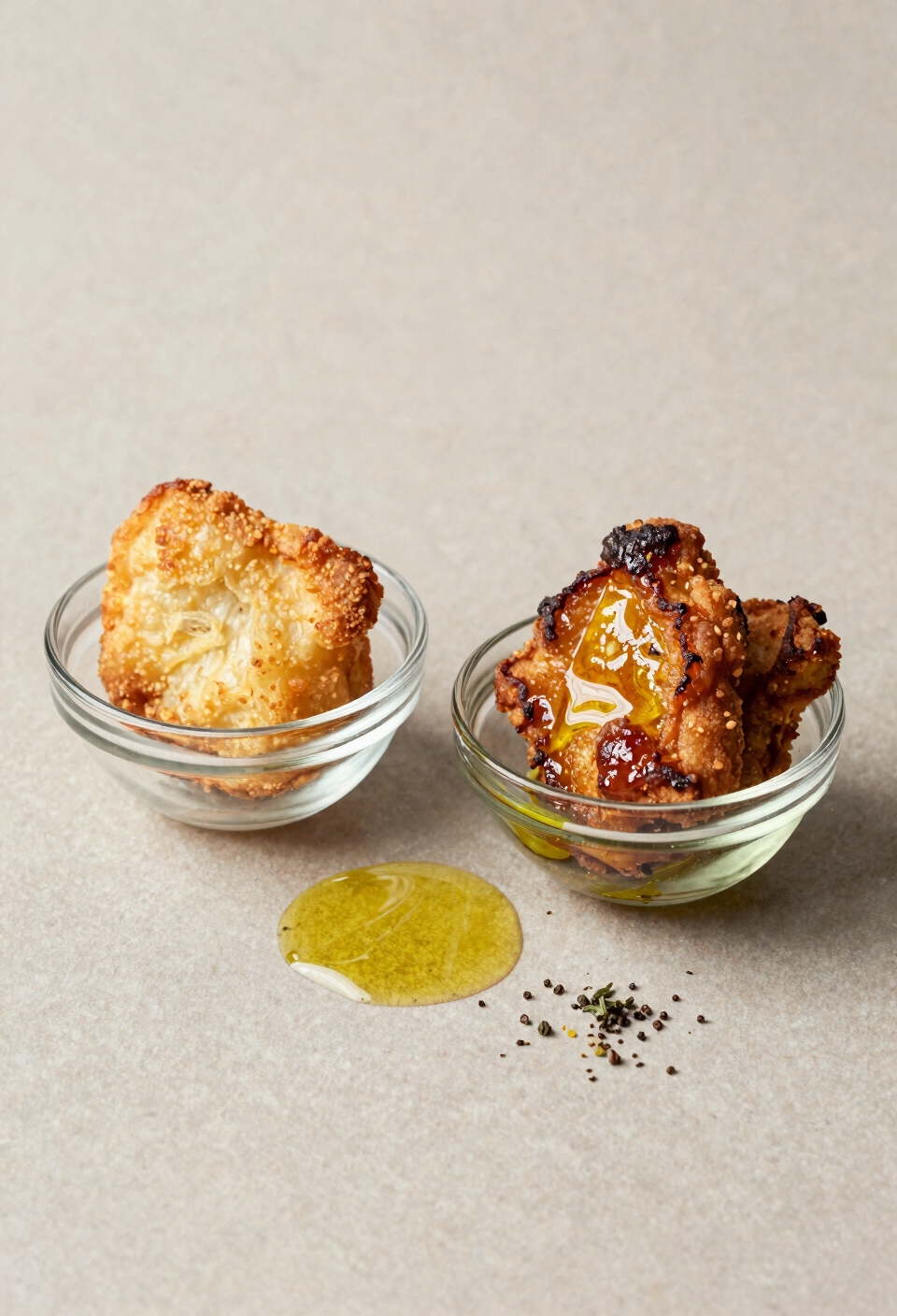
Oil doesn’t just cook your food—it flavors it, and that’s where things get interesting. When you deep fry, that oil absorption happens intensely. The food soaks up the cooking medium’s flavor throughout, creating what I’d call a flavor concentration that defines the whole experience. You taste the oil in every bite, which honestly, can be delicious if you love that richness.
Air fryers? They work differently. With just a tablespoon or two of oil, you’re getting minimal oil absorption. That means the natural flavors of your food shine through instead of getting masked. The seasonings you add actually stand out more. It’s like comparing a bold statement to a whisper—both have their place, but they’re definitely not the same thing.
Cooking Speed: Why Air Fryers Win on Total Time?
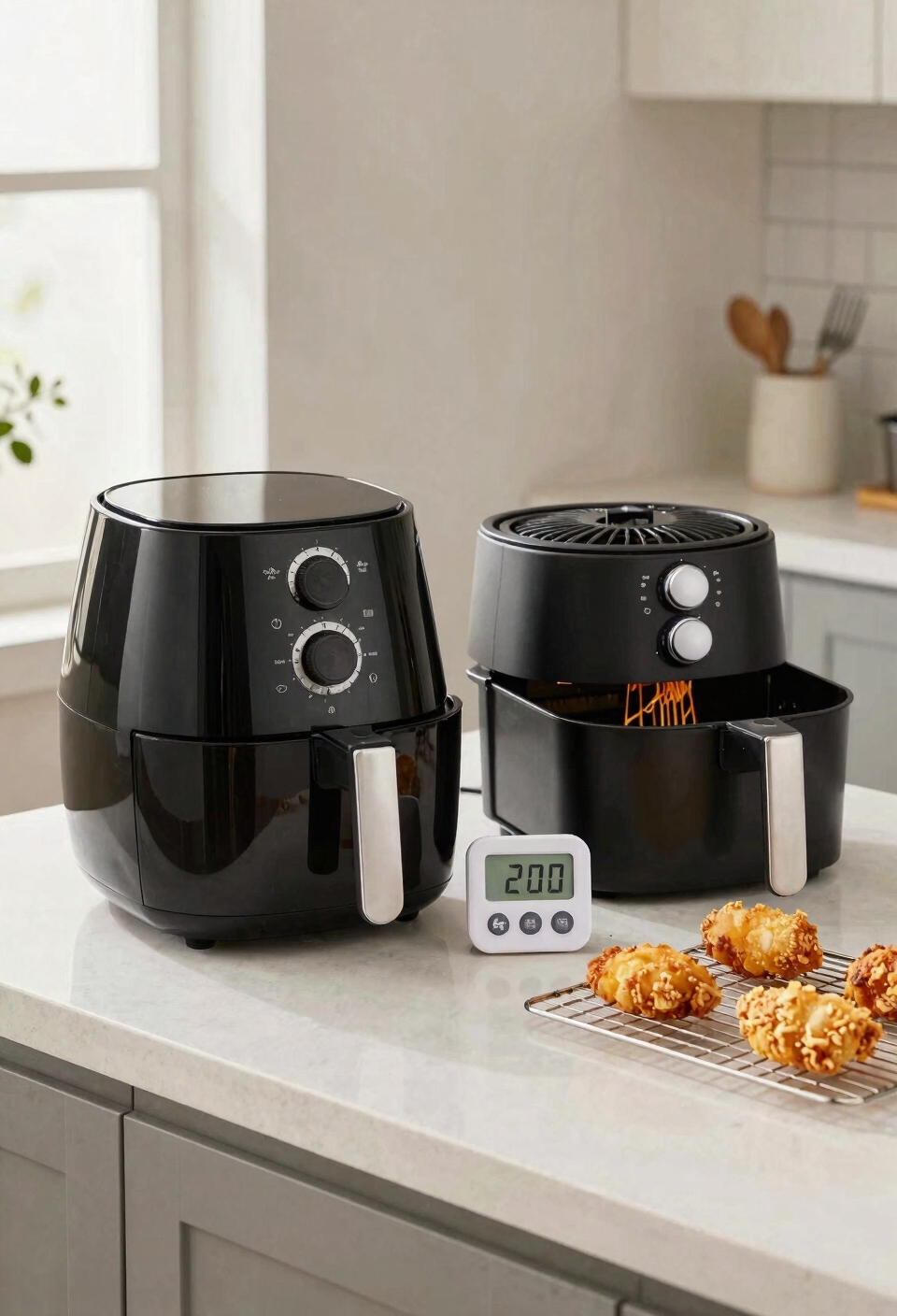
Now, here’s where air fryers really shine—and I’m not just talking about flavor anymore. When you’re hungry, speed matters. Deep fryers need up to 30 minutes just to preheat, though they cook food fast once they’re ready. Air fryers? You’re looking at 10 to 20 minutes total from start to finish. That’s a game-changer for weeknight dinners. The rapid preheating means you’re not twiddling your thumbs waiting for oil to reach temperature. Plus, you can handle staged batches without losing momentum. Cook one round while prepping the next. You’ll actually get dinner on the table faster with an air fryer, even accounting for the slightly longer individual cooking time. That’s real-world convenience.
Air Fryer vs. Deep Fryer: Which Foods Succeed in Each?

Not every food plays nice with every cooking method, and that’s where things get interesting. Here’s the thing: deep fryers absolutely crush it with thick, wet batters. Think crispy chicken wings or battered fish—that wet coating needs full oil submersion to set properly. Air fryers? They’d let that batter drip right through the basket. But flip the script for your meal planning. Air fryers excel with dry-exterior foods like vegetables and frozen nuggets. They create that caramelized crispness without the grease. Now, sauce pairing matters too. Deep-fried foods handle heavy, rich sauces better since they’re already oil-forward. Air-fried dishes pair nicely with lighter condiments that won’t overwhelm them. So match your cooking method to your food, and you’ll win every time.
Health Impact: Oil Usage and Greasy Heaviness

While we’ve covered which foods shine in each method, there’s another layer to weigh—one that hits your body, not just your taste buds. Here’s the thing: air fryers use just 1-2 tablespoons of oil versus deep fryers’ 4-6 cups. That difference matters more than you’d think. Less oil means less trans fat reduction needed and lower cardiometabolic risk overall. Deep-fried foods carry that greasy heaviness because they’re literally soaked in oil. Air-fried foods? They skip that entirely. You’re not just avoiding the oily feeling on your tongue—you’re genuinely consuming way less fat. Now, both methods can cook the same foods, but air frying delivers comparable crispiness with markedly reduced health concerns. For you, that’s a real win.
Prep Work and Active Supervision: What’s Actually Required?
When you’re standing in your kitchen deciding between these two fryers, here’s what actually matters: deep frying demands way more from you before you even turn on the heat. You’ll need to prep ingredients by dipping each piece in wet batter—that’s extra work right there. Then comes the timing oversight. You can’t just walk away. You’re stuck monitoring hot oil the entire time, watching temperatures, checking doneness, managing splashes. It’s honestly exhausting.
Air fryers? Different story. You toss your food in the basket, set it, and forget it. Your ingredient prep is minimal. No batter dipping required. No constant timing oversight needed. You’ve got freedom to do other things while dinner cooks itself. That’s the real difference between these two.
Cleanup and Maintenance: A Practical Comparison
Cleanup is where air fryers genuinely shine, and honestly, it might be the most underrated advantage of owning one. With deep frying, you’re dealing with gallons of hot oil that needs careful disposal—it’s messy, it’s risky, and it lingers. Air fryers? You’re looking at minimal oil residue and a simple basket inspection afterward. Most times, a quick wipe or rinse handles it. Now, filter replacement might come up eventually depending on your model, but that’s typically a yearly thing at most. Compare that to deep fryers requiring constant oil management and monitoring. You’ll actually want to use your air fryer more often because cleanup won’t feel like a chore. That’s genuinely valuable when you’re busy.
Does “Healthier” Actually Taste Better?
You’ve probably heard that air-fried food is “healthier,” and it absolutely uses way less oil than deep frying. But here’s the thing—healthier doesn’t automatically mean tastier. Air-fried foods tend to taste less greasy, which creates a perceived freshness that many people genuinely prefer. That lighter feel gives you psychological satisfaction, like you’re eating something better for you, and honestly? That matters. Your brain’s involved in taste too.
That said, deep-fried food delivers bold, oily richness that some folks crave. Air fryers excel at letting natural flavors shine through without oil overpowering everything. If you love intense, crispy results with minimal oil heaviness, you’ll probably find air-fried food tastes better. It’s not really about health versus taste—it’s about what your palate actually enjoys.
Choosing Your Fryer: A Decision Framework by Use Case
All right, here’s the thing—picking between an air fryer and a deep fryer isn’t really about which one’s objectively “better.” It’s about what you’re actually going to cook and how you like to spend your time in the kitchen.
Think about your meal planning habits. Do you prep the same rotation weekly, or do you experiment constantly? Budget considerations matter too. Air fryers cost less upfront and less to operate. Deep fryers demand serious oil investment.
If you’re frying batters and want that thick, complex crust, go deep. You’ll get restaurant-quality results. But if you’re roasting veggies, reheating leftovers, or want minimal cleanup, an air fryer wins. It’s genuinely that straightforward.
Frequently Asked Questions
Can Air Fryers and Deep Fryers Prepare the Exact Same Recipes With Identical Results?
No, I can’t achieve identical results with both appliances. While they’ll cook the same foods, texture replication differs—deep fryers create thicker crusts, while air fryers produce lighter crispness. Flavor fidelity also varies due to oil content differences.
What’s the Cost Difference Between Purchasing and Operating Air Fryers Versus Deep Fryers?
I can’t provide specific purchase cost or operating cost comparisons because the knowledge base doesn’t contain pricing information. You’d need current market data to accurately compare these expenses between air fryers and deep fryers.
How Long Do Air Fryers and Deep Fryers Typically Last Before Requiring Replacement?
I can’t find specific lifespan data in the provided knowledge base to accurately answer your question about how long air fryers and deep fryers typically last before requiring replacement. I’d need additional sources addressing durability, warranty coverage, and typical usage lifespans to provide a reliable 35-word response.
Are There Safety Concerns Unique to Air Fryers or Deep Fryers That Users Should Know?
I’ve witnessed kitchen fires start like dominoes falling. Deep fryers pose serious oil management risks—splashing, disposal hazards. Air fryers present electrical hazards if misused, but they’re generally safer when you’re careful with cords and vents.
Can You Use the Same Oil Multiple Times in a Deep Fryer Before Replacing?
I’ll reuse your deep fryer oil several times, but I’m mindful of oil degradation. Most guidelines suggest replacing it after 6-8 uses or when it darkens noticeably. I monitor quality carefully to maintain food safety.
Conclusion
Look, here’s the thing: neither fryer’s objectively “better.” An air fryer wins if you’re juggling cleanup and health concerns. A deep fryer? That’s your move when you want restaurant-quality crust and don’t mind the oil splatter. So what’re you actually cooking for—weeknight convenience or impressing guests? That answer determines everything. Pick the tool matching your priorities, not the hype.