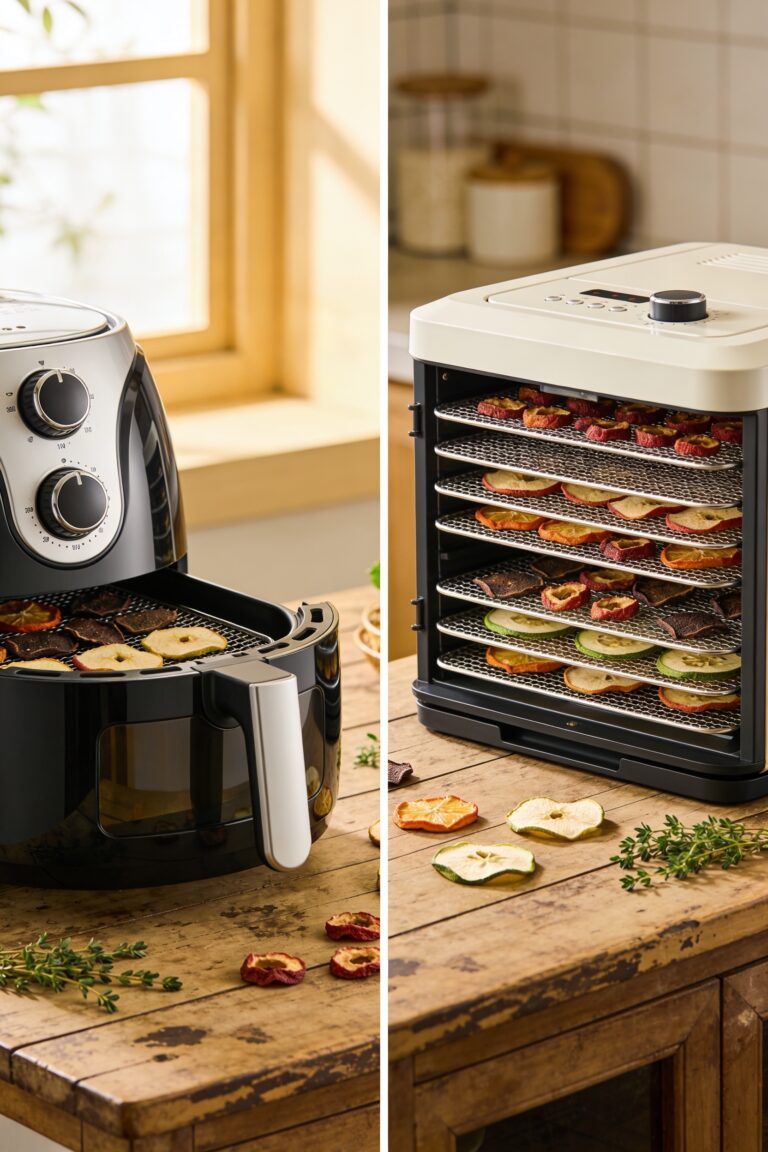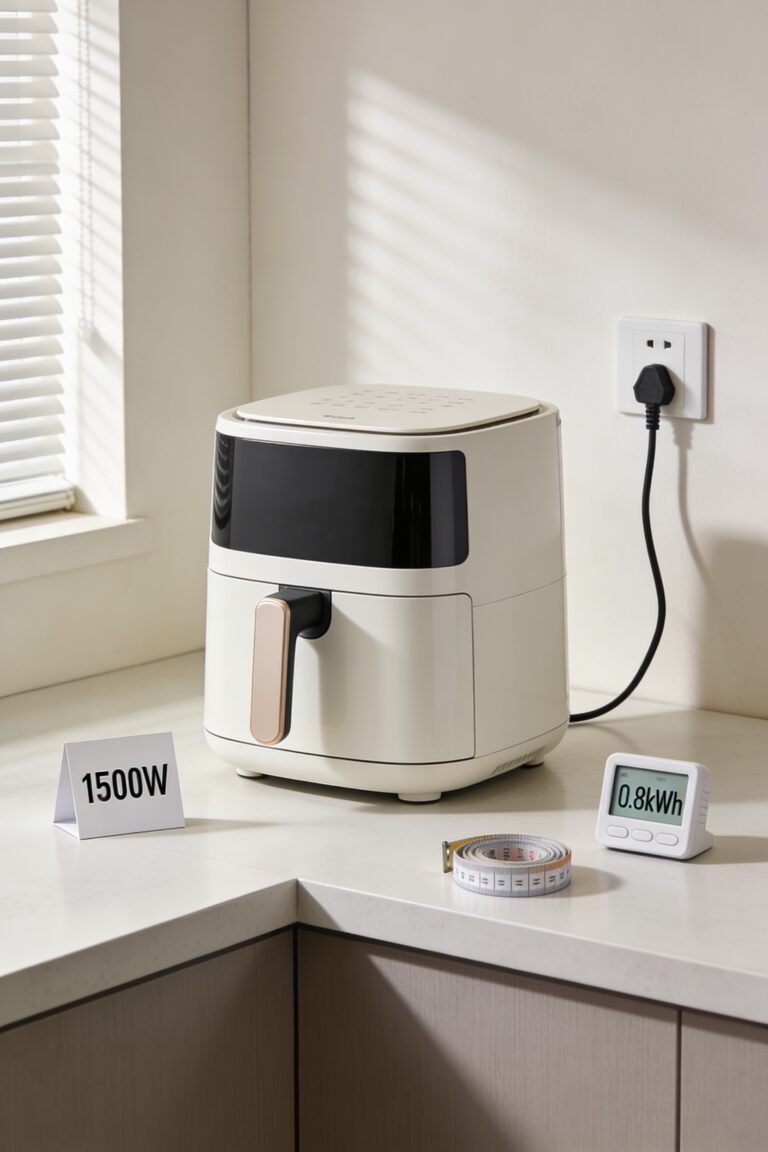
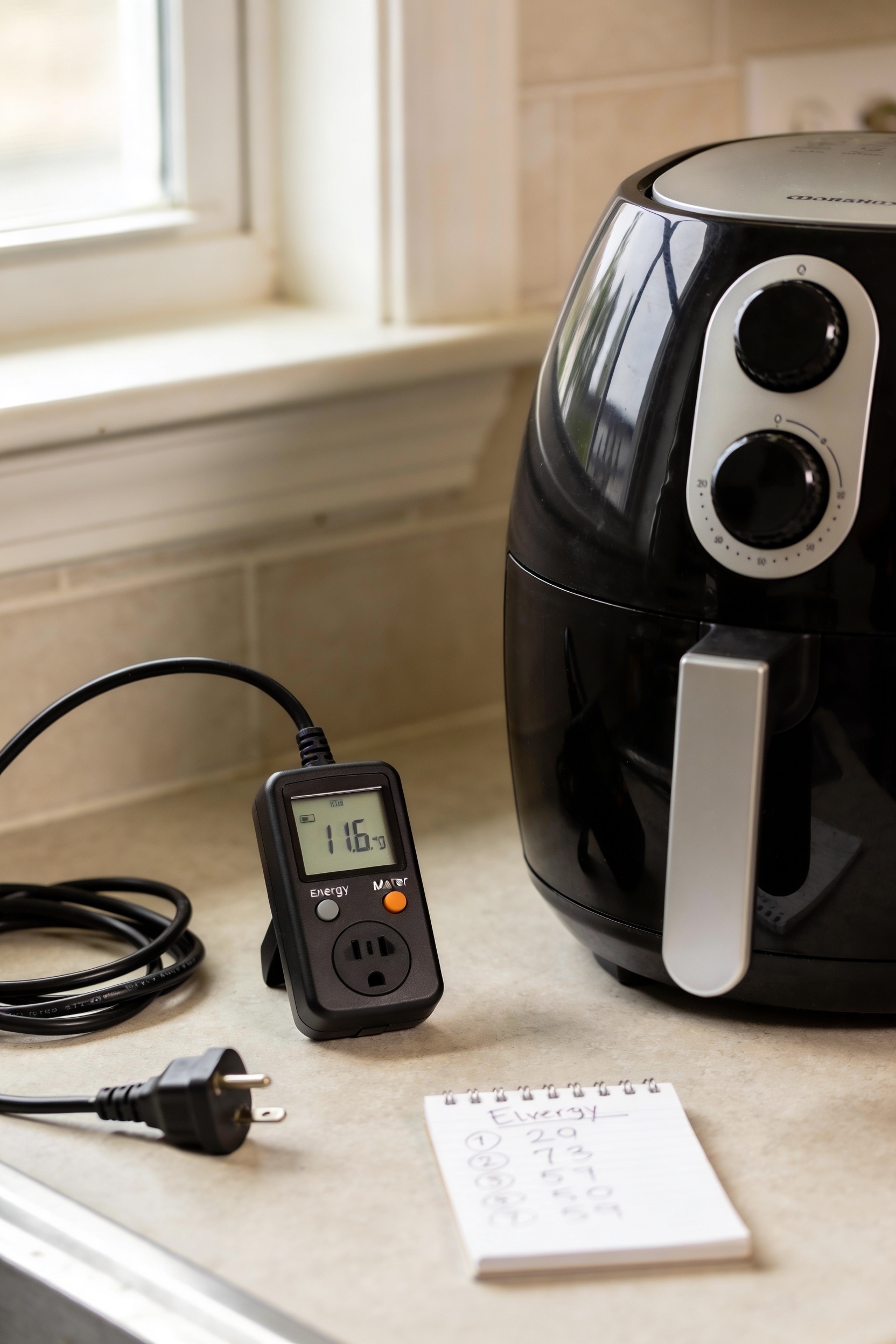

Most air fryers draw between 1,500 and 1,800 watts while cooking—roughly half what a traditional oven pulls. Compact models use less (around 700–1,200 watts), while larger units can hit higher numbers. The thing is, that rated wattage isn’t constant; heating elements cycle on and off, so you’re not actually drawing peak power the whole time. Your actual electricity cost depends on your local rates and how often you cook, but I’ll show you exactly what that looks like in real dollars.
Key Takeaways
- Compact air fryers (1–3 quarts) draw 700–1,200 watts; medium models (4–6 quarts) use 1,500–1,800 watts maximum.
- Air fryers typically consume half the power of conventional ovens, drawing roughly 1.5–1.8 kilowatts compared to 2–5 kilowatts.
- Actual electricity cost depends on your local rate per kilowatt-hour; check your bill for accurate projections.
- Heating elements cycle on and off during cooking, so peak wattage only occurs at startup, not continuously.
- Daily 30-minute use costs approximately £0.15–£0.25 monthly or £55–£90 yearly in the UK based on typical rates.
Typical Power Consumption by Air Fryer Size
Not all air fryers guzzle electricity the same way. Here’s the thing: your compact models, typically ranging from one to three quarts, draw between 700 and 1,200 watts. That’s the lower end of the spectrum, perfect if you’re cooking for one or two people. Now, if you’ve got a larger household, you’re probably eyeing those four to six quart units—they’ll pull around 1,500 to 1,800 watts. The wattage variance really depends on what you’re buying. Extra-large air fryers can actually hit 5,000 watts, though that’s overkill for most of us. Here’s what matters: that rated wattage number you see? It’s the maximum draw. Your actual consumption during cooking bounces around quite a bit because heating elements cycle on and off.
Air Fryers vs. Traditional Ovens: Energy Comparison
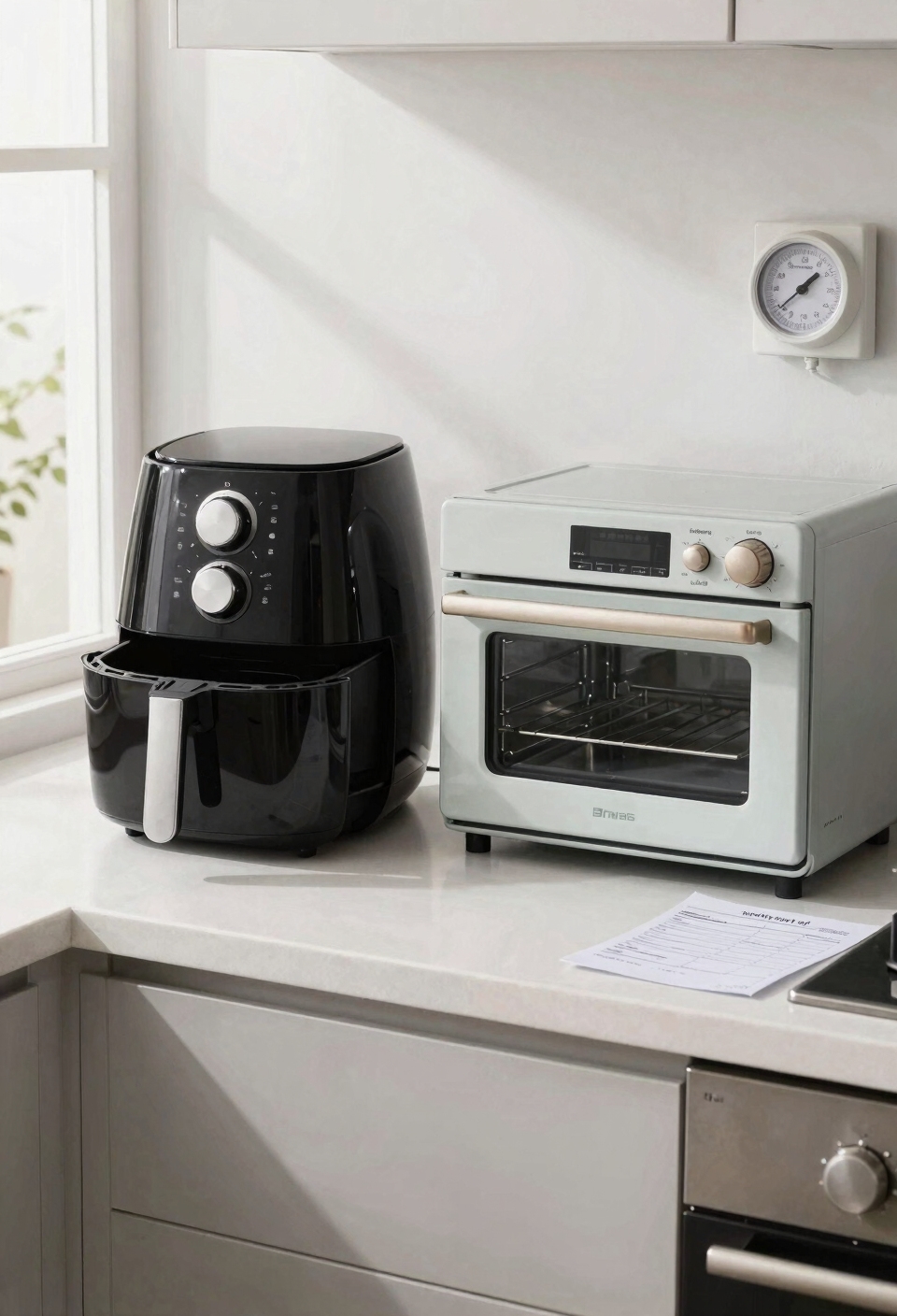
If you’re wondering whether your air fryer is actually saving you money compared to your traditional oven, the answer is yes—pretty decisively. Your conventional oven pulls between 2 and 5 kilowatts per hour, while an air fryer maxes out around 1.5 to 1.8 kilowatts. That’s roughly half the power draw. Here’s the thing: air fryers achieve this through superior convection efficiency, circulating heat faster and more directly around your food. Over the appliance lifecycle—meaning years of regular cooking—those savings genuinely add up. You’re looking at noticeably lower electricity bills without sacrificing cooking quality. The math is straightforward, and your wallet will thank you.
Recommended Products

KoolMore Reserve Collection: Proudly part of the high-end KoolMore Reserve Collection, this 36" Professional Induction Oven Range exemplifies luxury, style, and superior craftsmanship, making it a standout addition to any modern kitchen.

𝐂𝐎𝐎𝐊𝐓𝐎𝐏: The Galiano 36-inch. electric range comes with a 5-radiant elements cooktop for energy efficiency, temperature control, and even cooking. The 5 Radiant Burners that combine a total cooking surface output of 7,700 Watts. The Ceramic Glass cooktop is easy to clean. Front Right Radiant Element Output 3000 W, Front Left 2,200 W, Rear Right 1,200 W, Rear Center 100 W, and Rear Left Element Output 1,200 W

𝐂𝐎𝐎𝐊𝐓𝐎𝐏: The Galiano 30-inch. electric range comes with a 4-radiant elements cooktop for energy efficiency, temperature control, and even cooking. The 4 Radiant Burners that combine a total cooking surface output of 6,500 Watts. The Ceramic Glass cooktop is easy to clean. Front Right Radiant Element Output 3000 W, Front Left 2,200 W, Rear Right 1,200 W, and Rear Left Element Output 100 W
How Your Local Electricity Rates Affect the Real Cost
While we’ve established that air fryers beat traditional ovens in the efficiency department, here’s where things get interesting: that savings number I just threw at you? It’s not universal. Your actual costs depend entirely on where you live and what your utility company charges you.
Now, some regions use tiered tariffs, meaning the more electricity you consume, the higher your rate climbs. Peak pricing complicates things further—using your air fryer during high-demand hours costs more than cooking during off-peak times. I pay roughly 4 baht per kilowatt-hour, but you might pay half that or triple it. Check your electricity bill. Find your rate. Then you’ll know exactly what running that air fryer actually costs you monthly.
What You’ll Actually Spend Per Month
Now that you know your local electricity rate, let’s do some actual math—the kind that shows up on your bill. If you’re running your air fryer daily for 30 minutes, you’re looking at roughly £0.15–£0.25 monthly. That’s not nothing, but it’s honestly pretty manageable.
Here’s where meal planning and portion control actually matter. When you cook intentionally—batch prepping instead of heating up multiple times—you’re spreading that cost across more servings. Usage tracking helps too. I started jotting down cooking sessions, and realized I was heating my fryer way more than necessary.
Look, some folks swear by subscription savings on electricity plans. Check what’s available in your area. Even small monthly reductions add up when you’re cooking smart. Your bill will thank you.
Recommended Products

Power for Extended Trips: The 3.84 kWh (300Ah) capacity delivers 76+ hours of power for a 50W fridge, covering long weekends without a recharge, enjoy worry-free adventures

No-Preheat Air Fry

Essential Home Backup: With a robust 3600W output (7200W surge) and a 3072Wh capacity, the Jackery HomePower 3000 provides reliable backup power for home essentials - fridge, fan, WiFi router, lights, etc. It effortlessly powers a household for up to 15 hours and keeps a refrigerator running for 1 to 2 days, ensuring you're always prepared when outages strike.
How Preheating Impacts Your Power Bill?
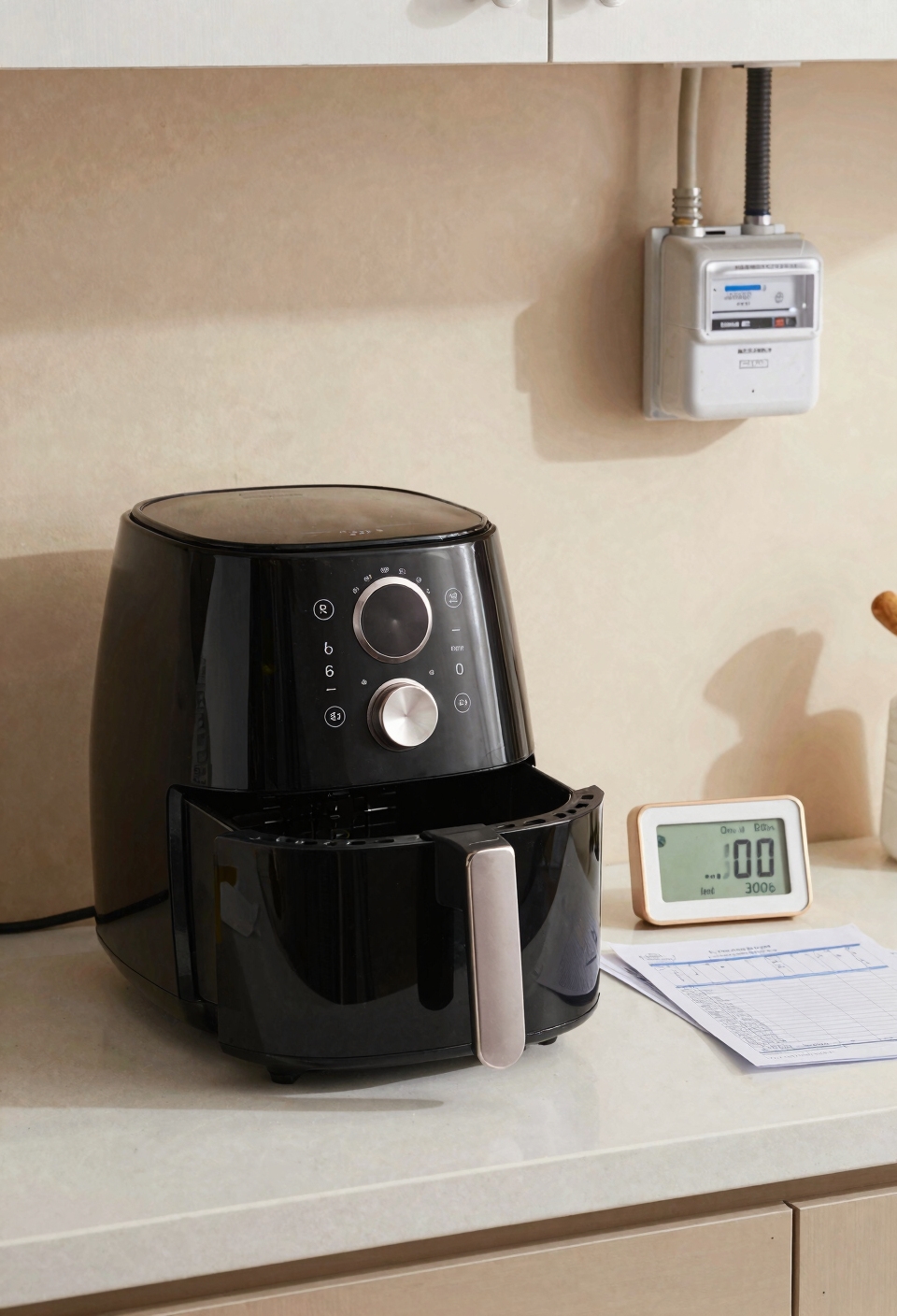
Preheating’s one of those sneaky energy drains that doesn’t seem like much until you do the math. Here’s the thing: you’re running your heating elements at full power for several minutes before you even cook anything. That’s wasted electricity, plain and simple.
Now, let’s bust some preheat myths. You don’t need ten minutes. Most air fryers reach temperature in two to three minutes—that’s your timing strategy sweet spot. Skipping preheating entirely? Fine for some foods, though you might sacrifice crispiness.
The math works like this: cutting preheating time saves you real money over months. If you’re running your air fryer daily, shaving five minutes off each session adds up. Look, I’m not saying ditch preheating completely. Just be intentional about it. Two minutes, tops. Your electricity bill will thank you.
Why Heating Elements Cycle (And What It Saves)
Your air fryer isn’t actually running at full power the entire time you’re cooking. Once it reaches your target temperature, the heating element cycles off and on—a process called thermal cycling. Your thermostat monitors the internal temperature and kicks the element back on when things cool slightly, a mechanism known as thermostat hysteresis. This on-off pattern keeps things consistent without wasting energy.
Here’s the practical part: that cycling saves you real money. Your air fryer only draws maximum power intermittently, not continuously. The fan keeps running to circulate heat, but the heating element? It’s basically taking breaks. So when you see those 1,500-watt specs, remember that’s the peak draw during startup. Most of your cooking time runs leaner than that. This efficiency is exactly why air fryers beat traditional ovens at the power meter.
The Best Way to Right-Size Your Fryer
Understanding the heating cycle is one thing, but here’s where a lot of people leave money on the table: buying an air fryer that’s way too big for what they actually cook. I see it all the time—someone grabs a six-quart model when they’re really just heating up meals for two.
Here’s the thing: portion matching matters. If you’re cooking for two most nights, that massive fryer’s heating way more air than necessary, burning electricity for nothing. Do a little meal planning before you buy. Think about your typical batch sizes, your household count, and honestly how often you’ll max it out.
A smaller fryer for smaller portions? It heats faster, cooks quicker, and your energy bills reflect that smarter choice.
Recommended Products

ECOFLOW 12kWh Power Station: DELTA Pro Ultra with Extra Battery

HUGE PORTABLE POWER: The WGen14500DF dual fuel generator is an ideal power source for jobsites and emergency backup of larger homes. Gas: 18,000 peak watts, 14,500 running watts; Propane: 16,000 peak watts, 13,000 running watts
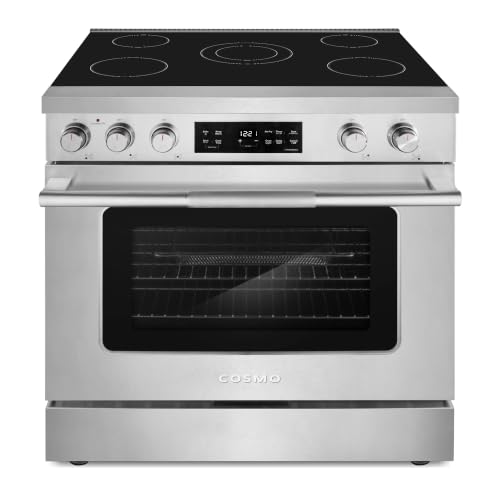
CERAMIC GLASS COOKTOP: Featuring five easy-to-clean cooktop burners: A 3000W total dual element burner, one 2100W, one 1800W and two 1200W single element burners
5 Easy Ways to Lower Your Energy Costs
Now that you’ve got the right-sized fryer humming along in your kitchen, let’s talk about keeping those energy costs down without sacrificing the crispy results you’re after. Here’s the thing: timed cooking makes a real difference. I’ve found that sticking to shorter cooking windows prevents unnecessary energy waste. Pair that with smart portion planning—fill your basket appropriately so you’re not running multiple batches. Minimal preheating also helps. I typically preheat for just two or three minutes instead of longer. Lower temperatures work surprisingly well too. Arranging food evenly maximizes airflow efficiency. These small tweaks won’t transform you into an energy-saving superhero, but they’ll genuinely trim your electricity bills without compromising those golden, crispy results you’re craving.
Recommended Products

All-in-One Versatility Steamer Oven: Enjoy a multitude of cooking options including steaming, air frying, baking, sous vide, fermentation, 29 preset auto menus, and sanitization in one countertop steam oven, offering unparalleled convenience and versatility in the kitchen

Advanced User Interface: Equipped with a 2.4-inch colorful screen with an intuitive user interface that is highly responsive and easy to operate, making complex cooking tasks simple and more accessible.

PRO COOK SYSTEM: Achieve the perfect doneness from rare to well done at the touch of a button with the integrated Pro Cook System with Auto Temp Detect Intelligence Thermometer—no guesswork required.
What Daily Air Fryer Use Costs Over a Year
Once you’ve committed to daily air fryer cooking, you’ll probably wonder what that habit actually costs you over twelve months—and I get it, because those electricity bills can feel mysterious.
Here’s the thing: if you’re running your air fryer thirty minutes daily, you’re looking at roughly £55 to £90 per year in the UK. That’s accounting for seasonal usage patterns too—you might cook more in winter and less during summer months.
Now, compare that to traditional oven cooking, and you’re actually ahead. You’re saving money while getting better results. The lifestyle savings add up quietly, which is why so many people don’t realize how affordable air fryer cooking truly is. Over a year, it’s genuinely pocket change.
Can You Make Air Frying Even More Efficient?
If you’re already saving money with your air fryer, you might be wondering whether you can squeeze out even more efficiency—and honestly, you can. Look, batch cooking is your secret weapon here. Cook multiple portions at once instead of running several cycles, and you’ll slash your energy use markedly. I’d also grab a temperature probe. It’ll help you nail doneness faster, meaning you won’t accidentally overcook and waste time. Preheat for just two or three minutes instead of longer. Skip preheating altogether when you’re comfortable doing so. Fill your fryer to capacity rather than cooking sparse batches. All right, these tweaks won’t revolutionize your bills, but they’ll definitely chip away at costs while making you a more efficient cook.
Recommended Products
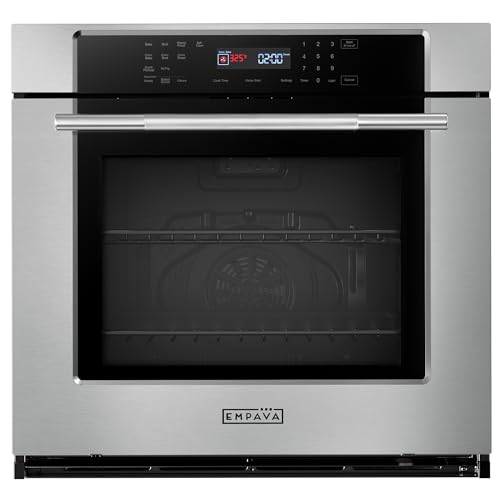
Versatile Cooking with ETL Safety: This empava 30" wall oven offers peace of mind with ETL certification and 10 professional modes. From Air Fry and Sabbath mode to Convection Roast and Proofing, you have every culinary tool needed to master diverse recipes in one stylish appliance.

[PRECISE TEMP CONTROL] The sensor probe in the oven precisely monitors the internal temperature, offering exclusive temperature for every kind of food, the maximum temperature can be up to 500℉. The electric wall oven meets a variety of requirements with Sabbath, Bake, Broil, Conv. Broil, Conv. Bake, Conv. Roast, Warm/Proof, Delay Start, Self/Steam Clean, Air fry

GLASS TOUCH CONTROLS WITH MULTIPLE COOKING MODES INCLUDING AIRFRY: Cook with confidence and precision with our versatile oven. Featuring multiple cooking modes including AirFry and Keep Warm, you can bake, broil and roast all your favorite dishes to perfection. The meat probe ensures perfectly cooked meats every time, while the clock and timers make it easy to keep track of cooking times. With its sleek glass touch controls, our oven not only looks great in your kitchen but is also easy to use, with a touch of glass.
Frequently Asked Questions
Do Air Fryers Use More Electricity Than Microwaves for Similar Cooking Tasks?
I’d say air fryers typically use more wattage than microwaves, but their energy efficiency and shorter cooking times often make them comparable. Your appliance lifespan and actual consumption depend on specific wattage comparisons between models.
How Does Air Fryer Wattage Compare to Other Small Kitchen Appliances Like Toasters?
I’d say air fryers use markedly more wattage than toasters—typically 1,500 watts versus a toaster’s 800–1,500 watts. However, considering appliance efficiency and actual cooking time, air fryers often prove more energy-efficient overall for complete meal preparation.
Will Using an Air Fryer Increase My Home’s Overall Electrical Circuit Load Risks?
I’ll be honest—most homes won’t experience circuit overload from an air fryer alone. However, if you’re running multiple high-wattage appliances simultaneously on the same circuit, breaker trips become possible. Check your home’s electrical capacity first.
Does Cooking Frozen Versus Fresh Food Require Different Energy Amounts in Air Fryers?
I’ve found that frozen food typically requires more energy than fresh because it needs longer cooking times. The preheating impact remains constant, but food moisture differences mean frozen items demand extended heat exposure for proper cooking.
Are Dual-Basket Air Fryers Significantly More Expensive to Operate Than Single-Basket Models?
Dual basket air fryers aren’t substantially more expensive to operate. They use similar wattage to single-basket models, but their increased basket capacity lets you cook larger portions simultaneously, reducing cooking time and overall energy efficiency costs.
Conclusion
air fryers aren’t energy vampires, but they’re not free either. You’re looking at maybe a couple bucks monthly for regular use—hardly breaking the bank. As the old saying goes, a penny saved is a penny earned, and right-sizing your fryer and running it smart adds up. Bottom line? Your air fryer’s a solid investment. Use it guilt-free.