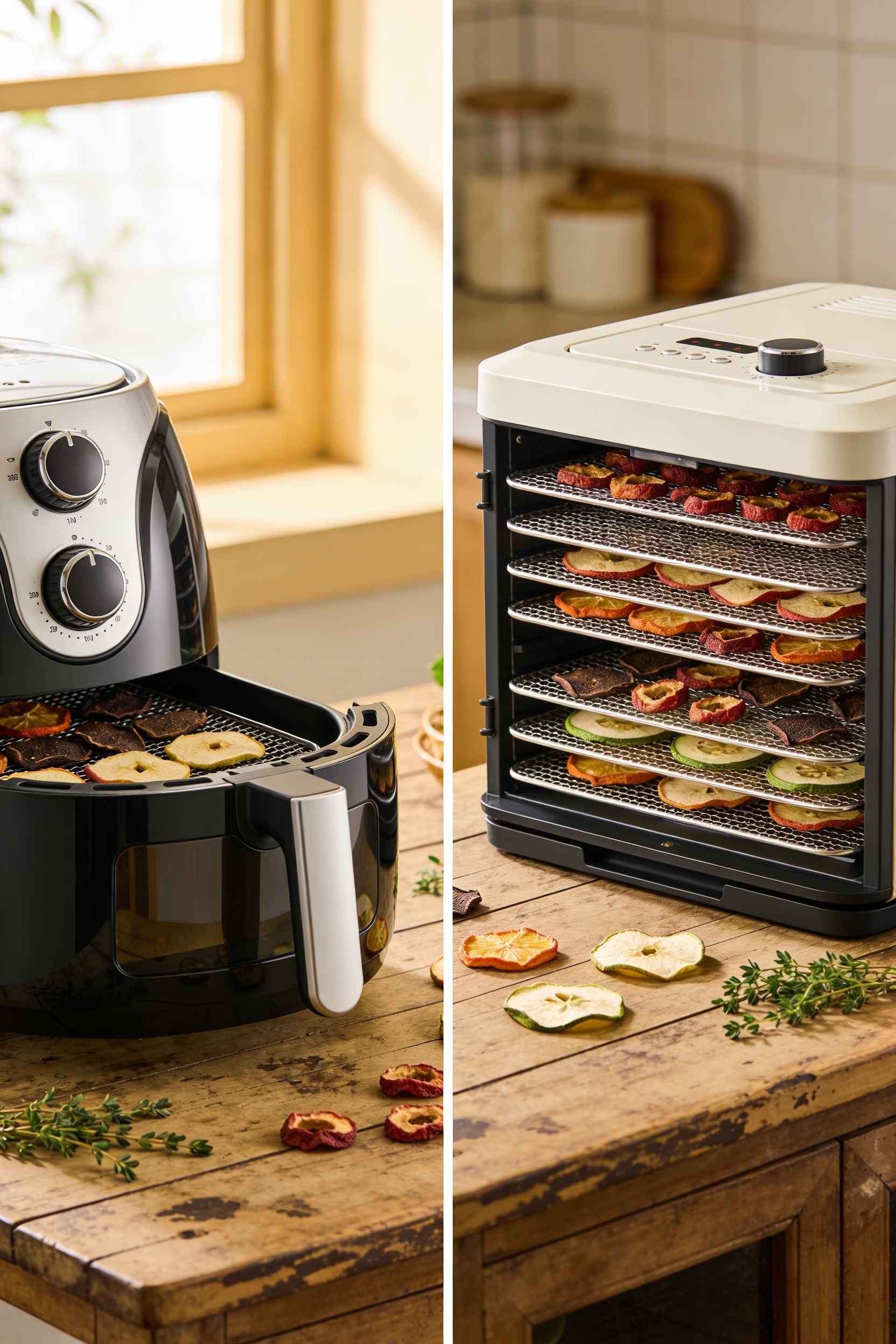

Look, they’re not really competitors—an air fryer dehydrates in hours while a standalone dehydrator preserves bulk quantities over a full day. Air fryers win on speed and versatility, handling everything from crispy fries to roasted veggies in one machine. Standalone dehydrators excel at jerky and dried fruit with better nutrient retention. Your choice depends on whether you need a quick-cooking generalist or a specialized preservation workhorse. Stick around to figure out which actually fits your kitchen.
Key Takeaways
- Standalone dehydrators excel at bulk preservation with lower temps (70°F–190°F) retaining up to 90% of vitamins.
- Air fryers offer versatility for quick cooking tasks (10–30 minutes) but handle smaller batches due to space limits.
- Standalone dehydrators last 5–10 years with better warranties; air fryers typically last 3–5 years.
- Air fryers are compact and cheaper upfront; standalone dehydrators cost more but provide superior nutrient retention for jerky and dried fruit.
- Choose dehydrator for preservation-focused goals; choose air fryer for versatility, speed, and limited countertop space.
Temperature Range: What Matters for Your Recipes
When you’re deciding between an air fryer and a standalone dehydrator, temperature range might seem like a boring technical detail—but here’s the thing: it’s actually the fundamental difference that shapes what each appliance can do.
Standalone dehydrators operate at low temps, typically 70°F–190°F. They’re designed for slow, gentle drying that preserves nutrients. Air fryers? They crank up to 325°F–450°F. That’s serious heat meant for quick cooking.
Here’s where it matters for your recipes. Dehydrators excel at jerky and dried fruit. If you want crispy fries or roasted veggies, you’ll need that higher oven temps an air fryer provides. Can’t make recipe tweaks work in one? Try the other. They’re basically cooking opposites, each dominating their own lane.
Speed Comparison: Hours vs. Minutes
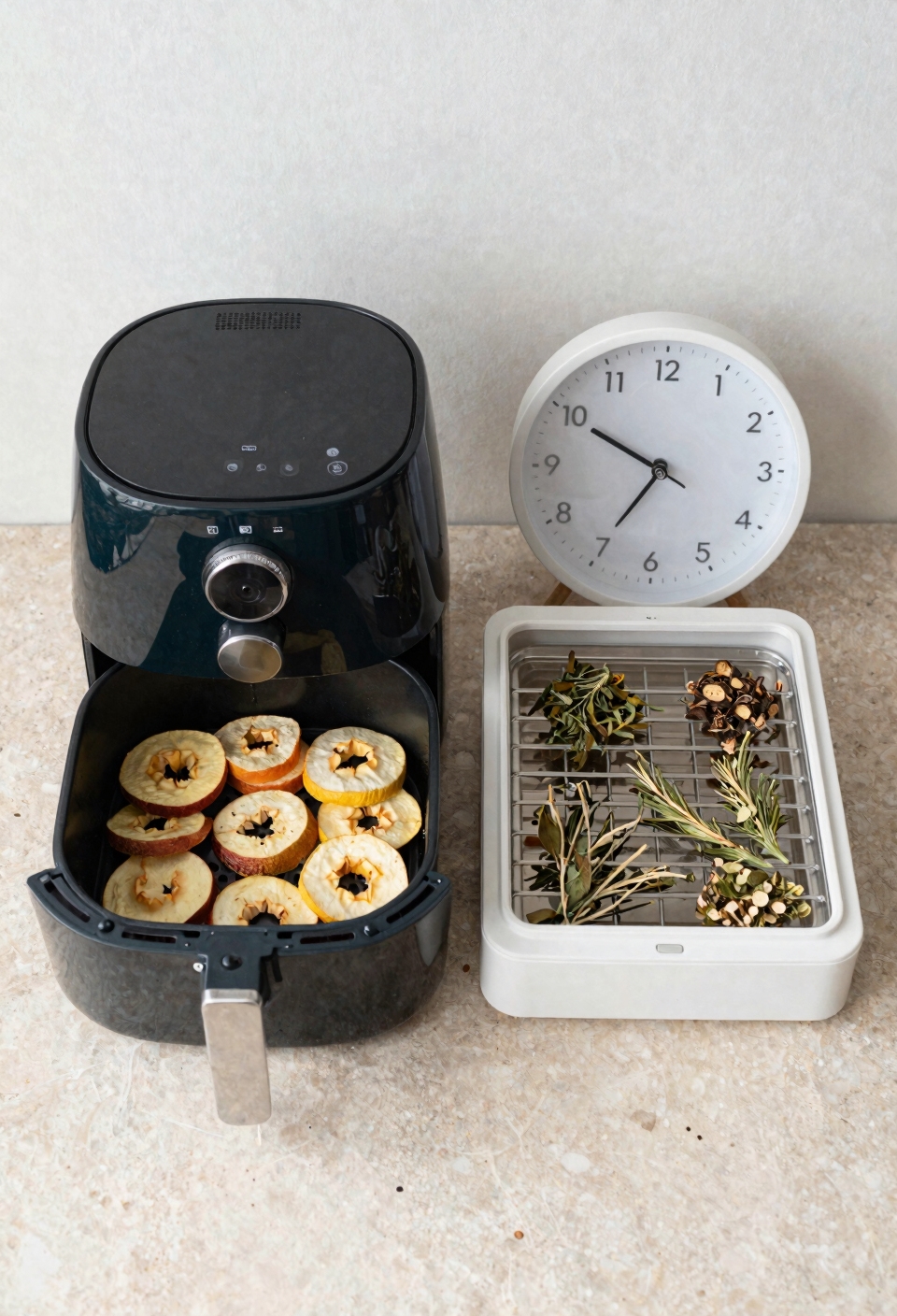
Speed comes down to what you’re willing to wait for. Here’s the thing: air fryer dehydration takes one to eight hours, while standalone dehydrators need anywhere from several hours up to a full day. That’s a massive difference when you’re planning dehydration scheduling around your week.
Now, if you’re making jerky, a standalone dehydrator handles it in a couple hours tops. Air fryers finish similar jobs in ten to thirty minutes for most tasks. The tradeoff? Standalone models work slower to preserve nutrition better, which matters if you care about that stuff.
Look, air fryers win on speed. But standalone dehydrators let you set it and forget it. With rapid rehydration capabilities, both give you quick results once you’re ready to use your dried goods.
What Each Appliance Can Actually Cook
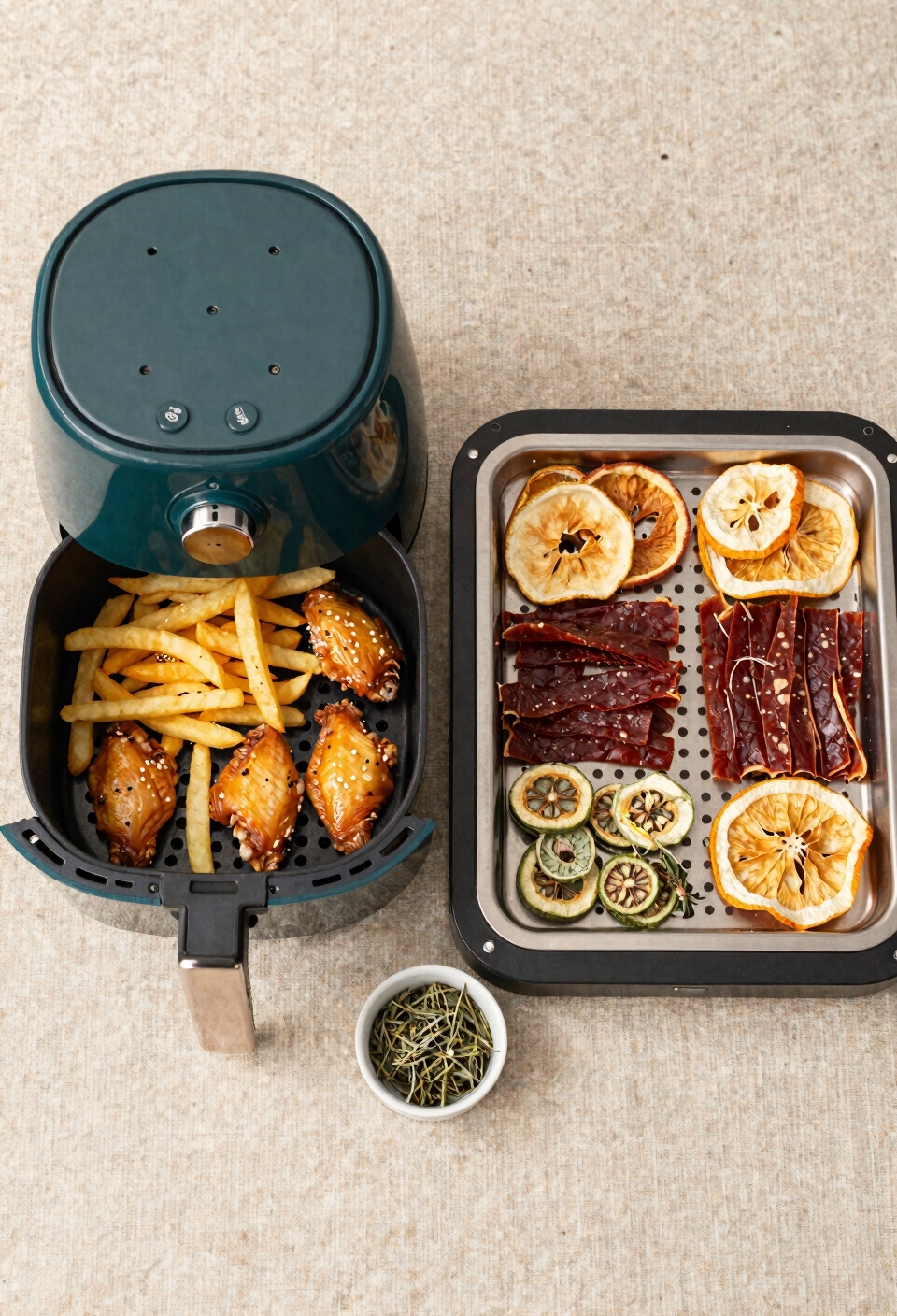
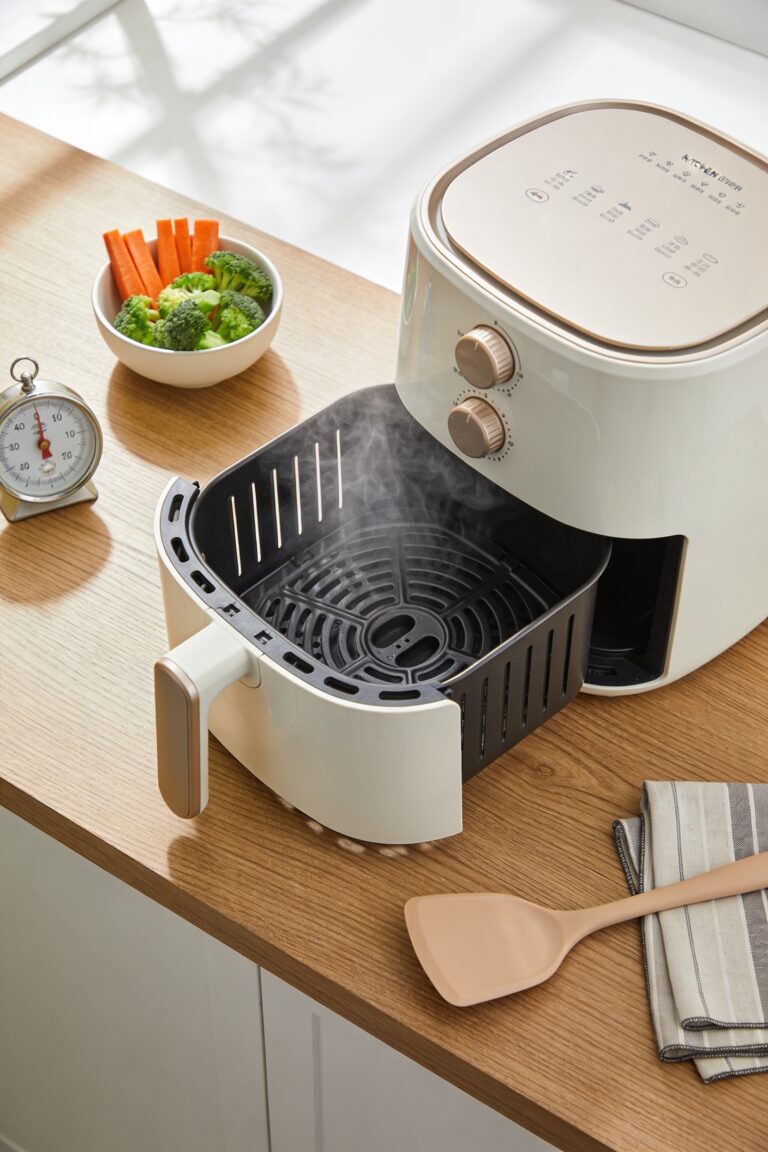
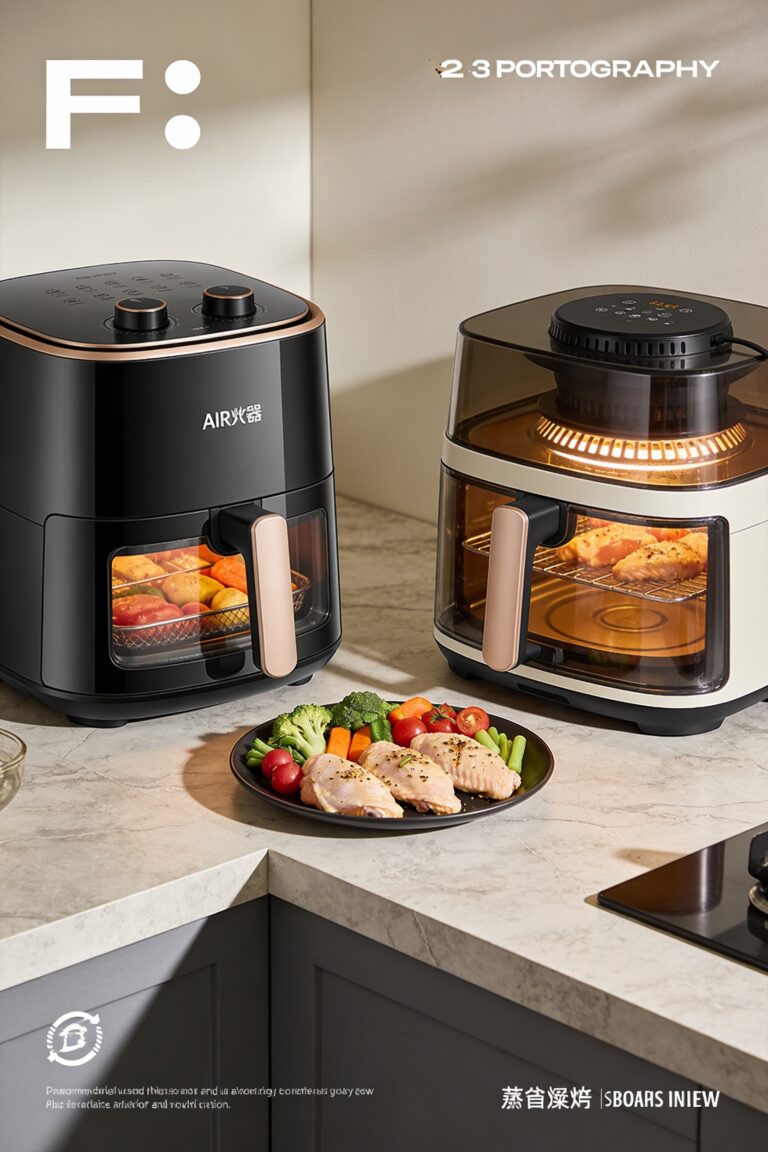
If you’re serious about dehydration as a preservation method, a dedicated dehydrator outperforms an air fryer every single time, even if it can’t make you crispy chicken wings for dinner. That’s where air fryer versatility shines—you get frying, roasting, baking, and grilling all in one compact machine. But here’s the thing: dehydrator capacity lets you process pounds of fruit or jerky simultaneously across multiple trays. An air fryer’s dehydration function takes 1–8 hours and handles smaller batches. You’re basically choosing between a specialist and a generalist. Need preservation? Go dedicated. Want weeknight dinner flexibility? Air fryer wins. Most people honestly need both, but if forced to pick one, consider what you’ll actually use most.
Size, Storage, and Kitchen Fit
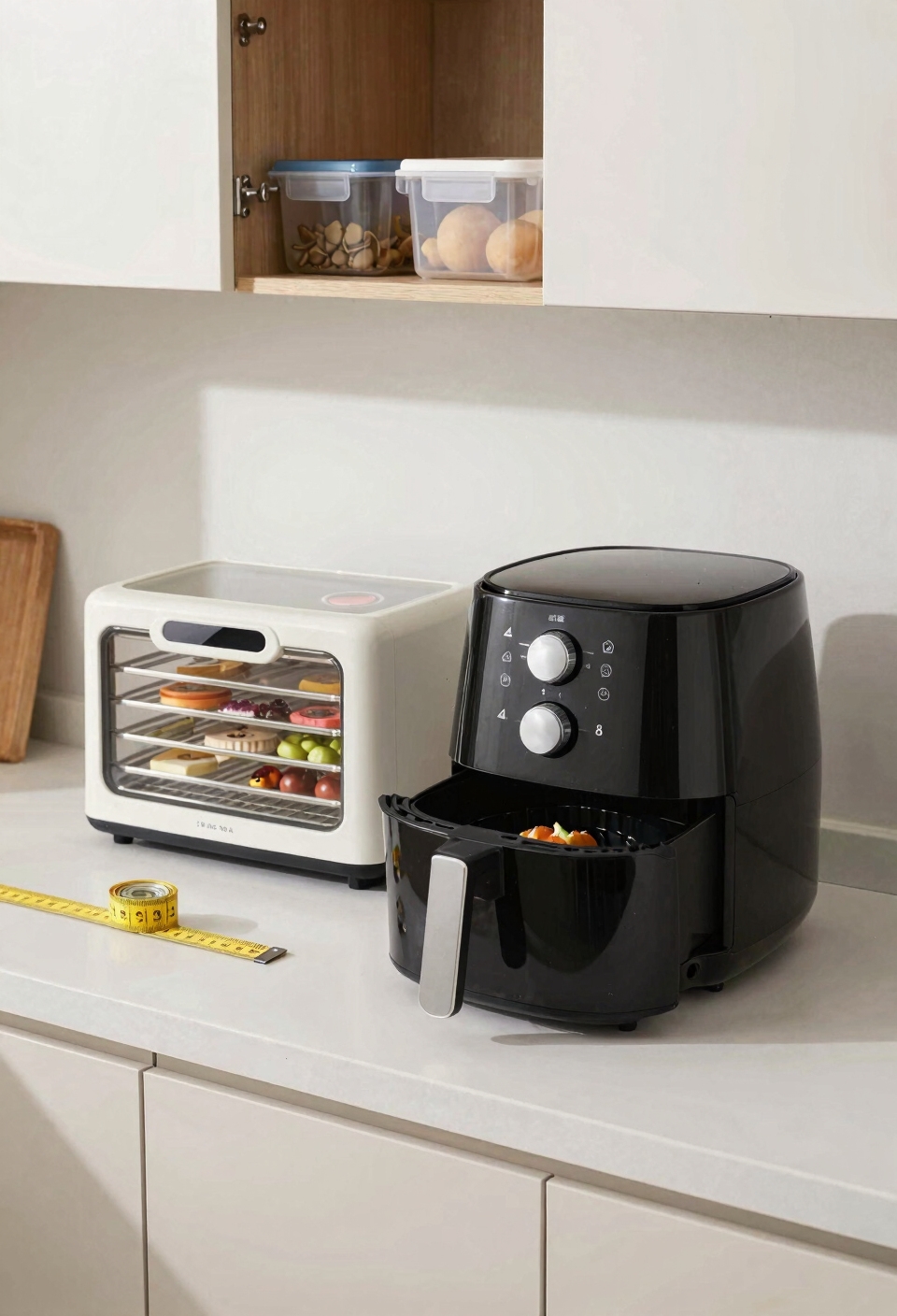
Now that you know what each machine can actually cook, let’s talk about where you’re going to put the darn thing. Here’s the thing: space matters, especially if your kitchen’s already cramped. Air fryers are compact and weigh around 5–12 lbs, so they nestle easily on your countertop without demanding real estate. Standalone dehydrators? They’re bulkier at 10–15 lbs with stackable trays that require serious counter or storage space. If you’ve got limited room, an air fryer wins hands down—you can tuck it away between uses. But if you’re serious about batch dehydrating, that larger countertop footprint becomes worth it. Think about your actual kitchen layout before deciding. Sometimes the best appliance is the one you’ll actually use, not the one taking up valuable space.
Energy Use and Cost Per Meal
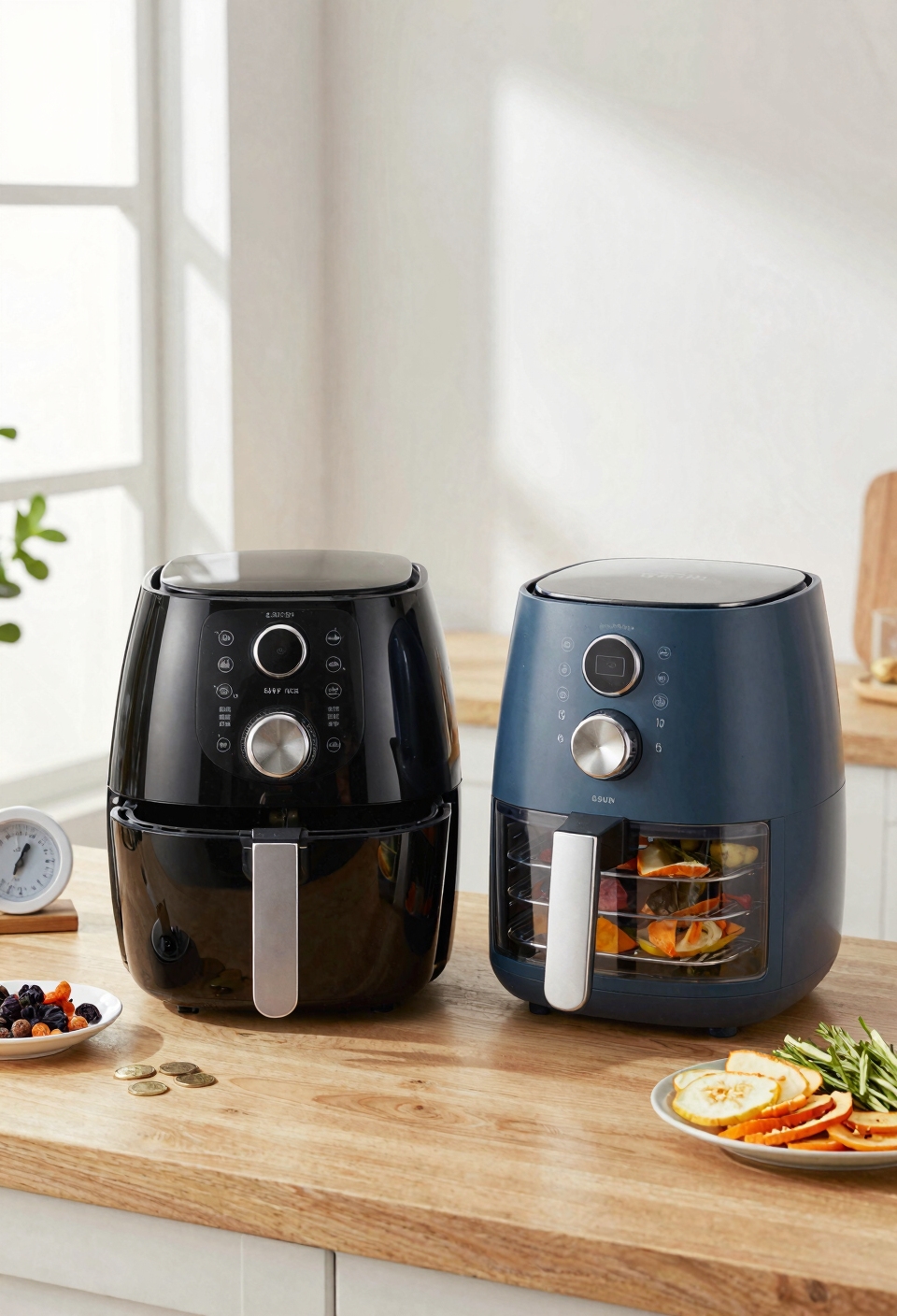
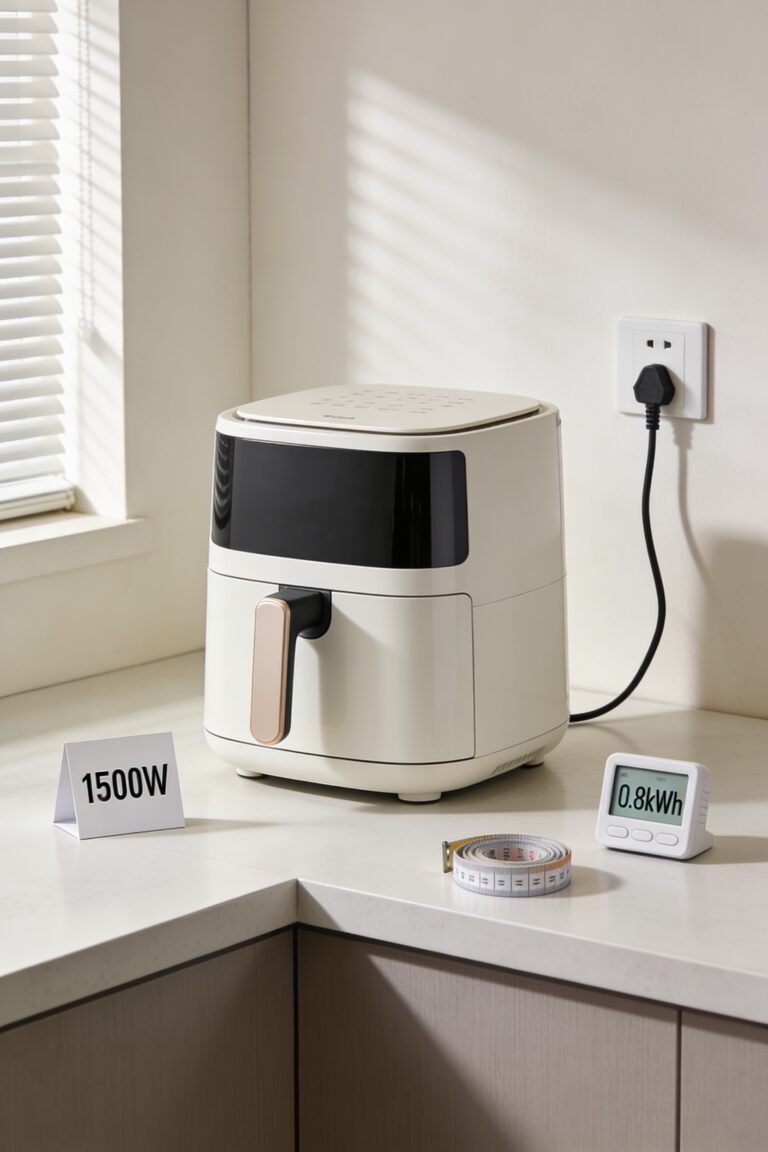
Look, here’s the real talk: energy costs might seem boring, but they add up faster than you’d think. Air fryers pull 1400–1800 watts and run for maybe 10–30 minutes per session. That translates to roughly $0.10–$0.50 per use. Standalone dehydrators? They’re slower, sipping 300–600 watts over 0–24 hours, landing around $0.30–$1.00 per use.
Here’s where it gets interesting: despite higher wattage, air fryers win on operational costs because they finish quick. You’re not leaving them humming for hours. From an environmental impact perspective, shorter cooking times mean less electricity consumed overall.
Now, air fryers typically last 3–5 years while dehydrators stretch 5–10 years. Factor that longevity into your decision, and the math shifts depending on how often you’ll actually use the thing.
How Long Your Investment Will Last
Buying kitchen gear is one thing—keeping it running is another. Here’s the thing: standalone dehydrators typically last five to ten years, while air fryers stick around for three to five years. That’s a meaningful difference if you’re planning ahead.
Now, warranty length matters here. Most dehydrators come with longer coverage periods, which reflects their durability. Air fryers? They’re shorter on both fronts—lifespan and warranty protection.
Look at resale value too. Standalone dehydrators hold their worth better since they’re specialized tools. Air fryers depreciate faster because the market’s flooded with them. If you think you might sell down the road, a quality dehydrator’s your better bet. That said, neither appliance screams “investment piece,” so don’t overthink it.
Nutrition and Texture: What You’ll Actually Eat
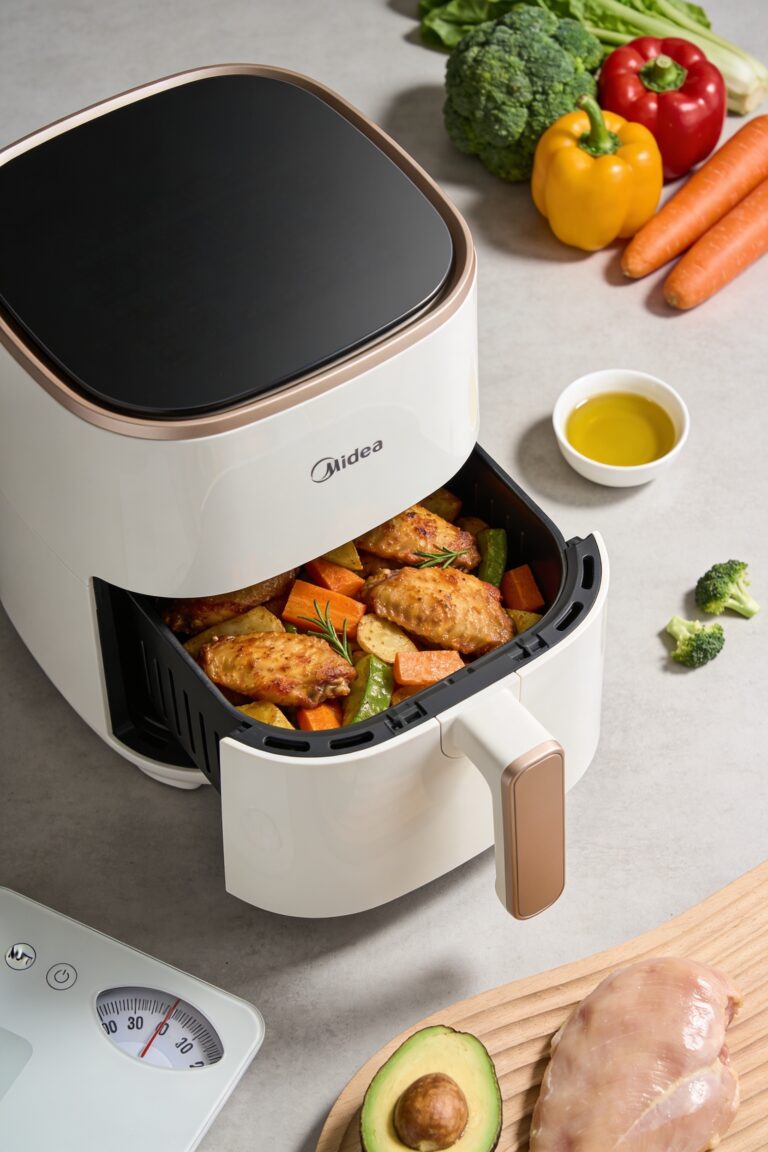
When you’re deciding between these two appliances, what actually ends up on your plate matters more than the machine itself. Standalone dehydrators preserve up to 90% of vitamins, keeping your food genuinely nutritious. Air fryers reduce oil by 80%, lowering calories markedly. Here’s the thing: texture differs wildly between them. Dehydrators create that satisfying chewiness contrast—think jerky you can actually chew. Air fryers nail the crispy-outside, moist-inside thing that feels indulgent. Now, if vitamin retention drives your choice, dehydrators win hands down. No oil needed means purer nutrition. But you’re trading speed and versatility for that health benefit. Air fryers get you dinner faster while still cutting fat. Both deliver real results. Your priority determines which actually wins your kitchen.
Making Your Decision: A Quick Comparison
Since you’ve got the nutrition and texture facts down, it’s time to actually figure out which machine belongs in your kitchen—and honestly, it comes down to what you’re willing to trade off.
If you want batch variety and speed, grab an air fryer. You’ll whip through multiple cooking methods in minutes, though your cleaning routine’ll be simpler but more frequent. Prefer long-term food storage and maximum nutrient retention? A standalone dehydrator‘s your move—it’ll handle bulk projects while you forget about it for hours.
Budget-conscious? Air fryers cost less upfront and run cheaper per use. Space-limited? They’re compact winners. But if you’re serious about preservation and don’t mind patience, the dehydrator’s specialized focus actually wins here.
Best Appliance for Your Kitchen Setup
All right, here’s the thing—your kitchen’s layout and lifestyle matter way more than specs ever will. If you’re tight on countertop footprint, an air fryer with dehydrator function saves real estate. You get versatility without sacrificing storage space. Now, consider your seasonal demands. Do you preserve food heavily in fall, or do you cook year-round? A standalone dehydrator shines if you’re serious about bulk drying. But if dehydrating’s occasional, an air fryer handles it fine. Think honestly about what you’ll actually use. A compact air fryer works if you’ve got limited space and varied cooking needs. A dedicated dehydrator wins if you’re preserving food seriously and have room to spare.
Frequently Asked Questions
Can Air Fryers With Dehydrator Functions Match Dedicated Dehydrators’ Performance Quality?
I’d say air fryers with dehydrator functions don’t quite match dedicated dehydrators’ texture retention and flavor concentration. You’ll find standalone models preserve nutrients better and deliver superior results for serious preservation work.
How Often Do Air Fryers and Dehydrators Require Maintenance or Replacement Parts?
I’d say maintaining either appliance isn’t rocket science. I’ve found air fryers need regular filter screens and gasket checks, while dehydrators require minimal upkeep. Air fryers typically last 3–5 years; dehydrators endure 5–10 years with proper care.
What’s the Noise Level Difference Between Running These Appliances for Extended Periods?
I’ve found dehydrators run nearly silent during extended sessions, while air fryers generate noticeable fan noise from their ambient heat circulation. You’ll hear the fan whirring continuously with air fryers.
Which Appliance Is Better for Batch Processing Large Quantities of Food?
I’d say standalone dehydrators win for batch throughput. Their stackable drying racks handle massive quantities simultaneously, while air fryers process small portions sequentially. You’ll process markedly more food faster with a dedicated dehydrator’s capacity.
Do Air Fryer Dehydration Cycles Consume More Electricity Than Standalone Dehydrators?
No, I’d argue standalone dehydrators consume more electricity overall. They run 0–24 hours versus air fryers’ 1–8 hour cycles. While dehydrators use 300–600W and air fryers use 1400–1800W, the shorter timeframe makes air fryers more energy efficient despite higher wattage and superior temperature precision.
Conclusion
Look, here’s the thing: you’ve got to match the tool to what you actually make. An air fryer dehydrator‘s like a Swiss Army knife—versatile but not always the sharpest blade. If you’re serious about jerky and dried fruit, go standalone. But if counter space is tight and you want one appliance pulling double duty, the hybrid works. Either way, you’re winning compared to your oven.