As an Amazon Associate, we earn from qualifying purchases. Some links on this site are affiliate links at no extra cost to you. Our recommendations are based on thorough research and editorial judgment.


Air Fryer vs Microwave: Which Should You Use and When?

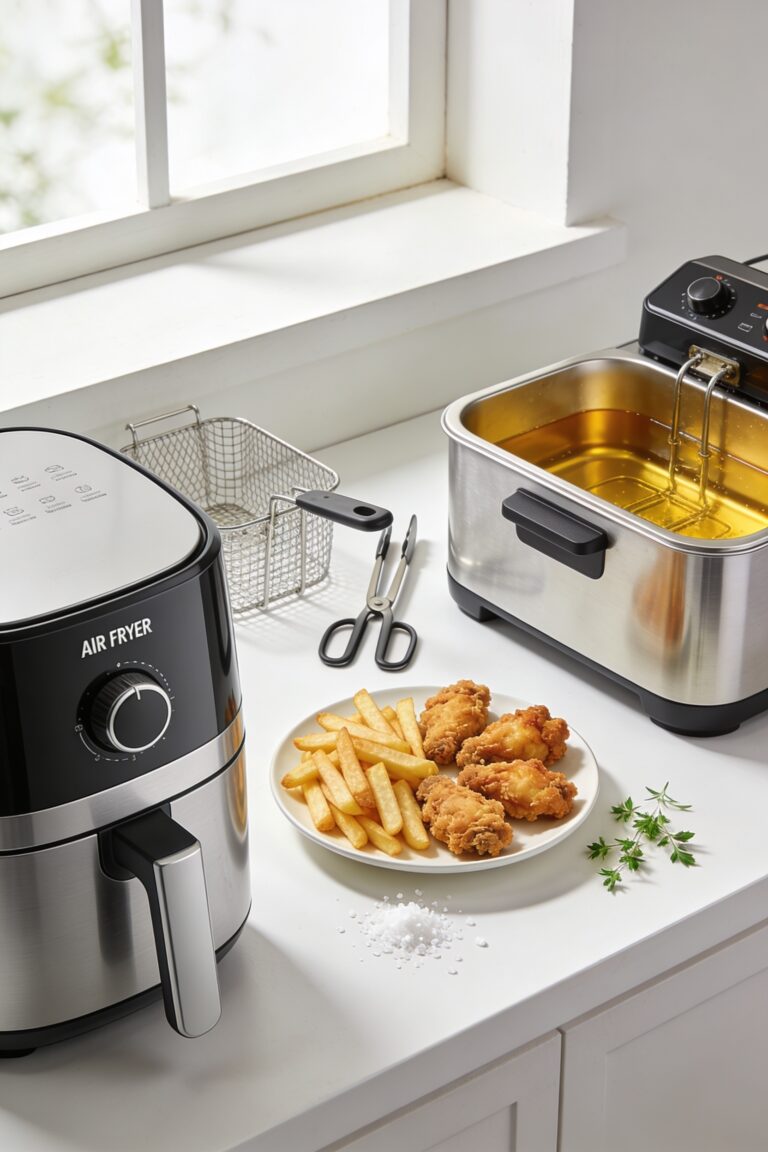
Air fryers and microwaves aren’t competitors—they’re tools for different jobs. Microwaves reheat fast and cheap, perfect for leftovers and coffee. Air fryers crisp things up using hot air circulation, turning frozen fries and vegetables into something actually worth eating. Your choice depends on what you cook most: need speed and low energy bills, grab the microwave. Want crispy textures without deep frying, go air fryer. Stick around to figure out which one actually belongs in your kitchen.
Key Takeaways
- Air fryers brown and crisp at high heat (~400°F); microwaves heat uniformly to ~212°F, producing softer textures.
- Use air fryers for vegetables, chicken, and foods benefiting from crispy finishes; use microwaves for reheating and defrosting.
- Microwaves cost less, use less energy, and require minimal space; air fryers demand more power and counter real estate.
- Air fryers excel at oil-free frying and complex flavors through caramelization; microwaves prioritize speed and convenience for quick tasks.
- Choose based on primary habits: microwave for frequent reheating and defrosting, air fryer for preference toward fried-like textures.
How Air Fryers and Microwaves Actually Work
Since you’re probably standing in an appliance aisle right now wondering which gadget deserves your counter space, let’s crack open how these two actually function—because they’re doing completely different things to your food. Air fryers work by creating hot airflows that circulate rapidly around whatever you’re cooking, mimicking deep frying with way less oil. That moving heat browns and crisps the exterior while keeping things tender inside. Microwaves, meanwhile, use wave penetration to vibrate water molecules inside your food, heating it from the core outward. It’s faster, sure, but you won’t get any crunch. One’s effectively a tiny convection oven; the other’s electromagnetic magic. Totally different approaches, totally different results on your plate.
Why Texture and Taste Differ So Dramatically
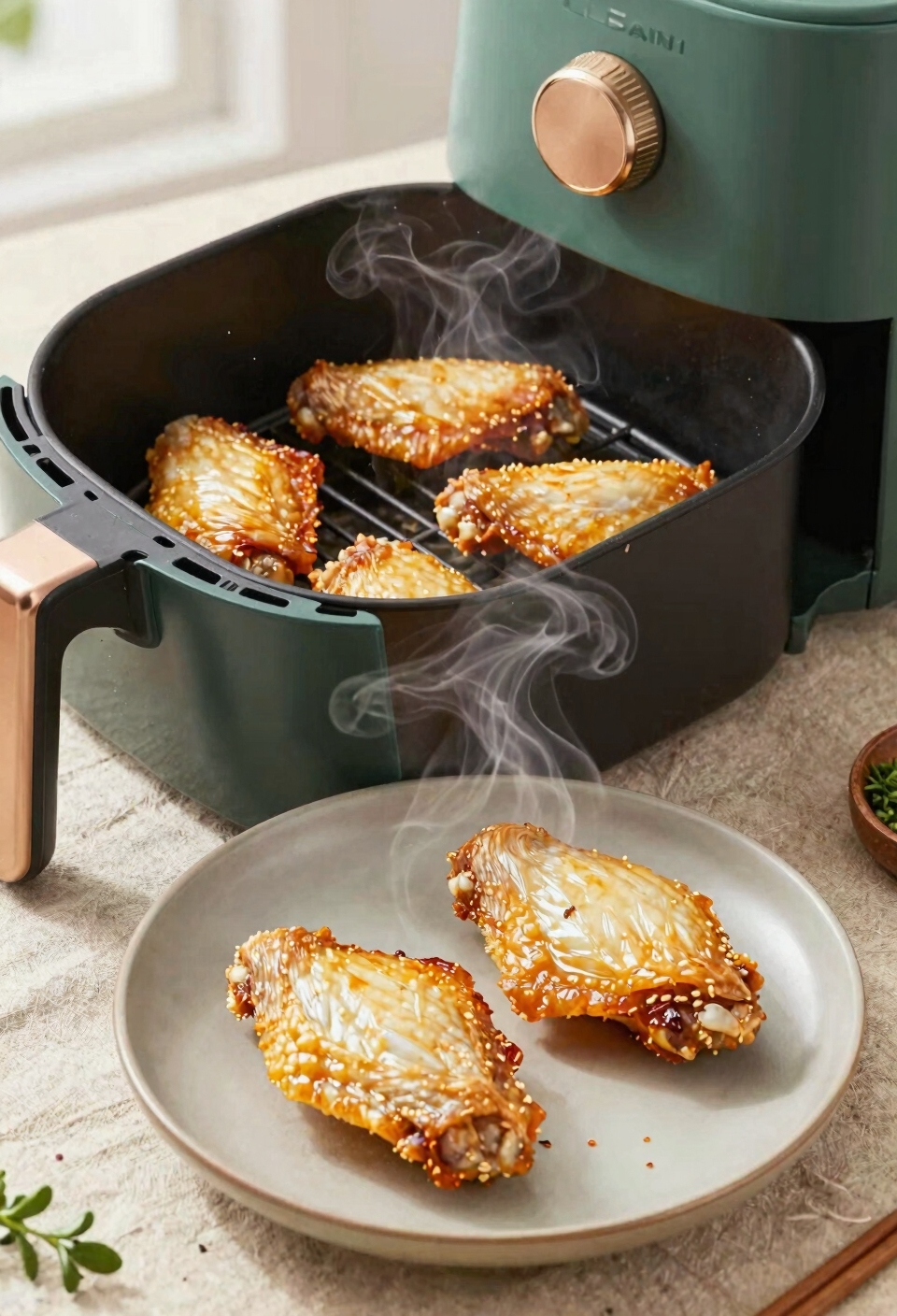
Those wildly different cooking methods I just described? They create totally different eating experiences. Here’s the thing: an air fryer’s high heat browns your food’s exterior while keeping the inside tender. That mouthfeel contrasts sharply with what a microwave delivers—soft, steamed textures that lack any crunch.
Now, sensory perception plays a huge role here. When you bite into air-fried chicken, you get that satisfying crackle. Your microwave? It’ll heat the same chicken evenly, but you’re eating something closer to boiled than fried. Air fryers caramelize surfaces through intense heat, creating complex flavors. Microwaves prioritize speed over taste development.
Look, if you care about how food actually feels in your mouth and tastes on your tongue, this difference matters. A lot.
Speed vs. Energy Efficiency: The Real Tradeoff
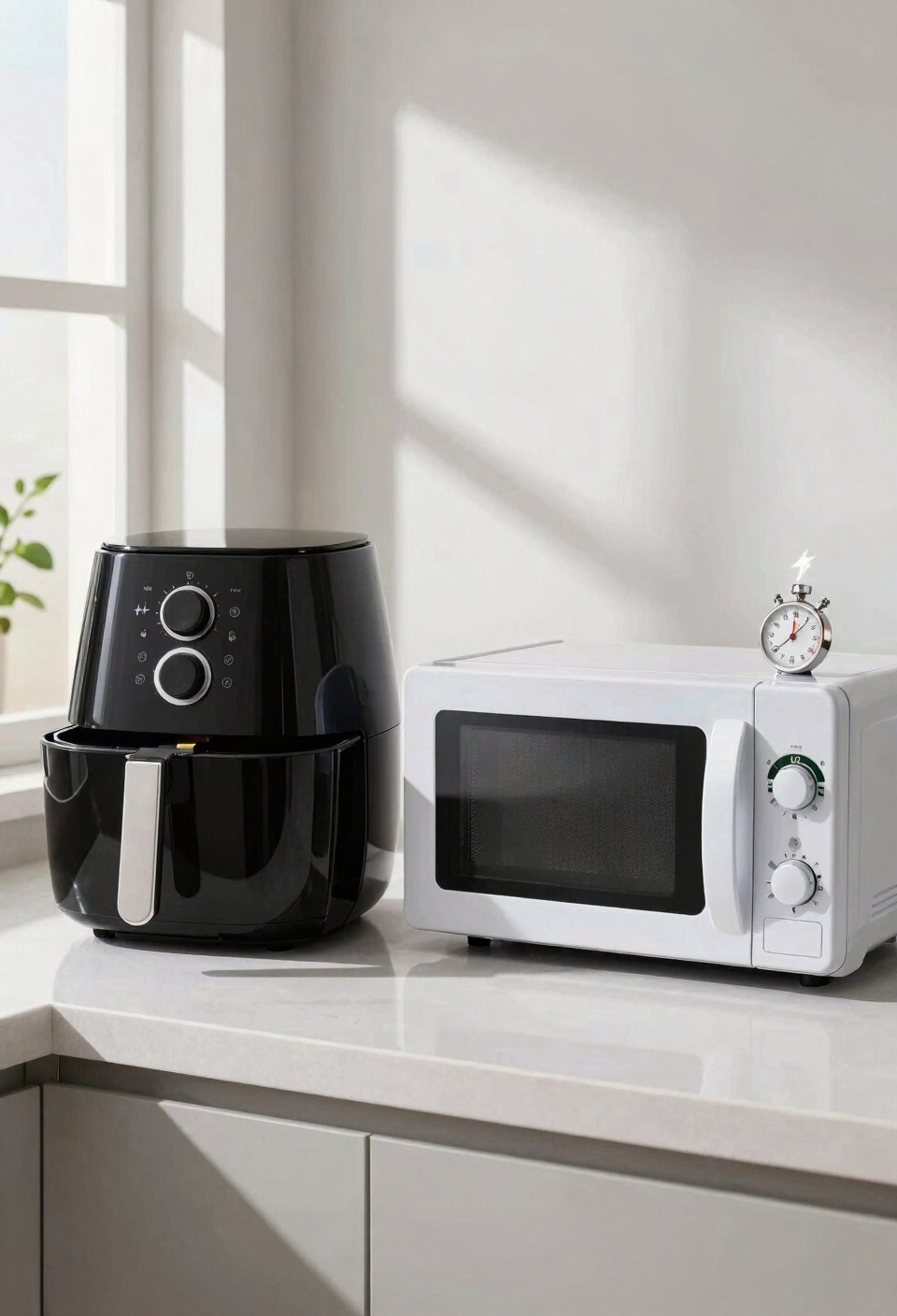
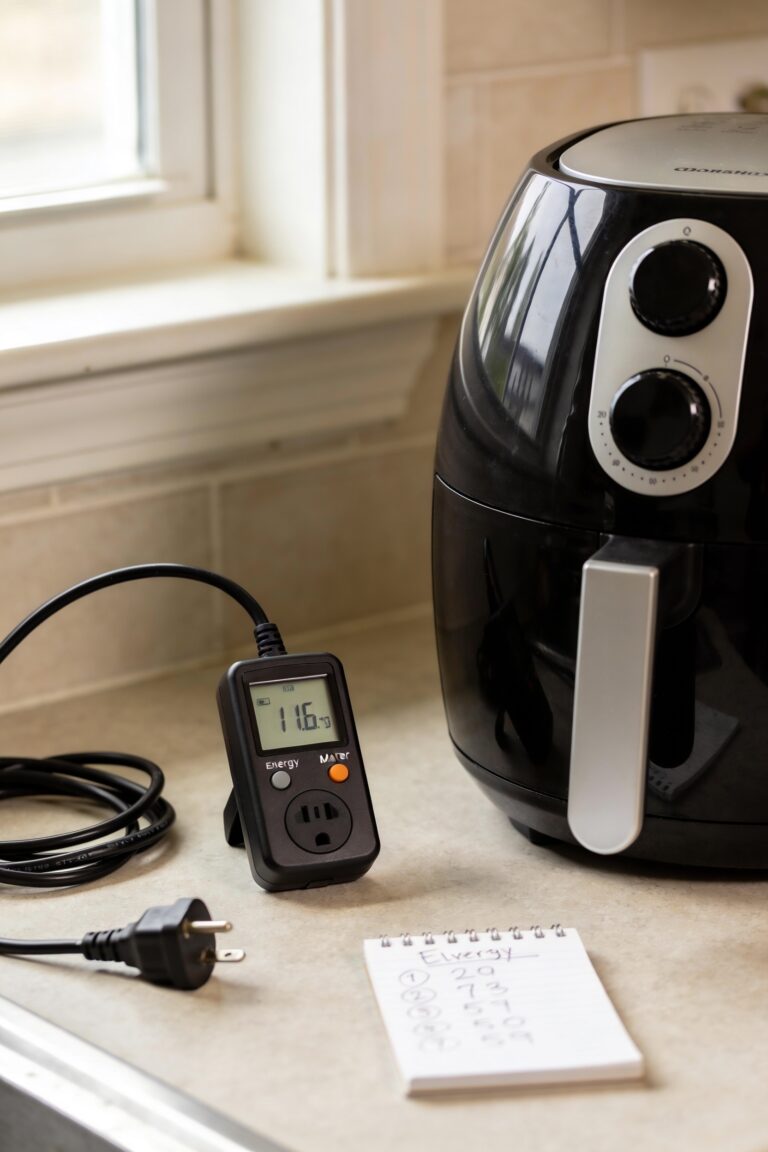
When you’re standing in front of your kitchen trying to decide what to use, you’re really making a choice between two different kinds of costs. Microwaves win on energy efficiency—they use radiation to heat food fast without preheating, which keeps your wattage economics lean. Air fryers? They demand more power upfront because of those heating elements and fans running constantly. But here’s where runtime tradeoffs get interesting. Yes, microwaves reheat leftovers quicker and cheaper. Yet air fryers cook fresh foods faster than you’d expect, and that speed matters when you’re hungry. The real question isn’t which saves money overall—it’s what you’re actually cooking and whether you value your time or your electric bill more.
Temperature: The Hidden Game Changer
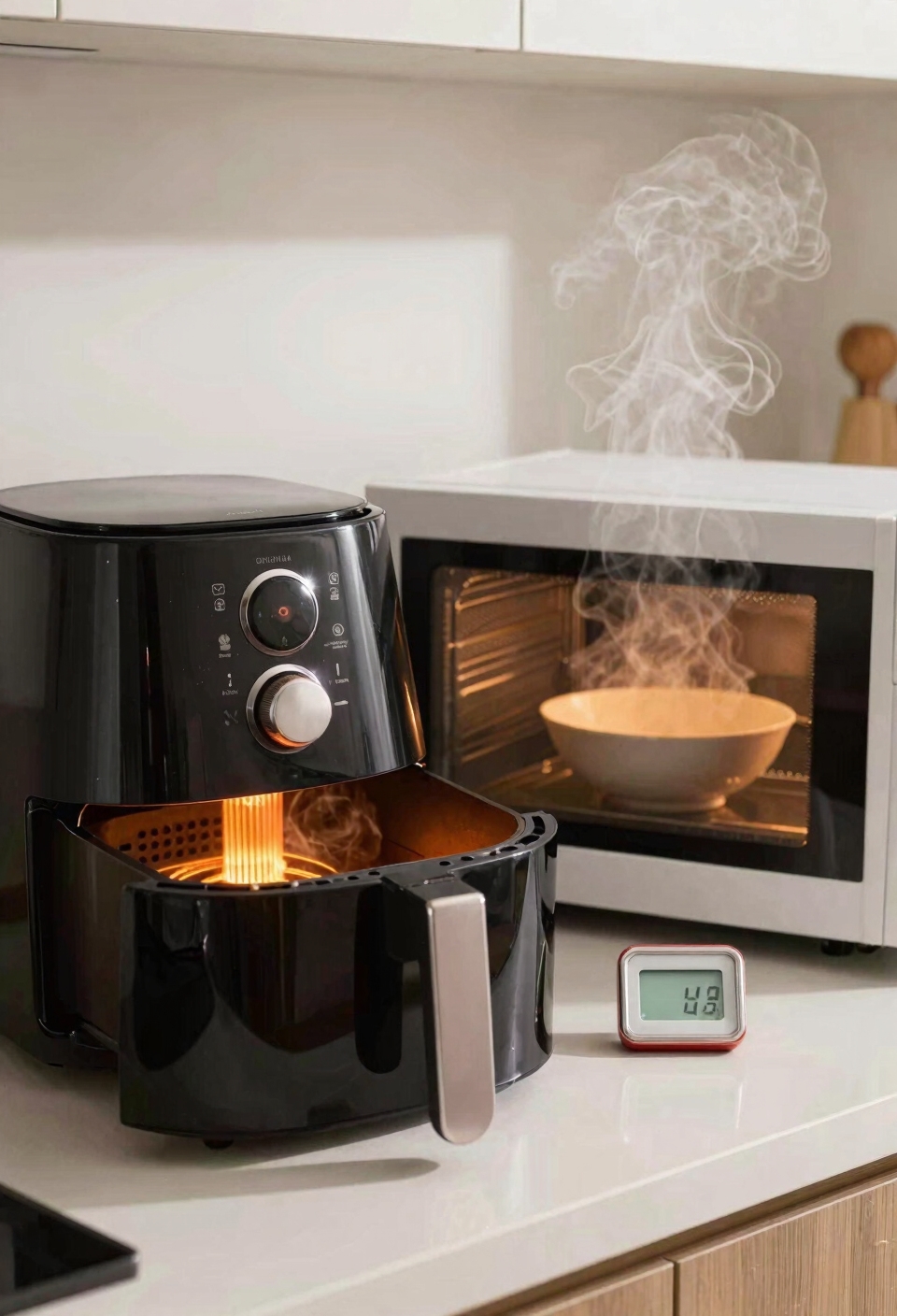
If microwaves max out around 212°F, they’re basically just boiling your food with invisible heat. Now, here’s where air fryers pull ahead: they reach 400°F, which means real browning happens. That temperature control matters because it creates those crispy exteriors you actually want.
Look, thermal gradients are your secret weapon. Air fryers build heat around food from all angles, creating texture layers. Microwaves can’t do this—they just warm things uniformly from the inside out. Your chicken comes out rubbery instead of golden.
All right, the practical takeaway? If you need crispy or caramelized, you need those higher temperatures. Microwaves excel at reheating leftovers, not transforming food. Temperature isn’t just a number—it’s the difference between “meh” and actually delicious.
Best Air Fryer Foods: What Crisps Best
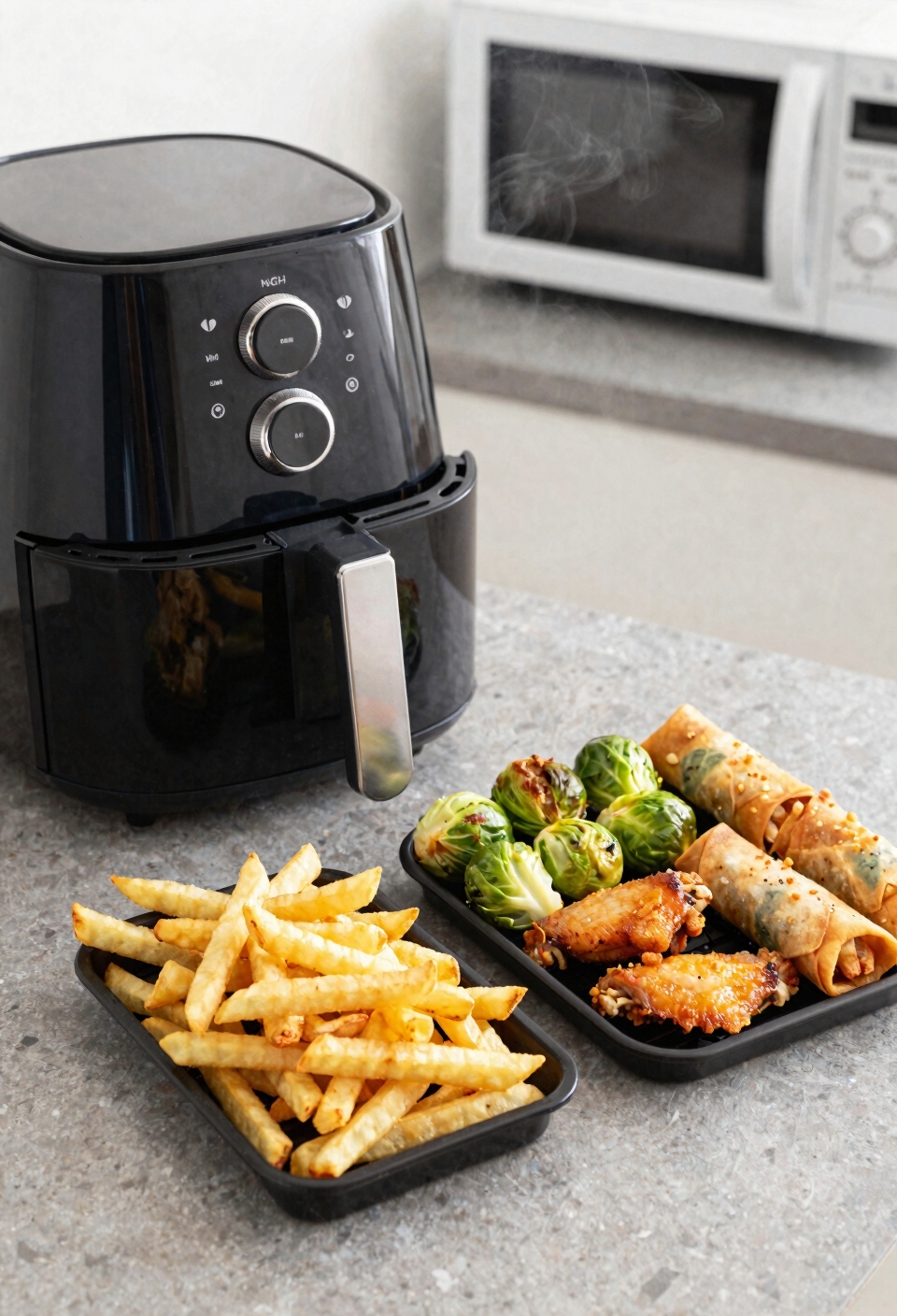
Now that you understand why temperature matters, let’s talk about what actually belongs in your air fryer basket. Vegetables like Brussels sprouts and broccoli transform into crispy, caramelized perfection. Chicken thighs get that golden, fried-like exterior you’re craving. Frozen fries? Obviously your air fryer’s best friend. Seasonal produce shines here—think roasted asparagus in spring or zucchini chips in summer. Delicate pastries surprise people; your air fryer handles them beautifully without the oil splatter. Honestly, if it’d be good fried traditionally, your air fryer can probably nail it. The key’s finding foods that benefit from that high heat and crispy finish. Soft, wet things? Save those for the microwave.
Best Microwave Foods: What Heats Fastest
While your air fryer turns everything golden and crispy, your microwave does something totally different—and honestly, that’s exactly why you need both. Look, microwaves are speed demons when it comes to heating. They excel at reheating beverages without any fuss—your coffee’s hot in seconds, not minutes. Frozen vegetables thaw and warm up faster than you’d think possible. High-water-content foods like soups, sauces, and leftovers heat evenly throughout. Popcorn pops reliably, and frozen meals become dinner-ready lickety-split. Your microwave doesn’t care about crisping—it’s all about convenience and rapid heating. When you’re hungry now, not eventually, the microwave’s your best friend. It’s not fancy, but it’s genuinely efficient at what it does.
Space, Budget, and Lifestyle: Your Real Decision Factors
So here’s the thing—knowing that microwaves reheat fast and air fryers crisp everything doesn’t actually solve your problem. Your real decision comes down to what fits your life. Budget planning matters: microwaves cost less upfront and use less electricity. Air fryers demand more money and energy but deliver results you’ll actually want to eat. Then there’s compact living. If your kitchen is tight, a microwave takes minimal counter space. Air fryers need real estate. Consider your household too. Solo? A microwave handles your needs perfectly. Cooking for a family most nights? An air fryer earns its spot. Honestly, I know people thriving with just one or the other. Think about what you actually cook, where you’ll actually store it, and what your wallet can handle.
Air Fryer vs. Microwave for Oil-Free Cooking
If you’re trying to cut oil from your cooking routine, you’ve probably noticed that air fryers get all the hype—and honestly, they deserve some of it. Air fryers nail oil-free frying by circulating scorching hot air that crisps food without deep dunking in oil. You get that fried crunch with a clean conscience.
Now, microwaves handle steam baking reasonably well for certain items, but they won’t give you that satisfying crispiness you’re after. They reheat vegetables without browning, which is fine if you’re just warming leftovers. But if you want genuinely crunchy results without oil? Air fryers are your answer. They mimic traditional frying while keeping your food healthier. That’s not hype—that’s just physics working in your favor.
Hybrid Air Fry Microwaves: Do They Deliver Both Benefits?
Look, here’s the thing about hybrid air fry microwaves—they’re trying to be the kitchen equivalent of a Swiss Army knife, and I get the appeal. You get reheating speed plus crisping power in one unit, which sounds fantastic until you’re actually using it.
Here’s where it gets real: the learning curve is steep. You’ll need to figure out which mode handles what, and hybrid maintenance requires understanding two appliances at once. Noise levels can be surprising too—that fan kicks in pretty loud during air fry cycles.
App integration sounds cool, but honestly? Most people just want a button that works. These hybrids deliver both benefits, sure, but they’re not necessarily better than mastering two separate machines.
Which Appliance (or Both) Fits Your Kitchen
Deciding between an air fryer and a microwave really comes down to how you actually cook—and honestly, what your kitchen can physically handle. Here’s the thing: microwaves don’t demand much countertop footprint, making them perfect if you’re working with limited space. Air fryers? They’re bulkier. Now, if you’ve got room and you genuinely reheat leftovers daily while also craving crispy roasted vegetables, a hybrid model might solve your problem. But I’ll be straight with you—if your kitchen has strong aesthetic cohesion going, cramming both appliances in can feel cluttered. Think about your actual cooking habits first. Do you mostly defrost and reheat? Microwave wins. Love fried-like textures? Air fryer’s your answer. Budget constraints? Start with the microwave.
Frequently Asked Questions
Can I Use My Air Fryer and Microwave Together for Faster Meal Preparation?
Yes, I’d combine them strategically. I’d use batch cooking with staggered timing—microwave reheats sides while I air fry your main dish. This approach lets me prep multiple components simultaneously, cutting your overall cooking time substantially.
How Long Do Air Fryers and Microwaves Typically Last Before Needing Replacement?
I’d say air fryers typically last 3-5 years, while microwaves often reach 7-10 years. Your lifespan expectations depend on usage frequency and warranty considerations—most come with 1-3 year coverage protecting against defects.
Are There Specific Foods That Shouldn’t Be Cooked in Either Appliance?
I’d say—like a Victorian telegram—that raw seafood and delicate pastries shouldn’t go in either appliance. They’ll either overcook unevenly or lose their structure entirely, ruining your dish.
What’s the Noise Level Difference Between Air Fryers and Microwaves During Operation?
Air fryers generate louder fan noise during operation, reaching higher operation decibels than microwaves’ ambient hum. You’ll notice the fryer’s audible vibration and continuous circulation sound, whereas microwaves operate much more quietly overall.
Do Air Fryers and Microwaves Require Different Types of Cookware or Containers?
Yes, they’re quite different. I’d picture metal baskets gleaming in air fryers versus microwave-safe glassware. Air fryers need oven-safe, nonstick coatings for best results, while microwaves require specific microwave-safe containers to prevent damage.
Conclusion
your kitchen isn’t a either-or battleground. I’ve learned that microwaves are sprinters—they reheat leftovers like lightning. Air fryers? They’re the sculptors, transforming ordinary food into crispy masterpieces. Think of them as different tools in your culinary toolbox. You don’t need both, but you’ll use whichever you choose constantly. Pick based on what you actually eat, not what sounds impressive.