As an Amazon Associate, we earn from qualifying purchases. Some links on this site are affiliate links at no extra cost to you. Our recommendations are based on thorough research and editorial judgment.

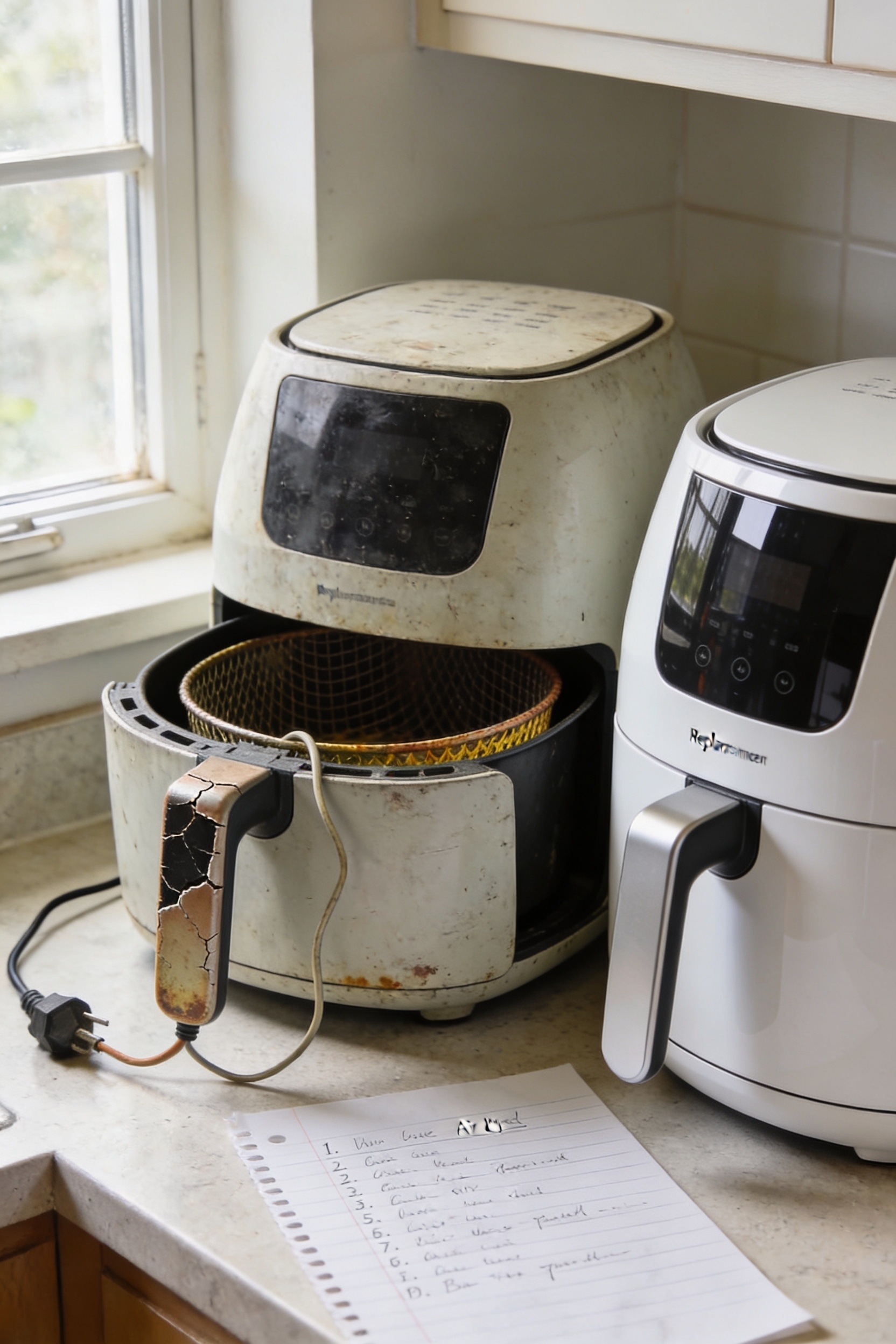
When Should You Replace Your Air Fryer?

Replace your air fryer when it stops performing like it used to—chicken taking twice as long, uneven browning, or a compromised non-stick coating. Mechanical failures like sparking or unresponsive controls mean stop using it immediately. Heavy daily use can slash lifespan from five years to two or three. Before you decide between repair and replacement, compare costs; sometimes a new unit makes more financial sense. The right timing depends on your usage patterns and what you’re willing to tolerate in the kitchen.
Key Takeaways
- Replace your air fryer when heating elements degrade, causing significantly longer cook times and uneven browning results.
- Peeling or chipping non-stick coating poses health risks and compromises cooking performance; replacement is safer than repair.
- Stop using immediately if you notice arcing, sparks, smoking, or control failures—these are fire hazards requiring replacement.
- Heavy daily use reduces lifespan to 2–3 years; regular cleaning after each use helps extend operational life.
- Compare repair costs ($75–$150+) against replacement prices ($80–$200); warranty coverage may make repair the better financial choice.
Declining Performance: Why Your Air Fryer Needs Replacement
When your air fryer starts taking twice as long to cook your chicken wings, you’ve got a problem—and I’m not talking about dinner being late. This is when heating degradation kicks in, and honestly, it’s a telltale sign your appliance is aging out. Look, reduced airflow combined with worn heating elements means your food’s not getting that crispy exterior you’re craving. Instead, you’re stuck with unevenly browned results and inconsistent textures. The efficiency just isn’t there anymore. I’ve been there—watching food take forever while wondering if I should’ve just used the oven. When performance drops noticeably, your air fryer’s telling you it’s time to move on.
Non-Stick Coating Damage: Why This Means Replacement, Not Repair
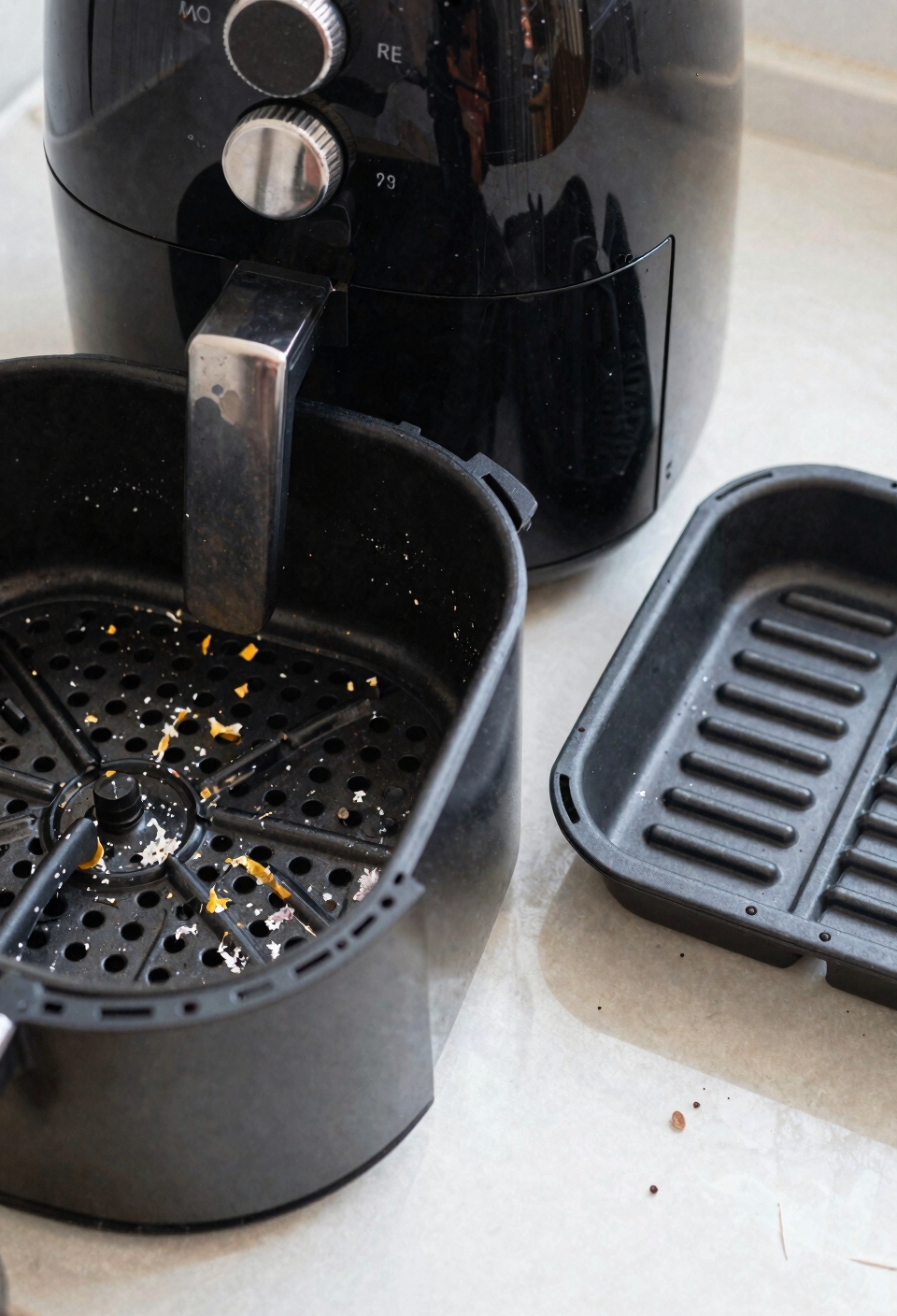
If you’ve noticed your air fryer’s non-stick coating starting to peel or chip away, I’ve got some bad news—this isn’t a fix-it situation. Once that coating deteriorates, you’re looking at toxic ingestion risks from plastic particles mixing into your food. That’s a hard no from me.
The cosmetic deterioration you’re seeing signals irreversible damage. You can’t patch it up or refinish it properly at home. Worse, the lost non-stick properties mean burnt residue builds up faster, making cleanup a nightmare and compromising your cooking results.
Here’s the thing: continued use exposes you to health hazards that repair simply won’t solve. Your best move? Replace the unit entirely. Consider upgrading to stainless steel or ceramic models for safer, longer-lasting performance.
Mechanical Failures: When to Replace Your Air Fryer Immediately
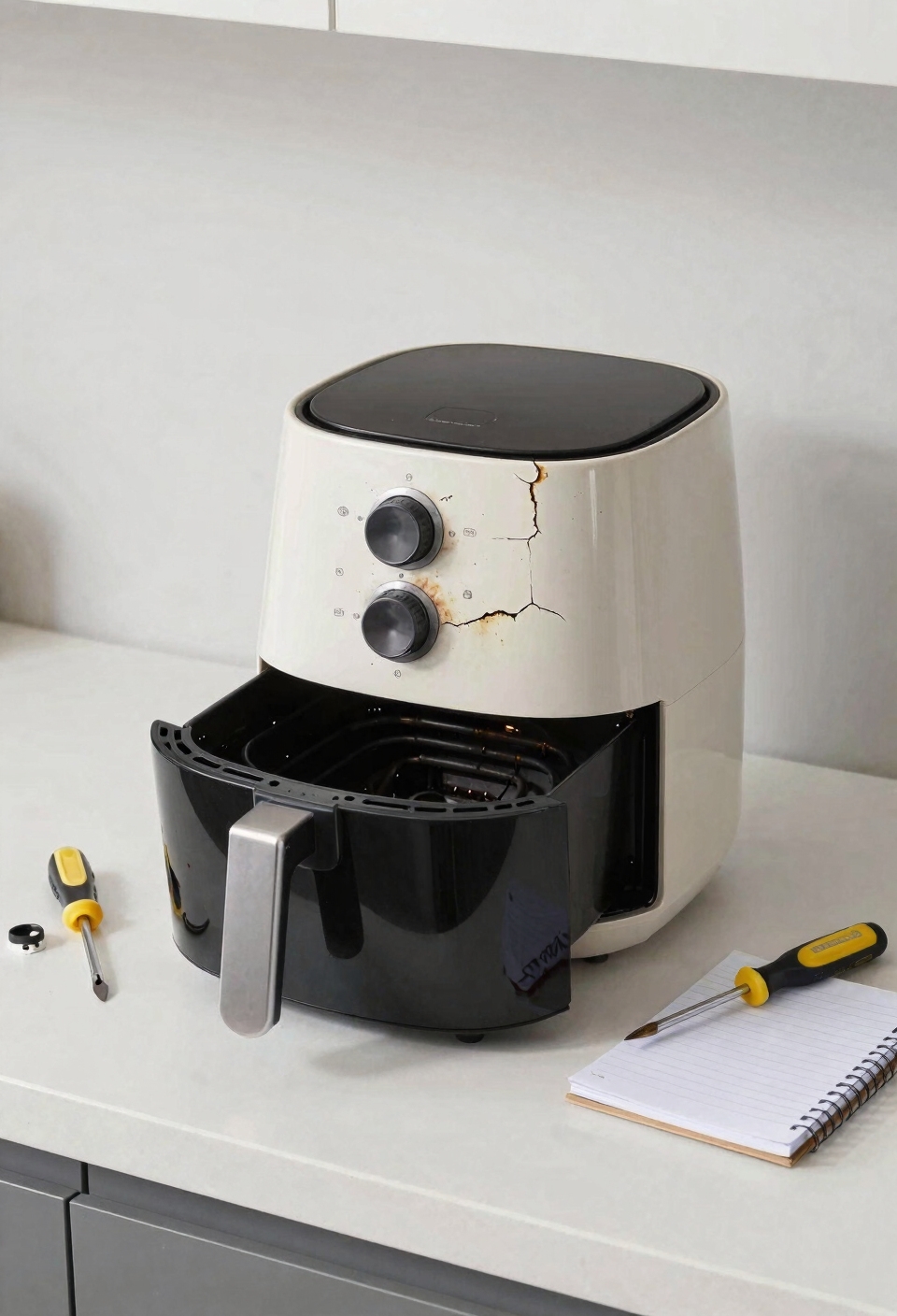
Mechanical failures are where I draw the line between “worth fixing” and “time for a new one.” Beyond the non-stick coating issues we just talked about, your air fryer can develop problems that demand immediate replacement—not a trip to the repair shop.
Look, if you’re experiencing sudden arcing inside the unit or sparks flying around, stop using it immediately. That’s a fire hazard, full stop. Control failure is another dealbreaker—when your buttons won’t respond or the display goes dark, you’ve lost the ability to cook safely. Strange noises, visible rusting, or smoking are your red flags too. These aren’t fixable quirks. They’re your air fryer waving the white flag. Sometimes replacement beats repair costs anyway.
Heavy Daily Use Cuts Lifespan in Half: Understanding Your Usage Impact

Your air fryer’s lifespan depends heavily on how hard you work it, and honestly, this is where a lot of people get blindsided. If you’re using it three to four times weekly, you’re looking at a solid three to five years. But here’s the thing—your usage patterns matter enormously. Heavy daily use for every meal? That cuts your lifespan nearly in half, down to just two or three years. Your meal frequency directly impacts how fast those heating elements degrade and how quickly the fan loses efficiency. I know it sounds harsh, but that’s the trade-off when you’re relying on your air fryer constantly. Higher-quality models hold up better under this stress, but even premium units struggle with relentless daily demands. Plan accordingly.
Quality and Maintenance: How They Determine Air Fryer Replacement Timing

While heavy daily use accelerates wear and tear, here’s the real plot twist: quality and maintenance can literally double or triple your air fryer’s lifespan. I’ve noticed that investing in higher-end models with solid material sourcing means you’re getting components built to last. Warranty comparisons matter too—they’re basically manufacturers betting on durability. Now, here’s the thing: even the best air fryer won’t survive neglect. Cleaning after each use prevents grease buildup that kills performance. Regular accessory checks catch problems early. Follow manufacturer instructions religiously. You’re basically choosing between spending thirty minutes monthly on maintenance or replacing your unit years sooner. That’s not dramatic—that’s just math.
Repair Costs vs. Replacement: The Financial Decision Framework
Now, here’s where things get real: the moment your air fryer starts acting up, you’re facing a choice that’s equal parts emotional and financial. I get it—you’ve grown attached to that little machine. But before you call a repair shop, do a cost comparison. Fixing heating elements or control panels often runs $75 to $150, sometimes more. A replacement might cost $80 to $200 depending on quality. Here’s the thing: check your warranty analysis too. If you’re still covered, repair might make sense. Otherwise? A new unit often wins financially, especially since older models typically aren’t worth fixing anyway. Calculate the actual numbers before deciding.
Extending Your Air Fryer’s Life: Maintenance Habits That Actually Work
I’ll be honest—the difference between an air fryer that dies after two years and one that keeps humming along for five or more often comes down to one thing: you actually cleaning it. Regular cleaning after each use prevents grease buildup that gunks up your machine and creates fire hazards. Wipe down the interior and exterior, and don’t skip the basket.
Now, here’s something most people overlook: gasket inspection. That rubber seal around your drawer? Check it monthly for cracks or peeling. A damaged gasket lets heat escape, forcing your fryer to work harder and wear out faster.
Follow your manufacturer’s instructions too. They’re not suggestions—they’re your roadmap to longevity. Proper maintenance genuinely separates the two-year disasters from the five-year workhorses. You’ve got this.
When You’ve Decided to Replace: What to Look for in Your Next Model
Once you’ve accepted that your air fryer’s days are numbered, don’t just grab whatever’s on sale at the big box store. Think about what actually matters to you. Do you need compact capacity because your kitchen’s tight on space? Or would smart features like app control and preset programs genuinely make your life easier? Honestly, smart features sound cooler than they are. But compact capacity? That’s worth considering if you’re cramped. Look at wattage and heating speed too. Higher quality models from trusted brands cost more upfront, but they’ll last those magical 5-8 years instead of burning out in two. Your next fryer’s your chance to get it right.
Frequently Asked Questions
Can I Still Use My Air Fryer if the Non-Stick Coating Is Slightly Scratched?
You can use it temporarily, but I’d monitor the damage closely. As scratches deepen, you’re risking health hazards from coating flakes. I’d consider switching to stainless steel or ceramic alternatives for safety.
How Do I Know if My Air Fryer’s Heating Element Is Actually Failing?
Your air fryer’s heating element is like a dimming lightbulb when it’s failing. You’ll notice uneven cooking, longer cooking times, strange odors during operation, and increased energy use—all telltale signs I’d investigate immediately.
What’s the Average Cost to Repair an Air Fryer Versus Buying New?
I’d say repair costs typically run $50–$150, while new models start around $40–$200. Since replacement pricing is often comparable to repairs, you’re usually better off buying new for warranty protection and improved efficiency.
Does Warranty Coverage Apply to Normal Wear and Tear Replacement Needs?
Like a roof that weathers storms, your air fryer’s warranty won’t shield normal wear. Most warranties exclude degradation, though prorated coverage may apply within the first year. You’ll likely shoulder replacement costs yourself.
Are Refurbished Air Fryers a Reliable Alternative to Buying Brand New Models?
I’d recommend certified refurbished air fryers as a reliable option. They’re typically restored to like-new condition and come with seller warranty coverage, offering you significant savings without sacrificing quality or performance.
Conclusion
Look, here’s the thing: most air fryers last three to five years with regular use. That’s not a lot of time, honestly. But you can stretch it out by staying on top of maintenance and not treating yours like it owes you money. When replacement time comes around, you’ll know it. Your next one will cook better anyway.