As an Amazon Associate, we earn from qualifying purchases. Some links on this site are affiliate links at no extra cost to you. Our recommendations are based on thorough research and editorial judgment.

How to Stop Your Air Fryer From Smoking

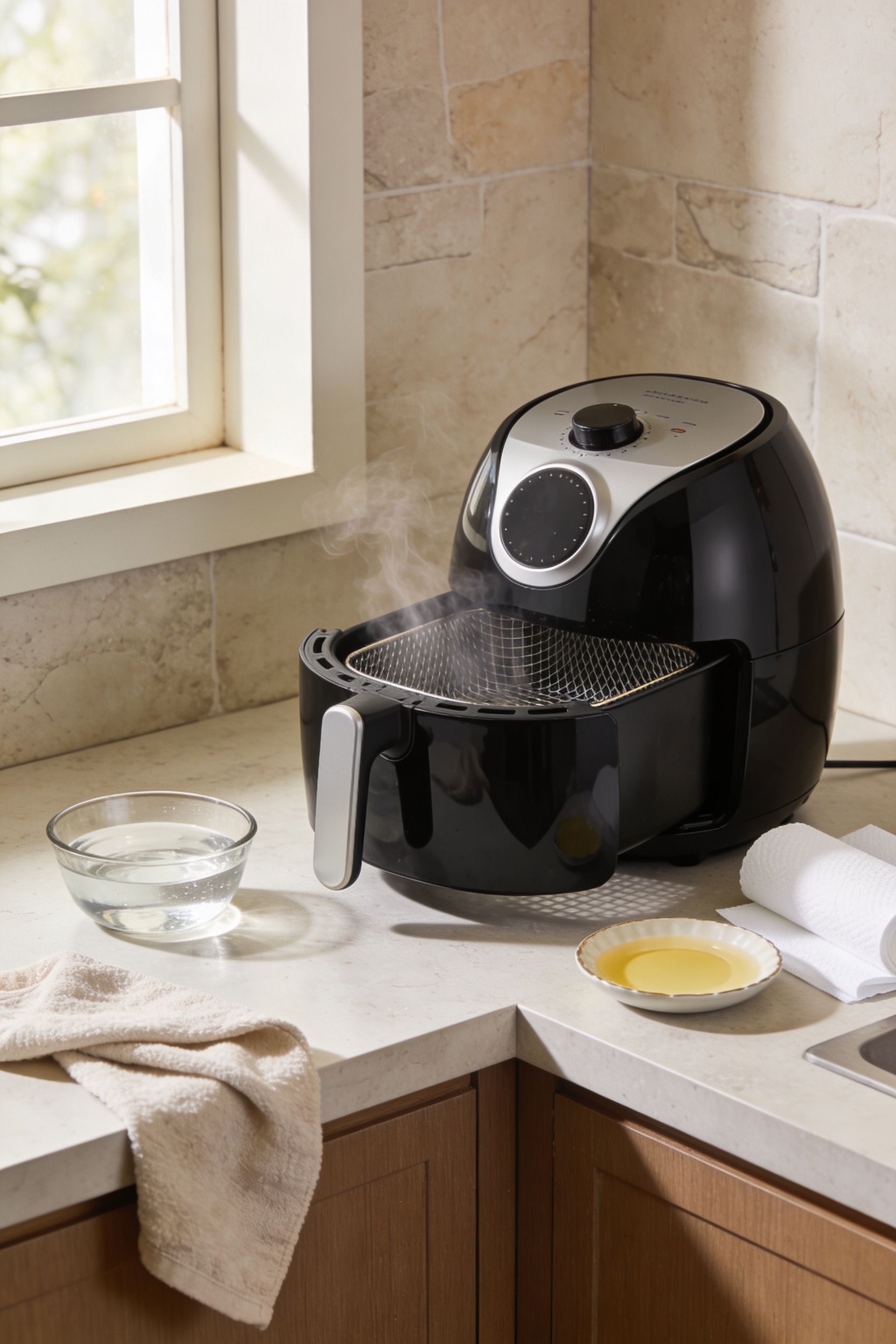
All right, here’s the thing—smoking air fryers usually mean you’re cooking too hot, using too much oil, or cramming food too close together. I’d start by lowering your temperature, switching to high-smoke-point oils like avocado, and giving your ingredients breathing room. Clean your basket regularly, line it with parchment paper, and add water to your drip pan. If you’re saucing, do it after cooking. Run your exhaust fan. Stick with leaner proteins and pat everything dry first. There’s definitely more to tackle here.
Key Takeaways
- Clean your air fryer regularly, including the heating coil and basket, to remove grease and debris that causes smoke.
- Use high-smoke-point oils like avocado or grapeseed in small amounts and lower cooking temperatures to reduce smoke production.
- Choose lean proteins and pat ingredients dry before cooking to minimize moisture and fat that generate excessive smoke.
- Line the basket with parchment paper and add water to the drip pan to catch grease before it burns.
- Avoid overcrowding the basket and always use your exhaust fan to maintain airflow and remove smoke from your kitchen.
Clean Your Air Fryer Regularly to Remove Smoke-Causing Residue
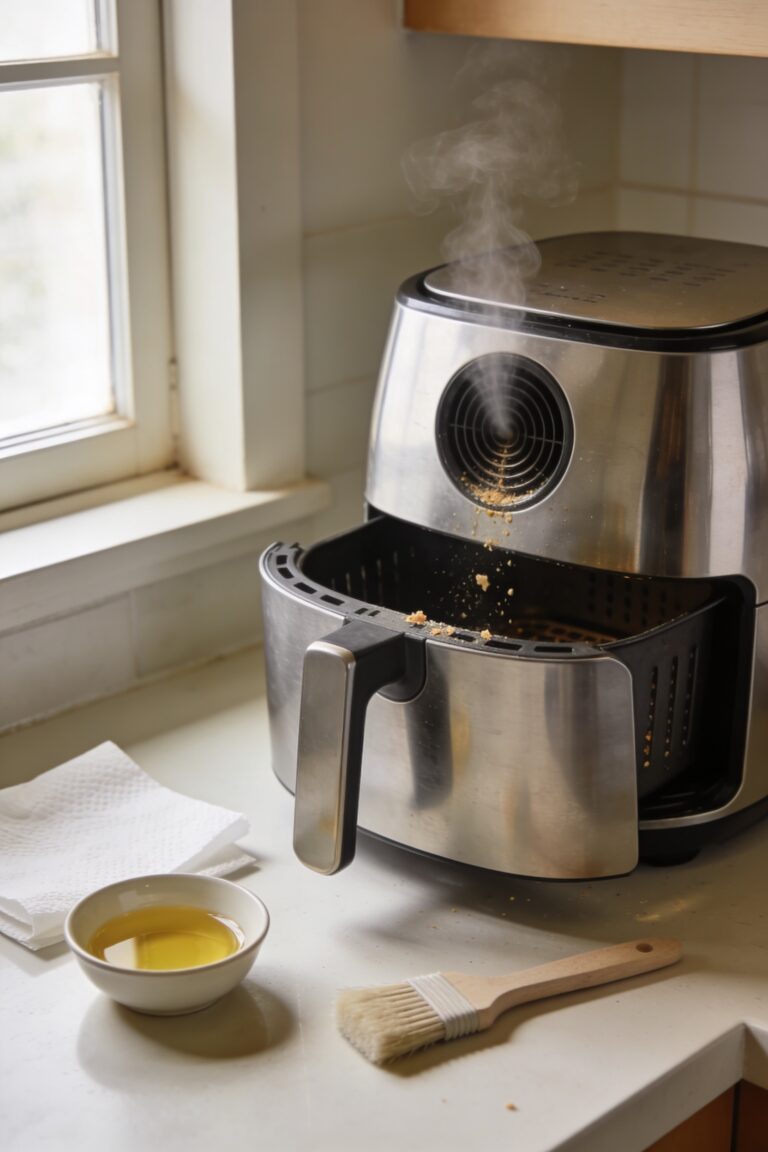
Look, I’ll be honest—I didn’t think regular cleaning mattered that much until my air fryer started looking like a tiny smoke machine. Turns out, accumulated grease and food bits burn at high temperatures, creating that nasty smoke you’re trying to avoid.
Here’s what I do now. After unplugging and letting everything cool, I wipe down the basket and trays with a soft sponge. I flip the unit over and clean the heating coil with a damp cloth—this step’s essential since debris up there really tanks performance. Don’t forget filter replacement if your model has one, and check the gasket inspection while you’re at it. A clean seal prevents smoke leakage.
Keeping that oven bottom clear of drips and crumbs? Game-changer. Takes five minutes, saves you from smoke city.
Lower Your Air Fryer’s Heat and Use High-Smoke-Point Oils
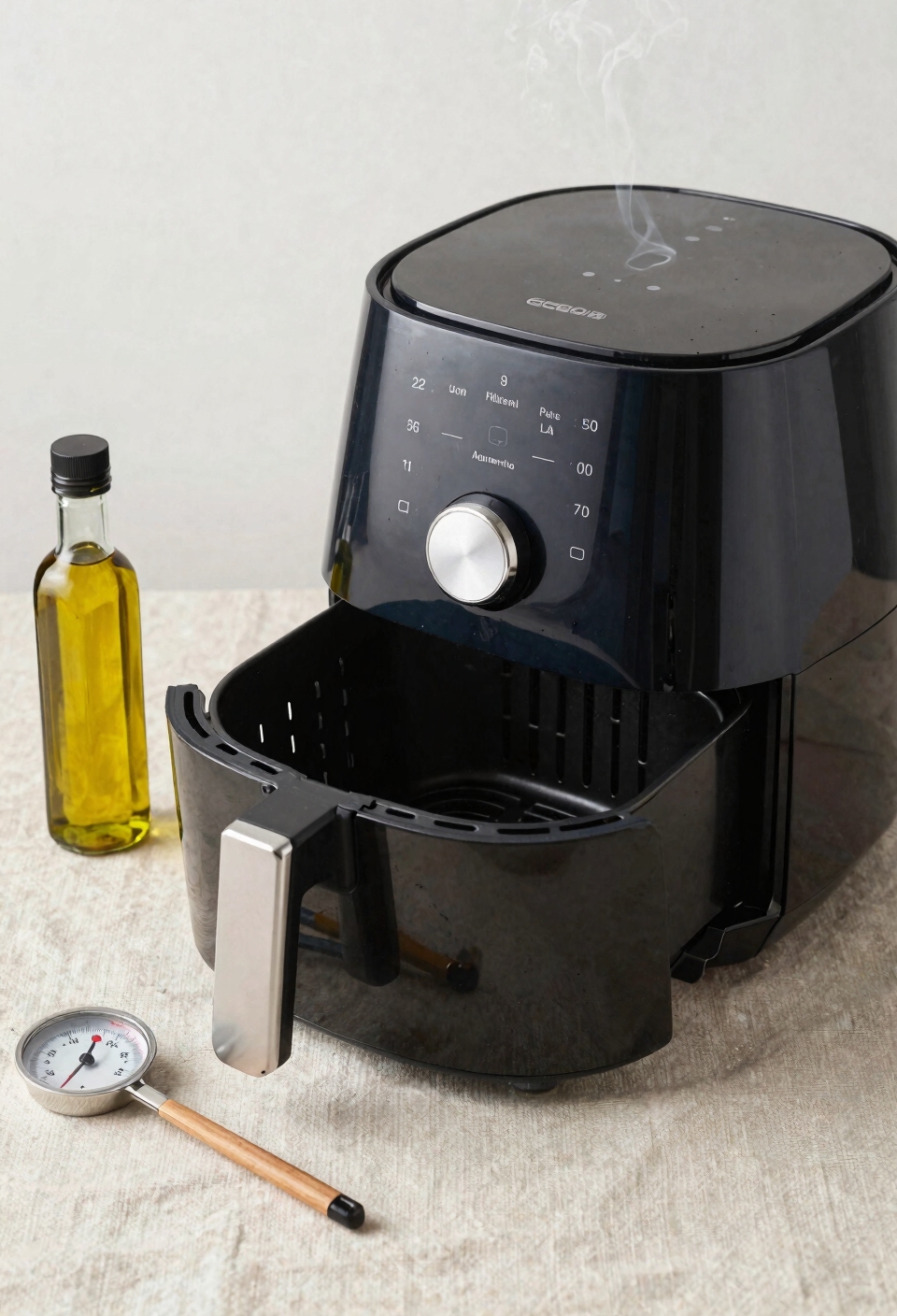
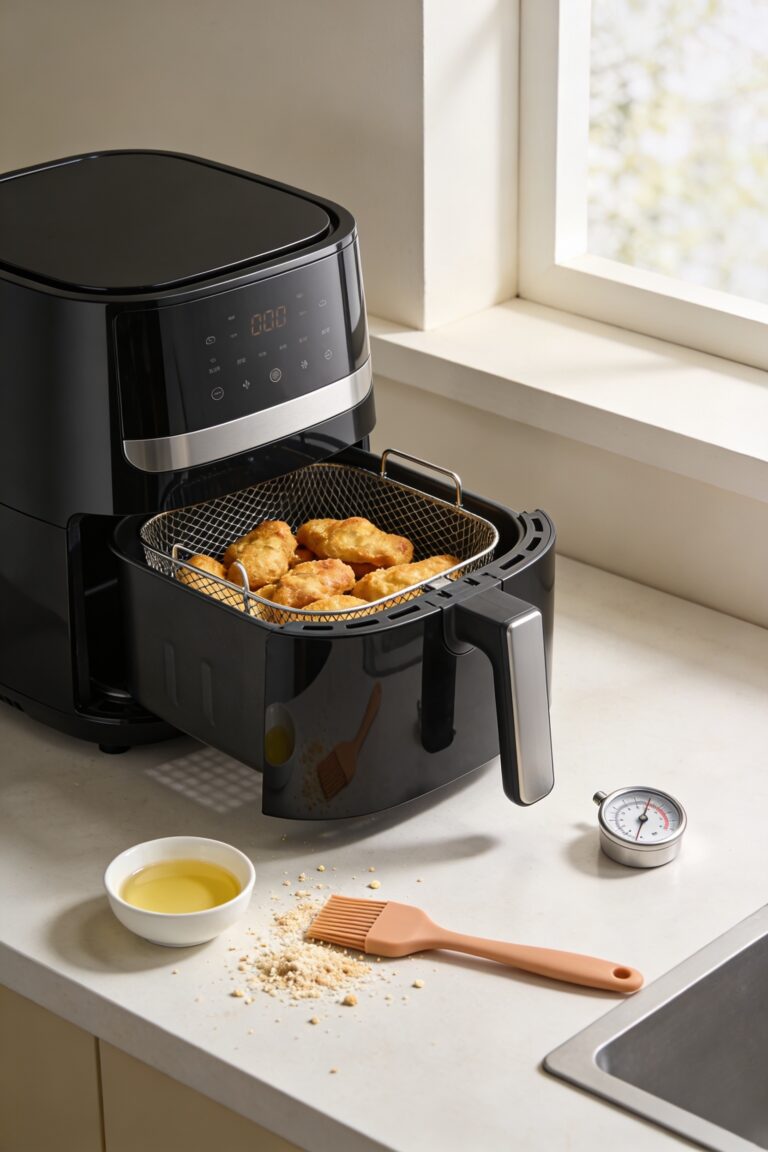
If you’ve been dumping oil into your air fryer like it’s a deep fryer, that’s your smoking culprit right there. Here’s the thing: you don’t need much oil at all. I’d suggest cutting back dramatically—we’re talking a light drizzle, not a pour.
Now, when you do use oil, choose oils with high smoke points. Avocado, grapeseed, and peanut oils handle heat without burning. Avoid nut oils; they combust way too easily.
You can also adjust temperatures downward. Lower heat means less smoke. Sure, it takes longer to cook, but that’s a fair trade. Extend your cook time as needed—your air fryer will thank you, and your kitchen won’t reek of burnt oil.
Choose Leaner Foods and Lower-Moisture Ingredients
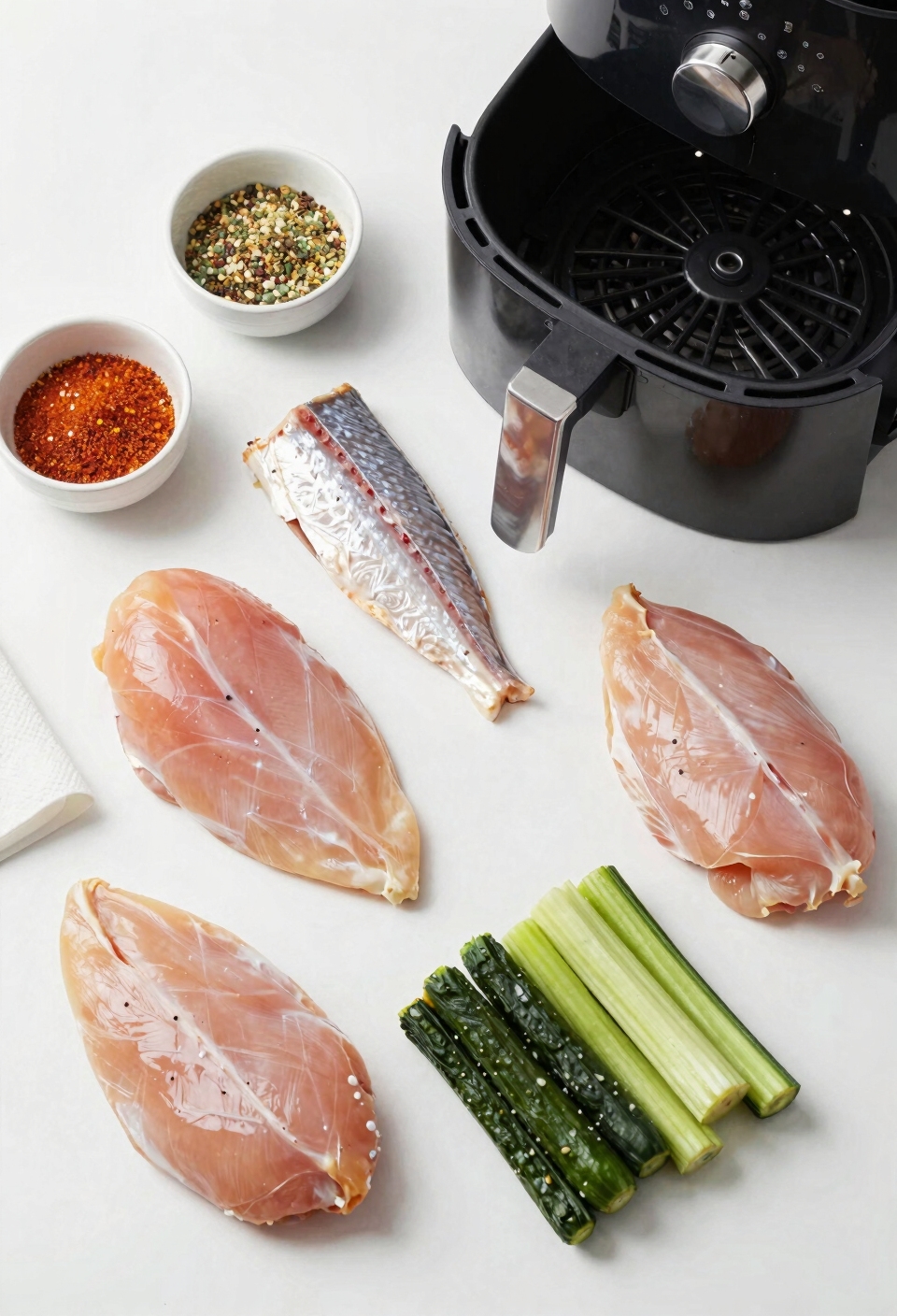
Beyond just controlling the oil and heat, what you’re cooking matters just as much. I’ve found that lean proteins like chicken breast and fish produce way less smoke than fatty cuts. The same goes for vegetables and tofu—they’re your friends here.
Now, moisture reduction is key. Wet foods release steam that can interact with hot oil and create that annoying smoke. Pat your ingredients dry before cooking. Choose lower-moisture options when you can. Think carrots over zucchini, or firm tofu instead of silken.
Look, I’m not saying you can never cook a juicy steak again. Just know that picking leaner foods and drier ingredients naturally minimizes smoking. It’s honestly the easiest adjustment you’ll make.
Line Your Basket With Parchment Paper or Bread
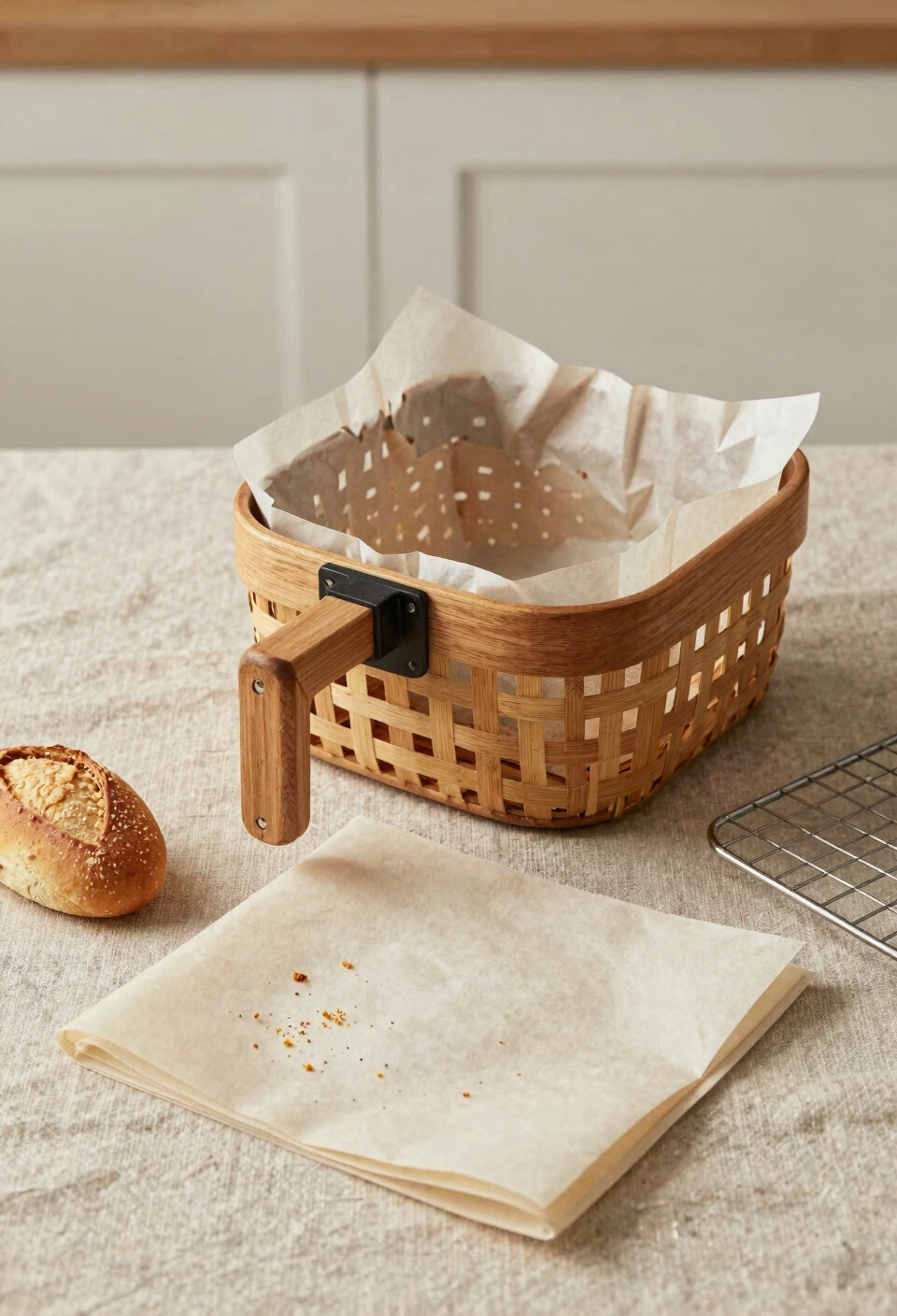
One of the simplest tricks I’ve discovered is lining your basket with parchment paper—it’s like giving your air fryer a protective shield against grease splatters and burnt-on residue. The key to proper parchment positioning is curling those edges upward so drippings stay contained instead of pooling on the heating element below.
Now, if you’re out of parchment paper, don’t stress. Bread slices work surprisingly well for bread absorption at the basket bottom. They soak up excess fat before it can burn and create smoke.
You can also layer parchment on a baking sheet positioned underneath your food tray for extra insurance. This dual-layer approach catches drips effectively and keeps your air fryer cleaner overall. It’s genuinely one of my favorite low-effort solutions.
Add Water to Your Drip Pan Before Cooking
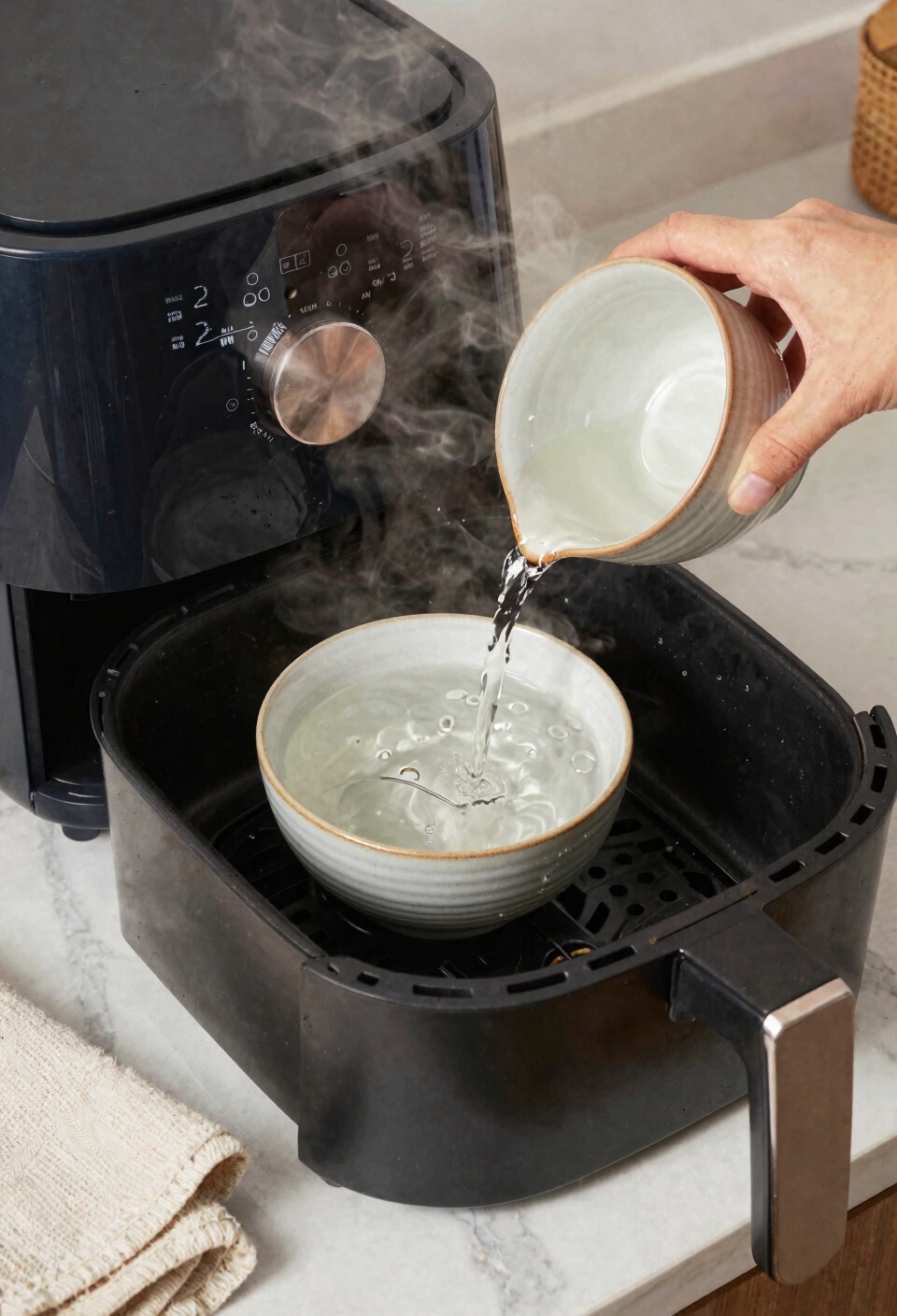
Adding water to your drip pan is honestly one of the easiest tricks I’ve found to keep smoke from ruining your meal. Here’s the thing: when grease drips onto hot surfaces, it burns and creates that awful smoke. Water cools everything down below the smoke point, which basically stops the burning before it starts.
Now, for water amount timing, I add about two to three tablespoons to my drip pan right before cooking begins. A few drops in the basket itself works too if you’re dealing with particularly greasy food. Just don’t go overboard—you’re not trying to steam your chicken. Check your air fryer’s manual first, though, since some models get touchy about liquid near heating elements.
Apply Sauces After Frying, Not Before
While water in the drip pan handles grease that’s already cooking, sauces are a whole different beast—they’re basically smoke waiting to happen. Sugar-heavy sauces like barbecue or hot honey burn fast and furious at high temperatures, creating that acrid smoke you’re trying to avoid. Here’s my move: wait to sauce until after frying. Let your food finish cooking first, then remove it and sauce separately off the heat. If you absolutely need that glaze, sauce it after, then pop it back in for a quick 30-second warm-up at lower heat. You’ll get flavor without the smoke show. It takes an extra minute, but trust me—it’s worth skipping the kitchen haze.
Avoid Overcrowding and Always Use Your Exhaust Fan
When you cram too much food into your air fryer basket, you’re basically asking for smoke—and a pretty disappointing dinner to boot. Here’s the thing: proper airflow management is absolutely essential. When food’s packed tight, hot air can’t circulate properly, which causes uneven cooking and excess moisture that turns into smoke.
Now, don’t overcrowd. Leave some breathing room between items. I know it’s tempting to maximize each batch, but trust me, it backfires.
Also, turn on your exhaust fan while cooking. Seriously. Whether it’s your range hood or countertop ventilation, get that air moving. This pulls smoke away from your kitchen before it becomes a problem. You’re basically giving your air fryer backup support. Combined with smart spacing, you’ll notice a real difference.
Frequently Asked Questions
Can I Use Parchment Paper Safely in My Air Fryer Without It Catching Fire?
Yes, I’d recommend using perforated parchment or heat-resistant liners designed for air fryers. They’re safe when you curl the edges upward to contain drippings and prevent contact with heating elements, ensuring they won’t catch fire.
What Types of Oils Have the Highest Smoke Points for Air Frying?
I’d avoid oils altogether if I wanted smoke—counterintuitively, you’ll want avocado oil or refined safflower oil instead. They’re my top picks for high smoke points, keeping your air fryer clean and smoke-free during cooking.
Is It Safe to Add Water to the Drip Pan for All Air Fryer Models?
I’d recommend checking your manual first—some models prohibit liquid near heating elements. I’ve found that manufacturer recommendations vary, so model-dependent precautions are essential before you add water to your drip pan.
How Often Should I Clean My Air Fryer’s Heating Coil to Prevent Smoking?
I’d clean your heating coil monthly—like a clogged filter weakens an engine. Regular element inspection prevents residue buildup that causes smoking. Monthly maintenance keeps your coil performing at its best and reduces fire hazards markedly.
Which Lean Proteins and Vegetables Produce the Least Smoke When Air Fried?
I’ve found that lean fish and firm tofu produce the least smoke when air fried. They’re naturally low in fat, so they don’t release excess oils. I’d also recommend broccoli, bell peppers, and zucchini—they’re moisture-rich vegetables that minimize smoke.
Conclusion
Look, here’s the thing—I’ve learned that stopping air fryer smoke isn’t really about one fix. It’s about habits. Clean regularly, respect your oil’s limits, and use that exhaust fan. Coincidentally, the steps that prevent smoking also make your food taste better. You’re not just solving a problem; you’re becoming the cook you probably wanted to be all along. That’s worth a little attention.