As an Amazon Associate, we earn from qualifying purchases. Some links on this site are affiliate links at no extra cost to you. Our recommendations are based on thorough research and editorial judgment.

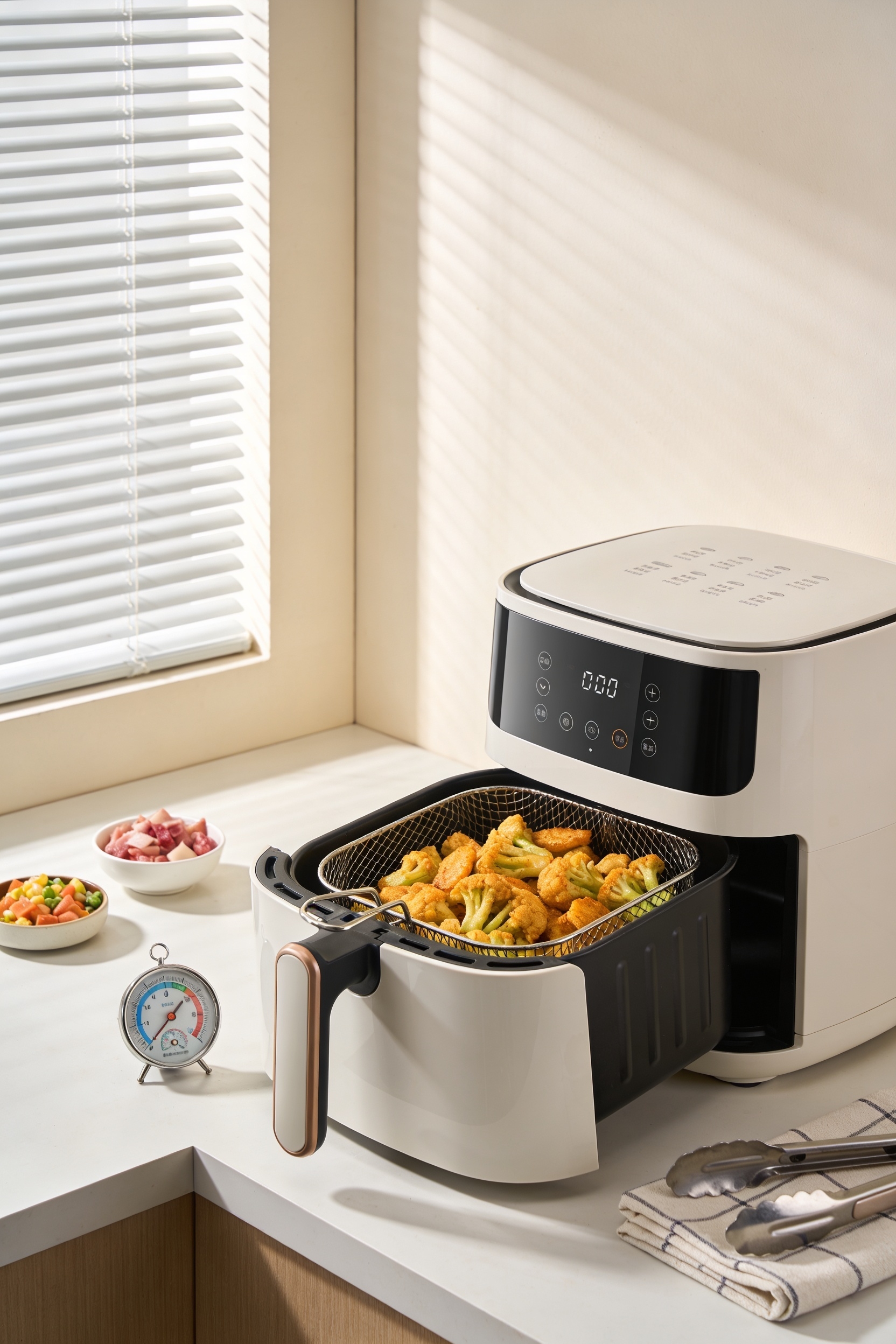
Air Fryer Food Safety: What Every User Should Know

Look, air fryers cook fast, but that speed doesn’t skip food safety rules. You’ll want to use a thermometer for meat—165°F for poultry, 145°F for most cuts—and pick one with ceramic coatings instead of PFAS-laden nonstick. Place yours on a flat, stable surface with clearance around it, never leave it unattended, and hand-wash the basket after each use. It sounds like a lot, but these basics keep your kitchen safer and your food actually edible. Stick around if you want the real details.
Key Takeaways
- Use a food thermometer to verify safe internal temperatures: poultry 165°F, ground meat 160°F, whole cuts 145°F.
- Hand-wash the basket after each use and clean coils monthly to prevent oil buildup and maintain safety.
- Choose ceramic-coated baskets without PFAS, which can leach into food at high temperatures during cooking.
- Place the air fryer on flat surfaces with 5–6 inches clearance on all sides for proper ventilation.
- Never leave the unit unattended during operation and unplug after each use to prevent fires and accidents.
Set Up Your Air Fryer on a Safe, Stable Surface
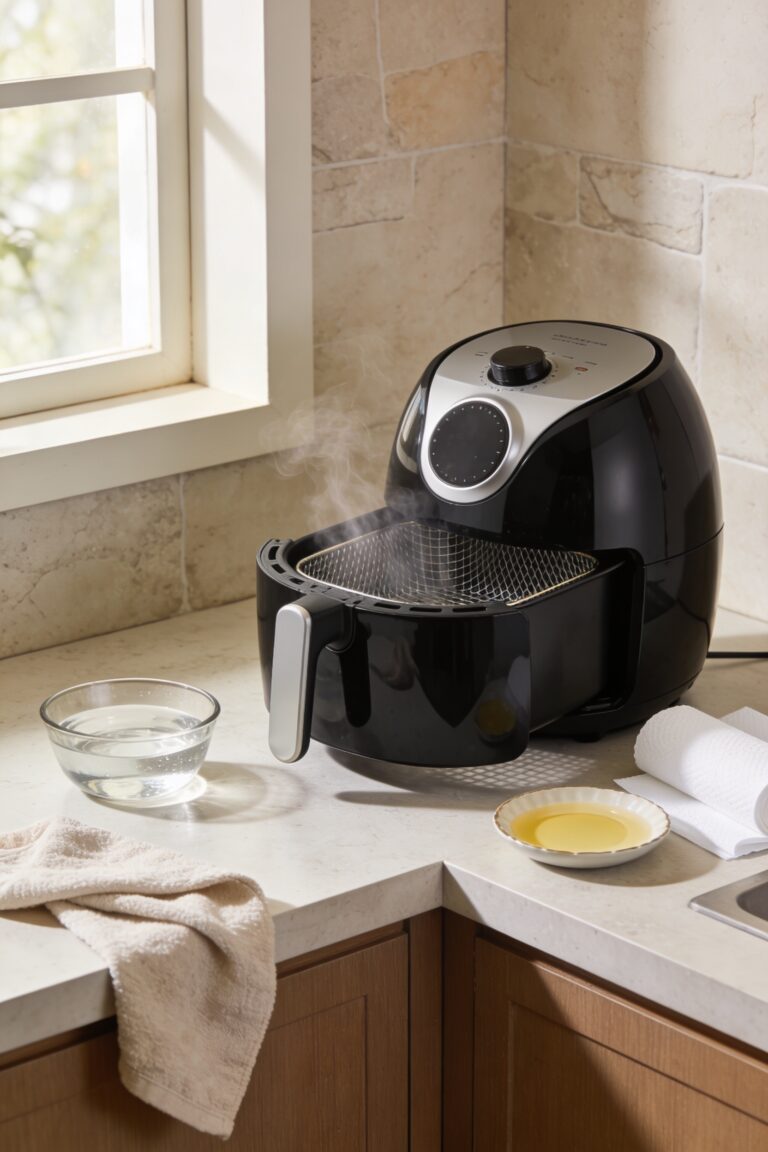
Before you plug in your air fryer, let’s talk about where it actually lives in your kitchen. You’ll want a flat, heat-resistant surface that won’t wobble or shift during cooking. All right, here’s the thing—vibration stability matters more than you’d think. A wobbly countertop means uneven cooking and potential safety issues.
Now, about clearance requirements: your air fryer needs 5 to 6 inches of breathing room on all sides. I know that sounds like a lot, but it’s real. Don’t tuck it into a corner or shove it against your backsplash. Poor ventilation causes overheating and safety hazards.
Keep it away from cabinets, curtains, and anything flammable. Place your air fryer somewhere you can access easily without reaching over it. Your future self will thank you.
Choose an Air Fryer With Safer Nonstick Coatings
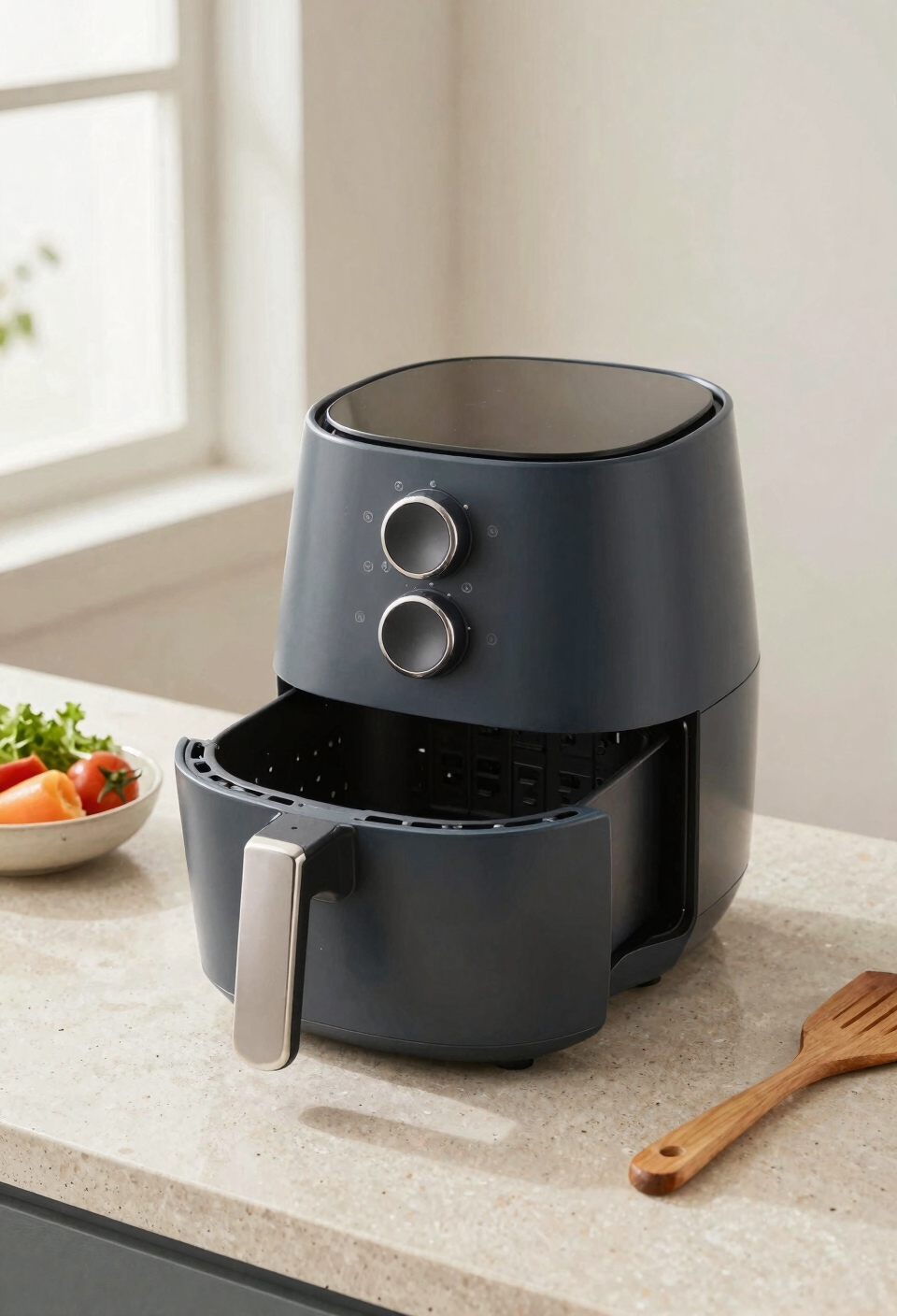
Once you’ve got your air fryer positioned safely, it’s time to think about what that basket is actually made of. Here’s the thing: many air fryers use nonstick coatings loaded with PFAS—chemicals that resist grease but can leach into your food, especially at high heat. I’d rather not take that risk, and honestly, you shouldn’t either.
Look for PFAS free options instead. Ceramic coatings are your best bet. They’re naturally nonstick, safer for your health, and they don’t require sketchy chemicals to work. Just avoid metal utensils that scratch the coating—stick with silicone or wood. Yeah, ceramic might cost more upfront, but feeding your family safer food? That’s money well spent.
Cook Meat, Poultry, and Eggs to Safe Internal Temperatures
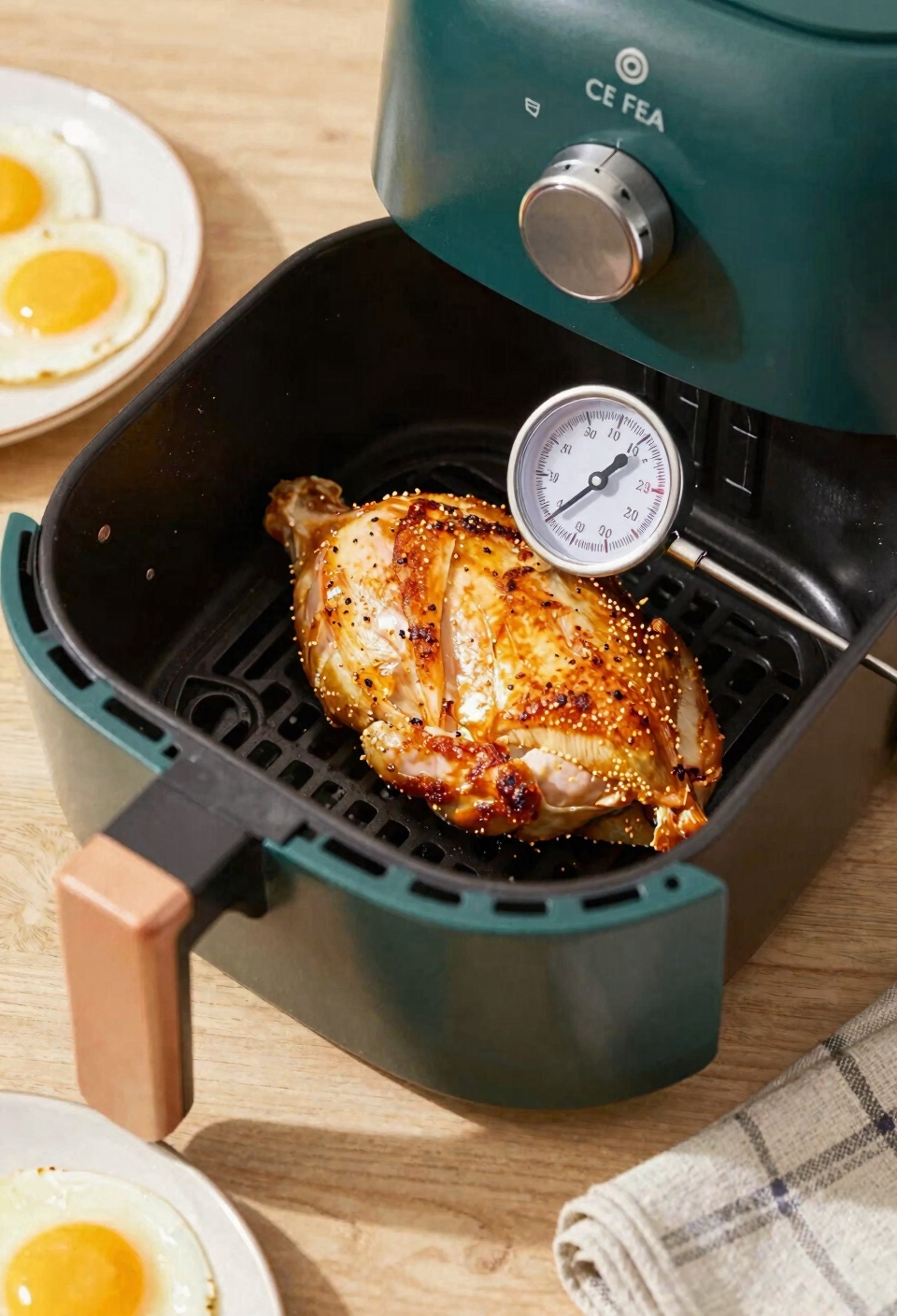
Now that you’ve got a safer air fryer basket, let’s talk about what actually goes in it—and more importantly, how to make sure it’s cooked through. Here’s the thing: undercooked meat isn’t just unappetizing; it’s genuinely dangerous. That’s why I always use a food thermometer, checking the thickest part while avoiding bone, fat, or gristle. Fish and shellfish need 145°F. Whole cuts of beef, pork, veal, or lamb hit 145°F too, then rest three minutes. Ground meats require 160°F. Poultry demands 165°F. Eggs also need 165°F. Look, safe temperatures aren’t suggestions—they’re your defense against foodborne illness. Invest in a decent thermometer. Your stomach will thank you.
Prevent Fires and Burns During Operation
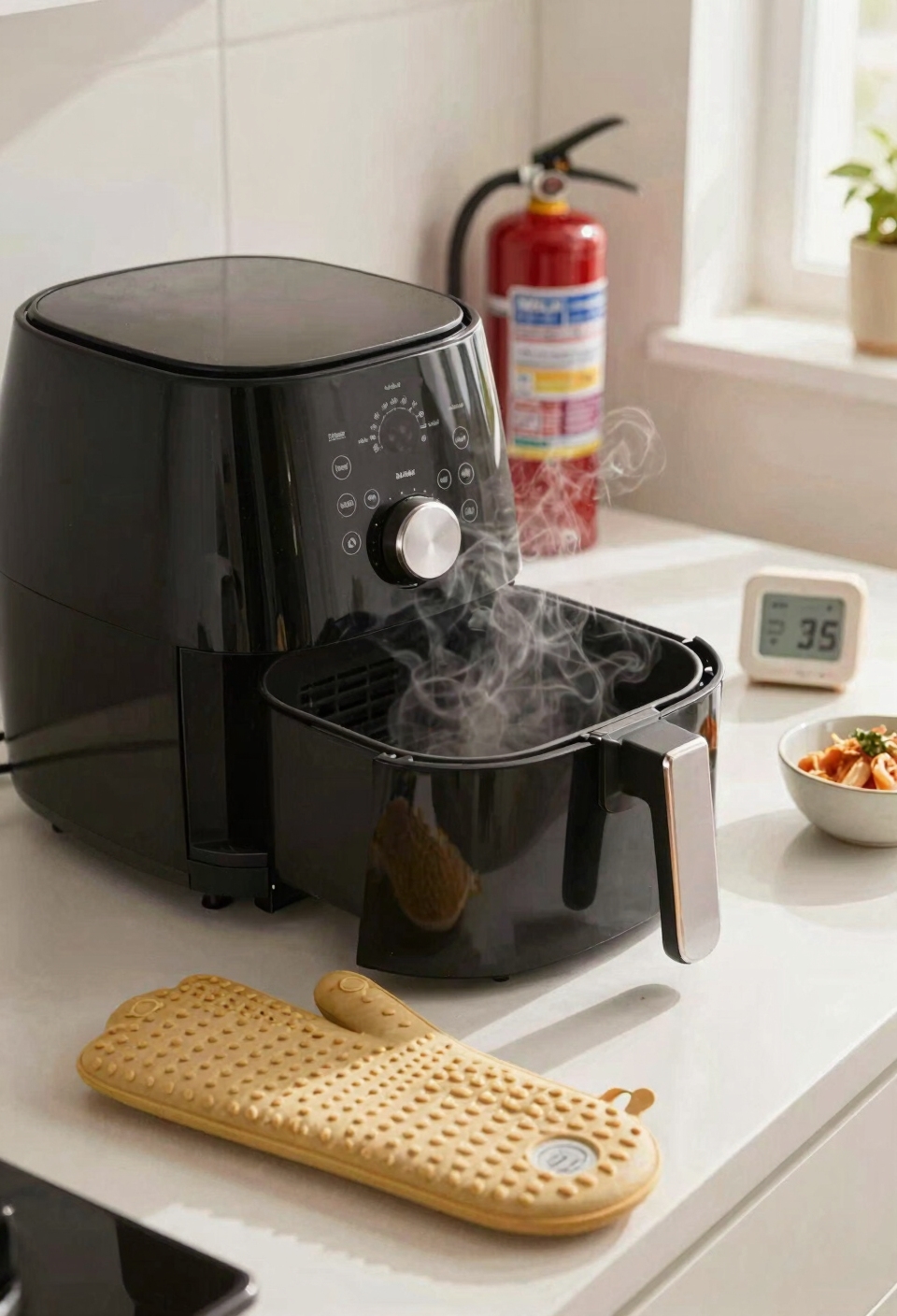
All right, so you’ve got your thermometer ready and your meat’s cooking perfectly—but here’s where things get real. Burns and fires aren’t just theoretical risks—they’re something I take seriously, and you should too.
First, keep clearance. Your air fryer needs five to six inches of space on all sides and proper ventilation. Don’t shove it against a wall or under cabinets. That’s basically asking for trouble.
Second, never leave it unattended, especially at high temperatures. I know it’s tempting to wander off, but don’t. Stay nearby.
Always wear oven mitts when handling hot components. Unplug the unit after every use to prevent accidental activation. These aren’t complicated rules—they’re just common sense that’ll keep your kitchen safe and your hands intact.
Hand-Wash, Maintain Monthly, and Check for Recalls
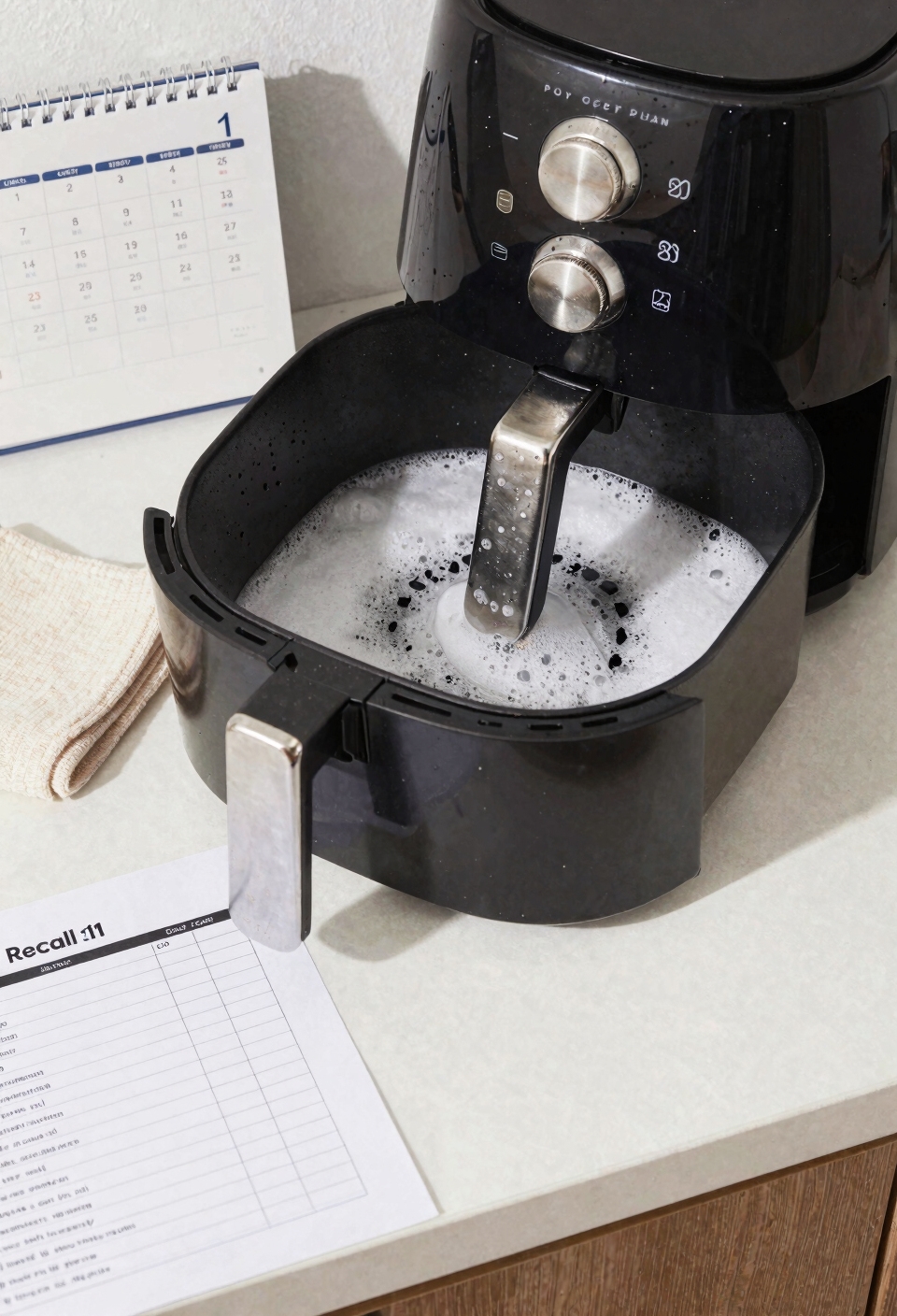
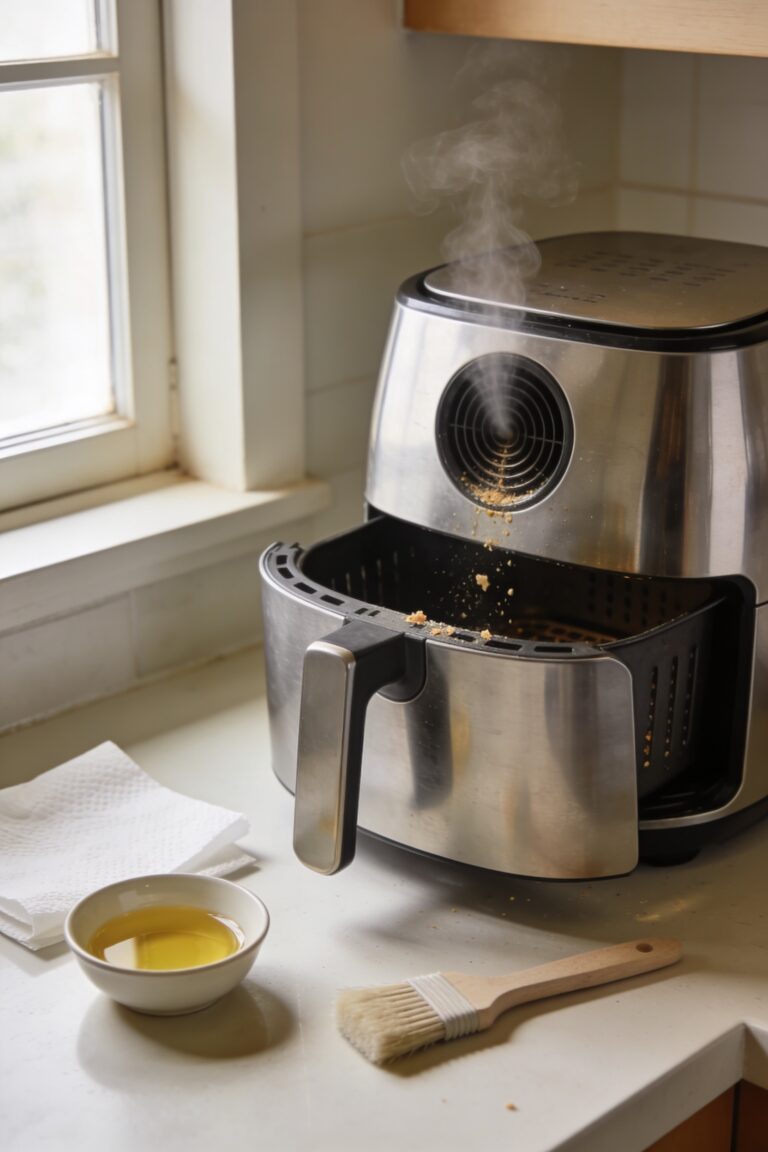
Every time you use your air fryer, you’re one step closer to either a sparkling clean machine or a grimy mess that’ll eventually underperform—and I’m guessing you’d prefer the first option. Hand-wash your basket after each use since dishwashers wear down nonstick coatings faster than you’d think. Now, here’s where most people slip up: clean those coils and basket area monthly to remove residual oil buildup. It’s tedious, but it keeps everything running smoothly. Before you buy, verify model numbers against CPSC recalls—brands like Cosori had fire and overheating issues. Look for units with UL, ETL, or CSA certifications. Replace filters if your model has them. Don’t skip this stuff; it’s the difference between safe cooking and preventable disasters.
Frequently Asked Questions
How Long Should I Wash My Hands Before Handling Raw Meat for Air Frying?
I’d recommend washing your hands for at least 20 seconds with soap and warm water before handling raw meat. Make sure you’re doing thorough lathering to eliminate bacteria effectively. This practice protects you from foodborne illness.
What’s the Correct Internal Temperature for Ground Meats in an Air Fryer?
I’d recommend reaching 160°F (71.1°C) as your safe temp for ground meats. That’s the cooking guidance you’ll want to follow every time you’re air frying ground beef, pork, or poultry to make certain they’re properly cooked.
Why Should I Avoid Aerosol Cooking Sprays in My Air Fryer?
I’d avoid aerosol sprays—they’re like poison to your air fryer’s health. They create aerosol buildup that damages your nonstick coating, releasing harmful chemicals. Instead, I’d use an oil pump or spray bottle with high-flash-point oil for safe cooking.
How Often Should I Clean the Coils and Basket Area of My Air Fryer?
I’d recommend you clean your coils and basket area monthly to prevent residual oil buildup. Regular coil maintenance keeps your air fryer functioning safely, while consistent cleaning frequency guarantees peak performance and longevity.
What Certifications Should I Look for When Purchasing a Safe Air Fryer?
Like a shield protecting you from harm, I’d recommend seeking UL certification and ETL listing when you’re shopping. These certifications guarantee your air fryer’s met strict safety standards for reliable performance.
Conclusion
Look, I’ve basically turned my air fryer into a second job, and honestly? Following these safety steps takes maybe five minutes total. You’re not gonna burn your kitchen down—I’d know by now. Hand-wash the basket, keep it on a stable surface, check those temperatures. Your air fryer’s literally a million times safer than a traditional oven when you’re paying attention. You’ve got this.