As an Amazon Associate, we earn from qualifying purchases. Some links on this site are affiliate links at no extra cost to you. Our recommendations are based on thorough research and editorial judgment.

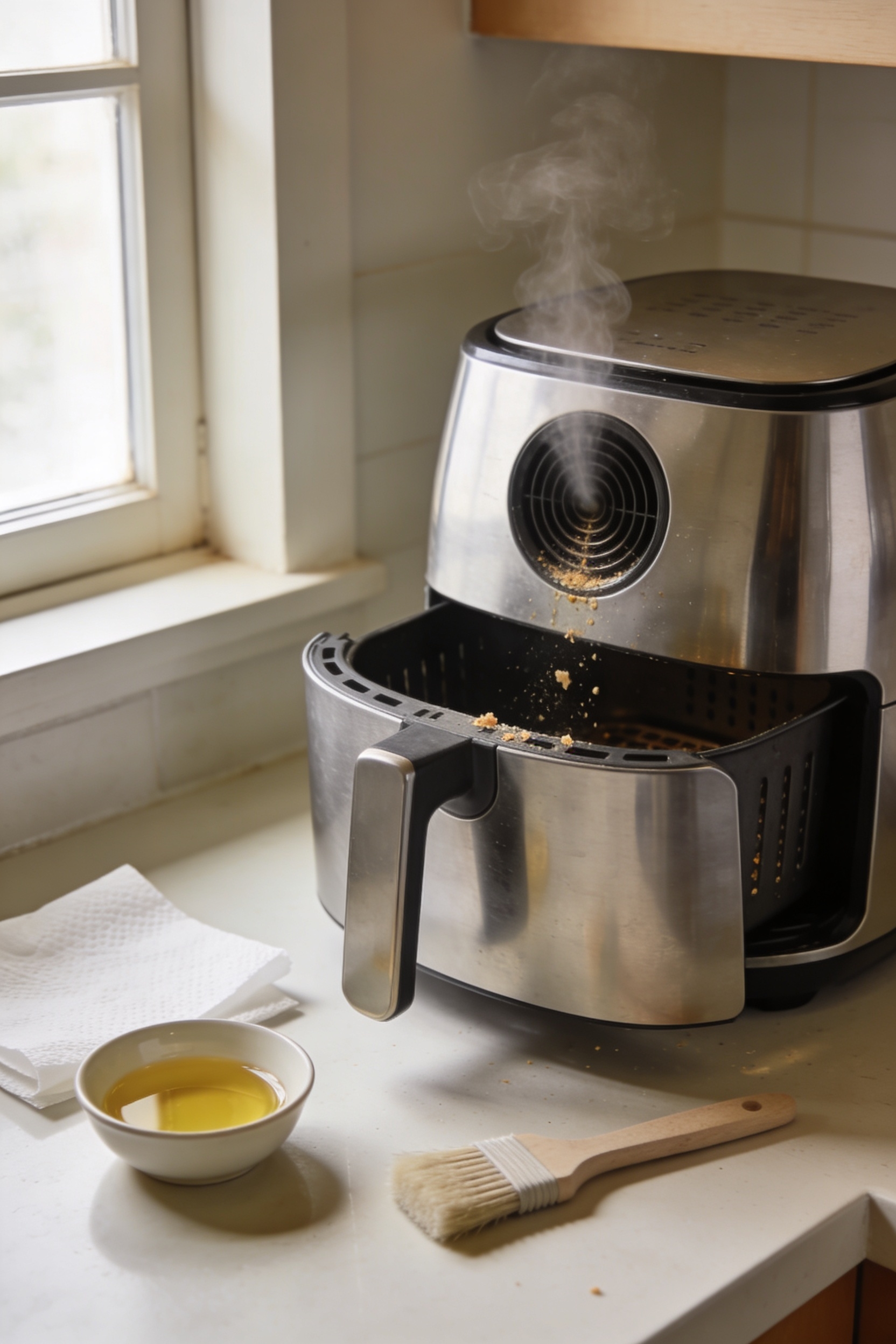
Why Is My Air Fryer Smoking? Causes and Solutions

Your air fryer’s smoking because grease is burning on the heating coil, you’re running the temperature too high, or you’ve stuffed too much food in there. All three issues are totally fixable. Start by lowering the heat by about 25 degrees, give your basket some breathing room, and wipe down that coil regularly. Stick around—I’ll walk you through exactly what’s happening and how to fix it.
Key Takeaways
- Fatty foods release grease that burns on the heating coil; use leaner proteins and catch trays to prevent smoke.
- Low smoke point oils and excessive heat cause burning; reduce temperature by 25°F and extend cook time accordingly.
- Accumulated grease and food particles on the coil trigger smoke; clean the basket and coil after each use.
- Overcrowding blocks airflow and causes uneven cooking; leave proper spacing between items for efficient heat circulation.
- Burnt smell indicates high heat scorching food, while chemical odors suggest the appliance needs deep cleaning and maintenance.
Fatty Foods and Excess Grease: The Leading Cause
Fatty foods are probably why your air fryer’s smoking. Look, when you cook high-fat meats like sausages or bacon, they release grease that builds up on your heating coil and burns. With sausage selection, I’d honestly skip the really greasy varieties—Richmond sausages, for instance, tend to trigger heavy smoking because of their fat content. The problem gets worse when that grease has nowhere to go. That’s where grease disposal matters. Make sure your air fryer basket has space underneath for fat to drip away. Better yet, use a catch tray or line your basket with parchment paper to absorb excess moisture. Your air fryer isn’t designed to handle burger-level saturated fat either. Stick with leaner proteins, and you’ll cut down on smoke markedly.
Pick the Right Oil and Keep Heat in Check
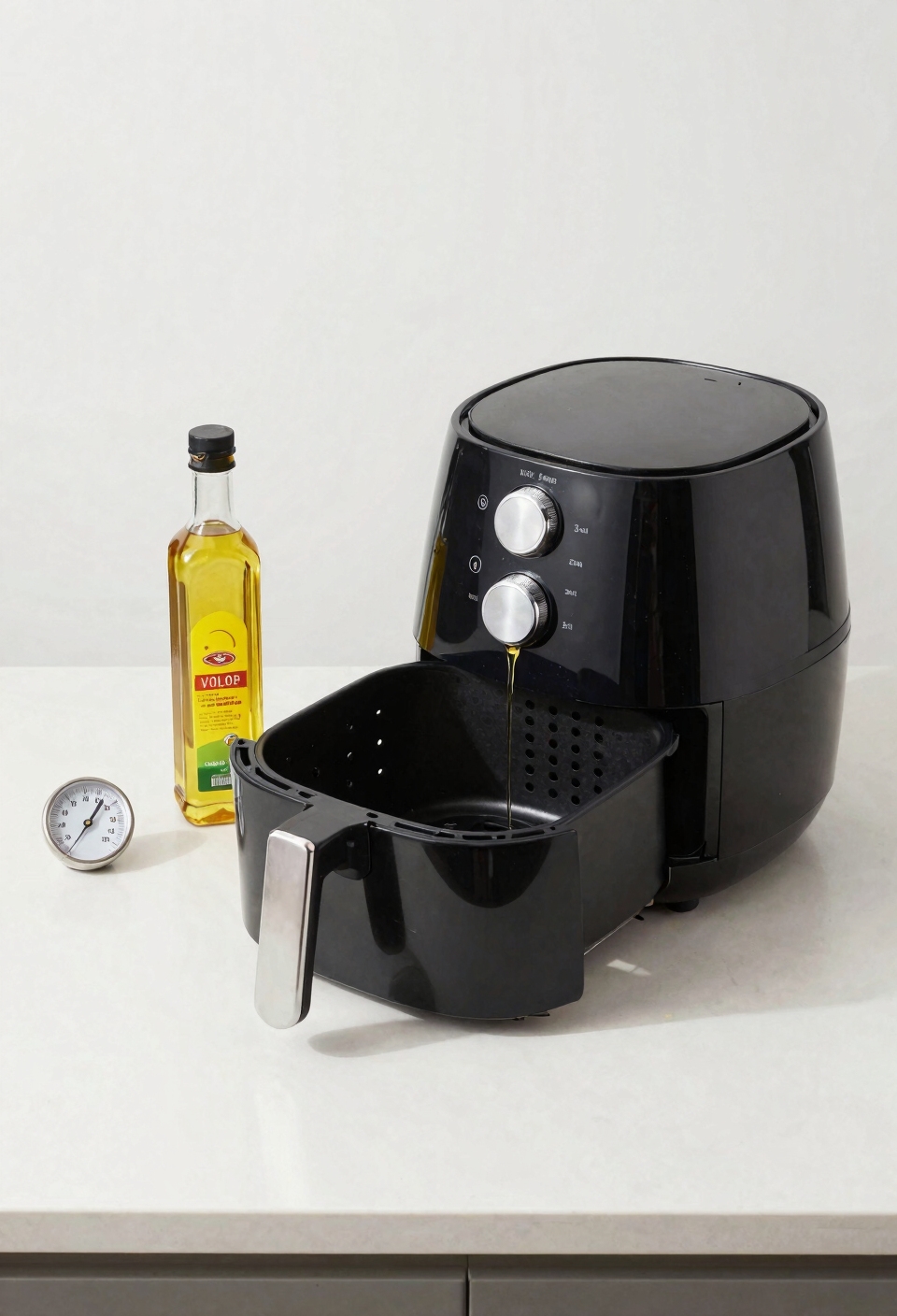
Now, here’s the thing—even if you’ve nailed the fatty foods problem, oil choices and temperature control can still sabotage you. Choose oils with high smoke points like avocado oil instead of delicate nut oils that burn instantly. Low smoke point oils? They’ll betray you every time. Temperature limits matter just as much. I learned this the hard way by cranking my air fryer to maximum heat for everything. That’s a recipe for burning, not cooking. Lower your temperature and add extra cook time instead. Your food will thank you, and so will your lungs. It’s honestly that simple.
Clean Your Air Fryer to Stop Smoke
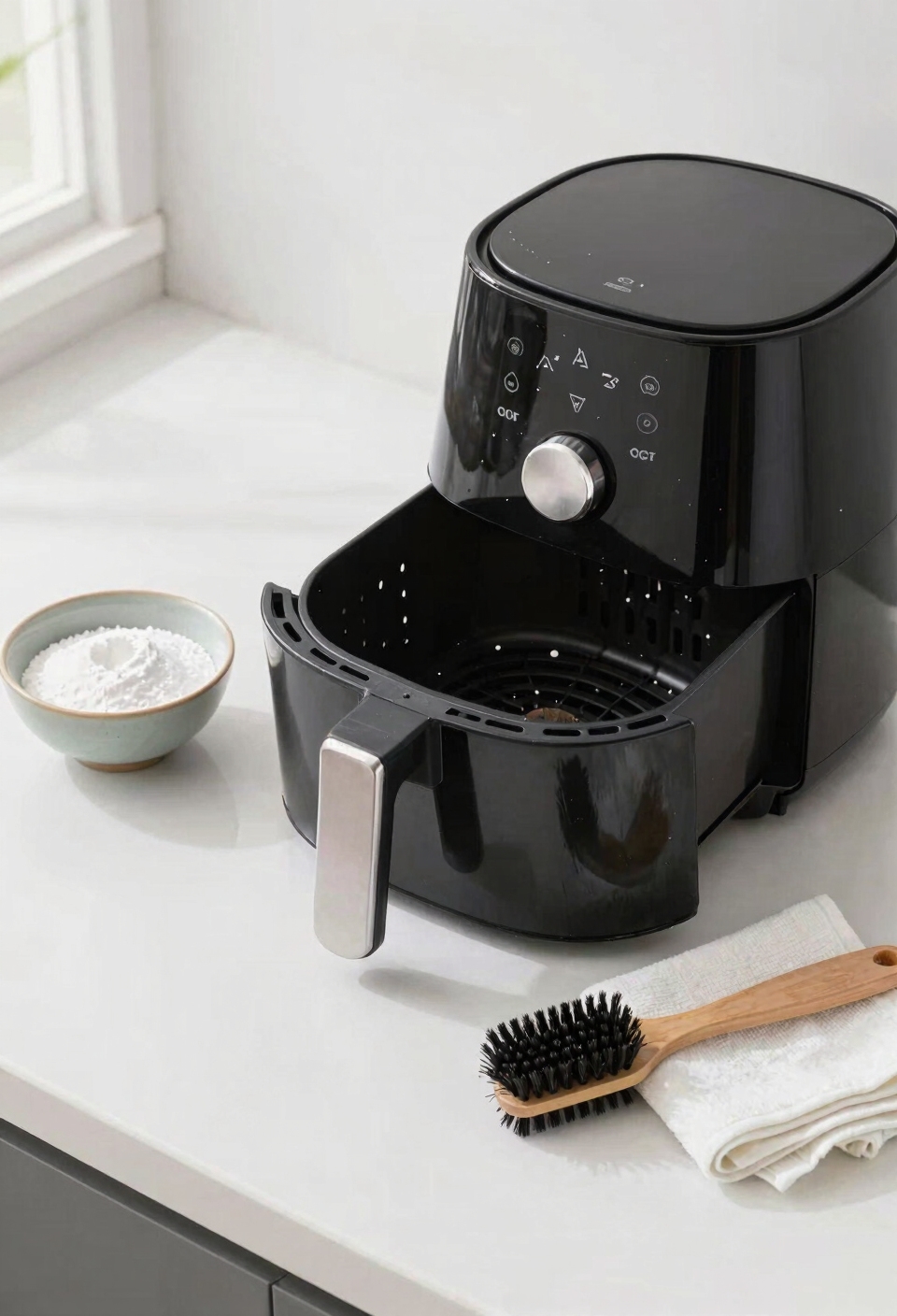
All right, here’s what nobody wants to admit: your air fryer is basically a tiny grease trap, and like all traps, it needs regular cleaning or it’ll betray you with smoke.
I’m talking deep scrubbing here. After each use, wipe down the heating coil and basket. Built-up grease and food particles are literally smoking guns—they burn when hot air circulates around them. It’s not glamorous, but it works.
Every week or so, do a thorough cleaning. Remove the basket and soak it if you need to. Attack any stubborn residue with a soft brush. For odor removal, run a cycle with a little lemon juice in the basket.
You’ll be amazed how much this stops the smoke. Your air fryer—and your kitchen—will thank you.
Overcrowding Causes Smoke: Here’s Why
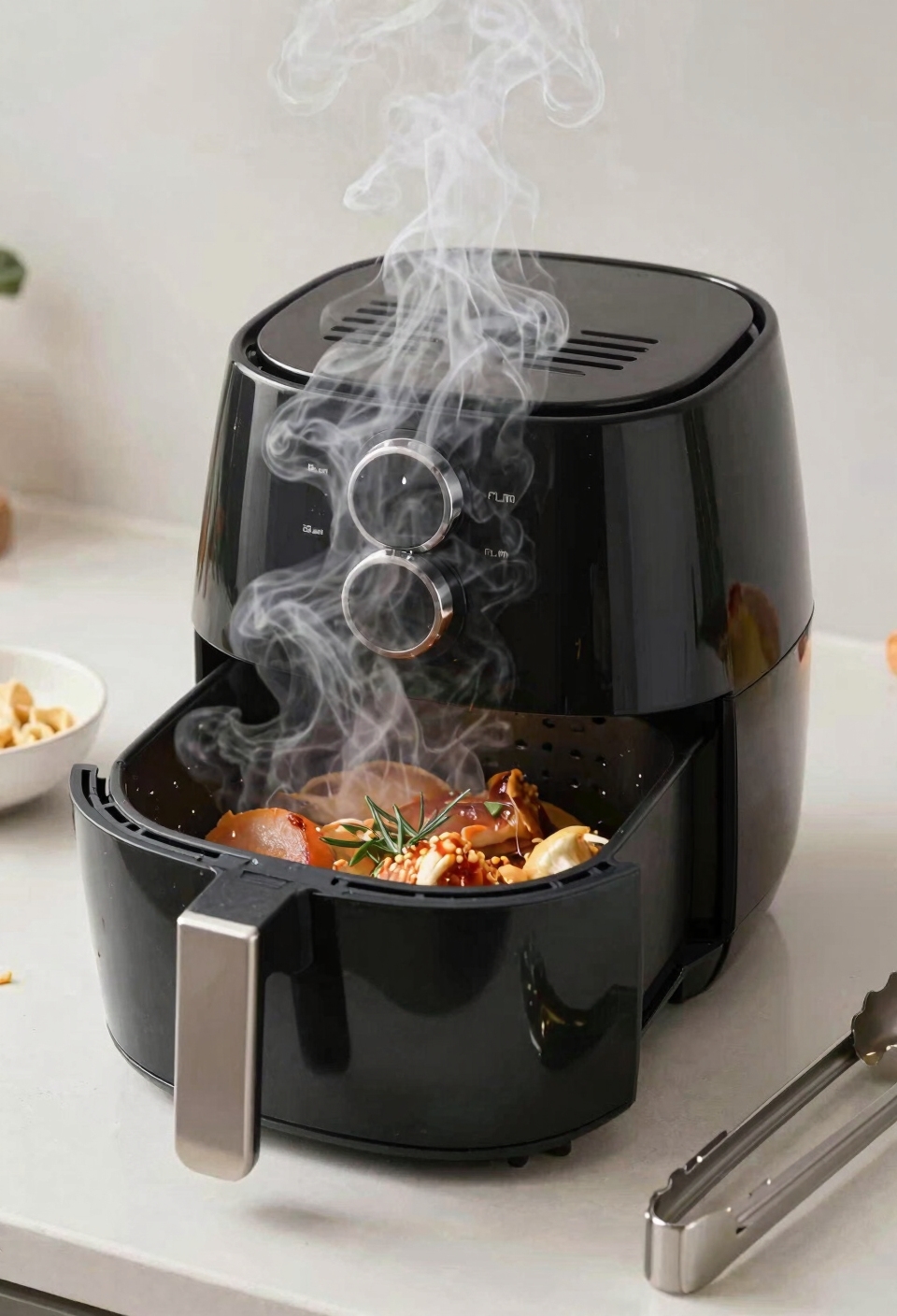
When you’re loading your air fryer basket like you’re packing a suitcase for a week-long trip, you’re basically setting yourself up for smoke. Here’s the thing: cramming food into every available space creates serious airflow blockage. Hot air needs room to circulate around each piece, and when you deny it that space, things burn instead of cook. I’ve learned this the hard way. Proper basket spacing lets the air do its job efficiently. You don’t need to fill it completely—in fact, you shouldn’t. Leave gaps between items so heat reaches all surfaces evenly. This prevents burning and keeps smoke at bay. Your air fryer works best when it’s got breathing room, just like you do.
Which Foods Smoke Most (And Why)
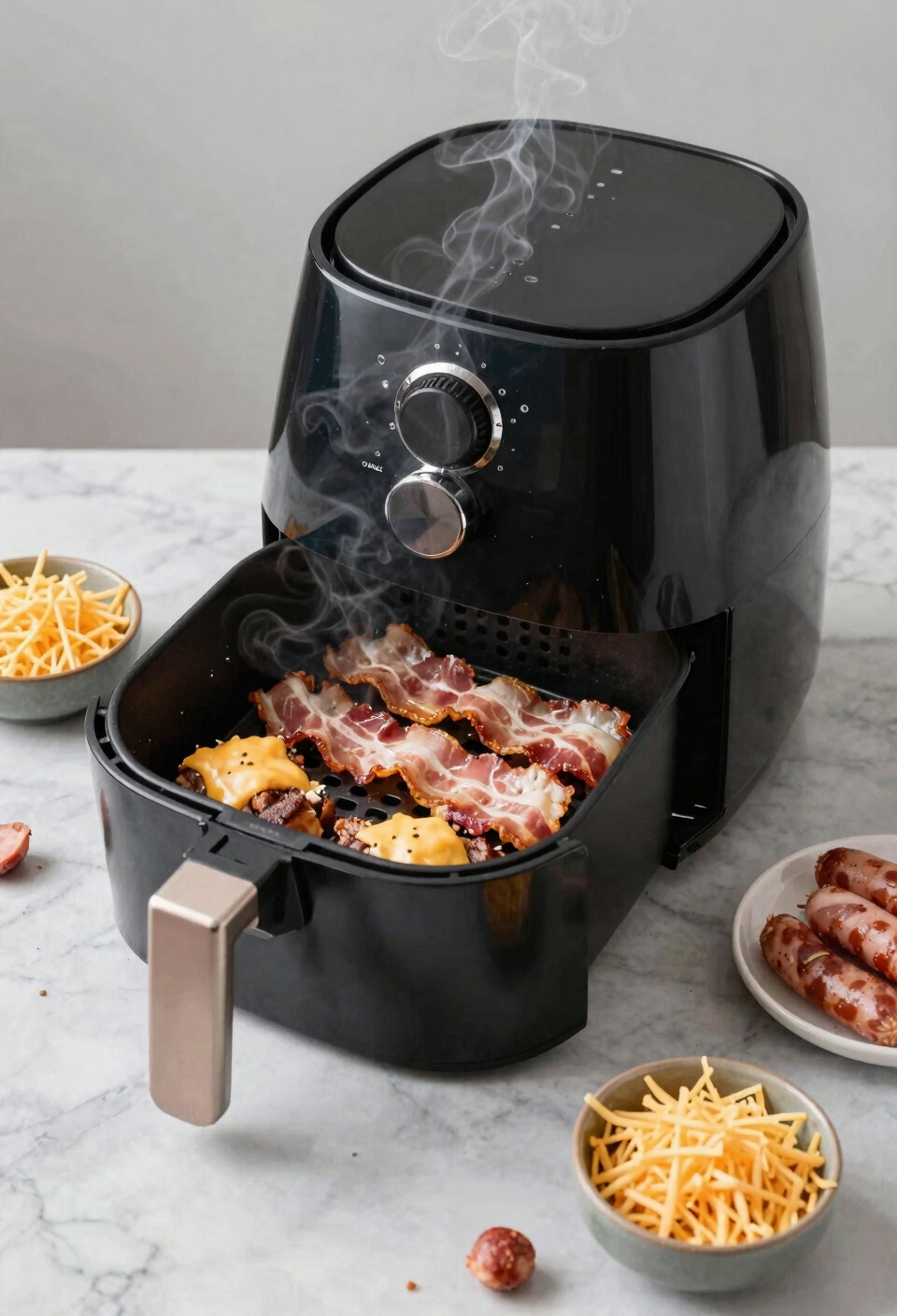
Some foods are basically smoke machines waiting to happen, and once you know which ones, you can plan accordingly. High-fat meats like sausages and bacon release grease that burns fast. Breaded seasonal produce sheds tiny crumbs that char easily. Here’s the thing: high-moisture foods such as zucchini steam heavily, creating that smoky haze you’re trying to avoid.
Now, certain sauces and spices ignite at high temperatures too. I’ve learned the hard way that burgers with saturated fats don’t air fry well. Look, if you’re craving crispy snack alternatives, choose lower-fat options instead. Use parchment paper to catch drippings. Basically, stick with lean proteins and adjust your temperature downward for anything questionable. Your smoke alarm will thank you.
Lower the Heat, Extend the Cook Time
Now that you know which foods are trouble, let’s talk about the single most effective fix: turning down the heat. I know it sounds counterintuitive—air fryers are supposed to be fast, right? But here’s the thing: lower temps actually work better for preventing smoke. When you reduce the temperature by just 25 degrees, you give grease time to render properly instead of burning instantly. Slower cooking means the food cooks through without charring the outside. Yeah, you’ll add five or ten minutes to your cook time, but you won’t spend that time watching smoke billow from your kitchen. Trust me, that trade-off’s worth it. Start experimenting with lower temps on foods that typically give you trouble.
How to Clean Grease Buildup Inside
Let me be straight with you: if your air fryer’s smoking problem didn’t disappear after lowering the temperature, chances are you’re looking at a grease buildup issue. Built-up residue on your heating coil creates smoke every time hot air circulates through.
Now, deep cleaning is your move here. Unplug the unit and let it cool completely. Remove the basket and any removable parts, then wipe down the interior with a damp cloth. For stubborn grime, use a soft brush on the heating element—carefully, obviously.
Don’t skip filter maintenance either. If your model has a removable filter, clean it regularly under running water. A clogged filter restricts airflow and traps grease particles that’ll smoke like crazy.
Make this a monthly habit, and you’ll notice the difference immediately.
Your Pre-Cook Smoke-Prevention Checklist
You’ve got your air fryer squeaky clean now, which is half the battle. Before you cook anything, let’s run through a quick checklist that’ll keep smoke from ruining your meal.
First, check your preheat habits. I always let my air fryer warm up for about three minutes—it helps food cook evenly and reduces burning. Next, make sure your ventilation tips are solid. Open a window or turn on your exhaust fan before you start cooking.
Now, pat your food dry and use minimal oil. Don’t overcrowd the basket—give everything breathing room. Choose the right temperature for what you’re cooking, and if you’re unsure, start lower. These simple steps catch most smoking problems before they start.
Troubleshoot Smoke by Symptom
Sometimes the best way to solve a smoking problem is to decode what your air fryer’s trying to tell you. Here’s the thing: different smoke patterns mean different root causes. Start with airflow diagnostics by checking if your basket’s overcrowded—blocked vents definitely cause burning. Now, odor identification matters too. A burnt, acrid smell suggests high heat scorching food. A greasy smell points to excess oil or fatty meats. Chemical-like odors? Your appliance probably needs cleaning. Dark smoke means something’s actually burning on the heating coil. Look, I’ve found that taking a minute to identify the specific symptom saves you from guessing. Notice when the smoke appears—immediately or halfway through cooking? That timing tells you whether it’s a temperature issue or a buildup problem. You’ve basically got a diagnostic code written in smoke.
Frequently Asked Questions
Can I Use Parchment Paper or Aluminum Foil to Prevent Smoking in My Air Fryer?
Yes, I recommend parchment placement to catch grease and reduce smoke. However, make certain proper foil ventilation by leaving gaps so hot air circulates freely. Both methods work well when you don’t block airflow completely.
How Often Should I Clean My Air Fryer to Maintain Optimal Performance?
I’d recommend cleaning your air fryer after every use for regular maintenance. Do a deep cleaning weekly to remove buildup from the heating coil and basket, preventing grease accumulation that causes smoking and guarantees peak performance.
Does Marinating Food Before Air Frying Reduce Smoking and Improve Results?
I’d say marinating does help your air fryer’s temperament. When you let flavors dance into your food, marinade penetration reduces excess oil absorption, which means less smoke and more evenly cooked results.
What’s the Ideal Basket Fill Level to Balance Capacity With Proper Air Circulation?
I’d recommend filling your basket about half full with a staggered layer arrangement. This guarantees hot air circulates evenly around each piece, preventing burning and smoke while maximizing your cooking capacity effectively.
Can I Cook Frozen Foods Directly, or Does Thawing First Reduce Smoke?
I’d recommend thawing frozen foods first for better results. You’ll get improved texture differences and reduce smoke risk. Frozen safety means understanding that ice creates excess moisture, which converts to steam and smoke when it hits hot surfaces rapidly.
Conclusion
Look, here’s the thing: most air fryer smoke comes down to grease and overcrowding, and studies suggest nearly 40% of users don’t clean theirs regularly enough. You’ve got this figured out now. Clean your basket, don’t overload it, and watch that heat. Your air fryer’ll reward you with crispy food and smoke-free cooking. That’s the whole game right there.