As an Amazon Associate, we earn from qualifying purchases. Some links on this site are affiliate links at no extra cost to you. Our recommendations are based on thorough research and editorial judgment.


Air Fryer Error Codes Explained: What They Mean

Air fryer error codes are your appliance talking—E1 usually means temperature sensor trouble or overheating, while E2 signals heating element problems or low heat. E3? That’s just WiFi connectivity issues that won’t stop you from cooking. Most errors clear with a simple power cycle or vent cleaning, but persistent codes need professional attention. Your heating element especially deserves serious investigation. Stick around to discover which fixes work best for your specific situation.
Key Takeaways
- E1 signals temperature sensor problems, overheating, or faulty probes; E2 indicates heating element failure or low appliance temperature issues.
- E3 represents WiFi connectivity diagnostics errors that don’t prevent basic cooking; app functionality may be affected but unit operates normally.
- A1 means probe isn’t properly plugged in; reseat and recheck placement for immediate resolution.
- A2 signals food temperature rising too fast; calibrate probe or consider replacement if problem persists after troubleshooting.
- Power cycle for 1–30 minutes, check vents, clean basket, and verify heating element condition before contacting professional support.
What E1 and E2 Errors Mean
When your air fryer flashes E1 or E2 on the display, it’s basically your machine waving a red flag—and I’ve definitely been there, staring at my fryer like it just personally betrayed me. Here’s the thing: E1 typically signals a temperature sensor problem or overheating, while E2 points to low appliance temperature or a heating element issue. Both errors frustrate users because sensor diagnostics aren’t exactly intuitive.
Now, temperature calibration matters here. An E1 error means your fryer’s overheating or the sensor itself is faulty. E2 usually shows up after cold storage or from WiFi credential mix-ups. Before you panic, try unplugging for thirty minutes and checking those air vents for blockages. Sometimes it’s just your machine cooling down and recalibrating itself.
E3 Error: Connectivity Issues Explained
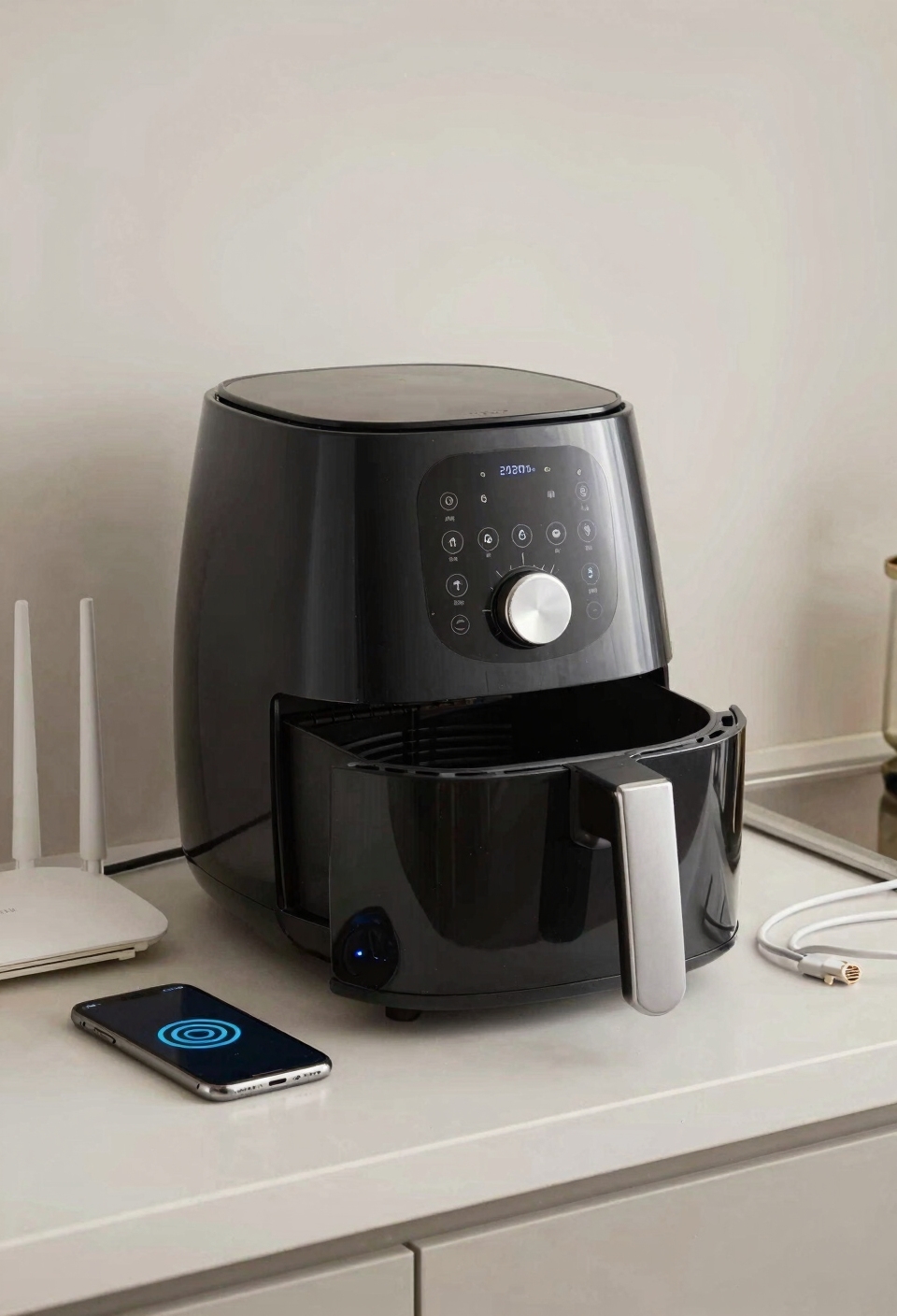
Now that we’ve covered the temperature gremlins with E1 and E2, let’s talk about a different beast altogether: the E3 error. This one’s actually less scary than it sounds. E3 signals a connectivity diagnostics issue—basically your air fryer’s WiFi feature isn’t working properly. The good news? You can still cook. E3 won’t stop your air fryer from functioning; it just means the smart connectivity is down. You’ll see this mostly on Philips NA46x models, and sometimes it displays as 0x4001 instead. Here’s the thing: if you’re not using the app anyway, you can ignore it and keep frying. That said, if you want full functionality restored, contacting customer support is your best bet. They’ll walk you through reconnection steps.
Quick Fixes for E4–E9 Errors
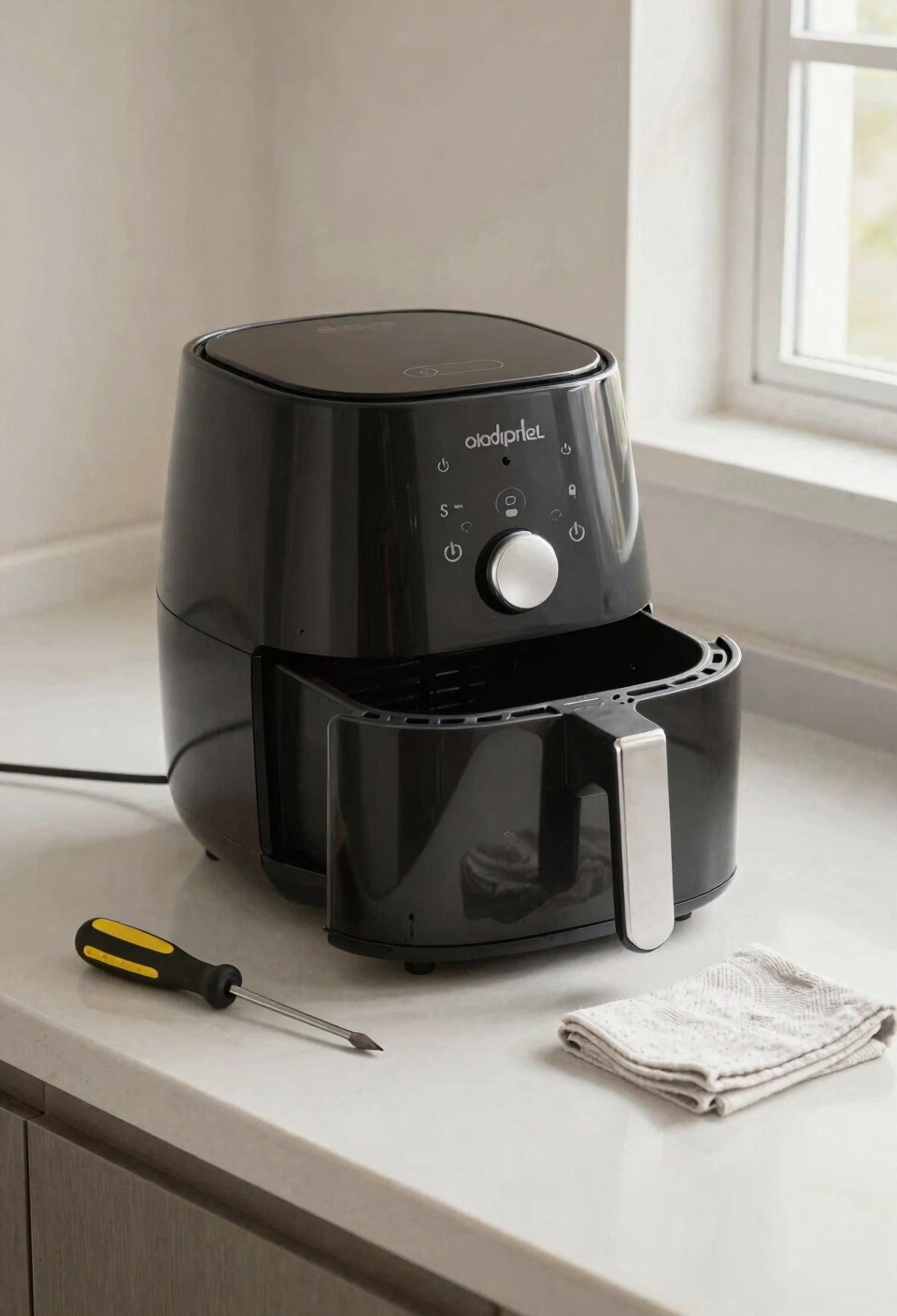
Once you’ve ruled out the connectivity stuff with E3, you might bump into error codes E4 through E9—and here’s the good news: most of these are surprisingly fixable with the nuclear option of unplugging your air fryer.
Seriously, unplug it for a minute or two. This resets the system and clears temporary glitches that power surges or electrical hiccups create. While it’s unplugged, check your air vents and basket area for vent clogging. Buildup restricts airflow and triggers these errors faster than you’d think.
Once you’ve cleared any blockages, plug it back in and try again. Nine times out of ten, that’s all you need. If the error persists after this reset, you’re probably looking at a sensor or heating element issue worth calling a technician about.
Temperature Sensor Problems and E1
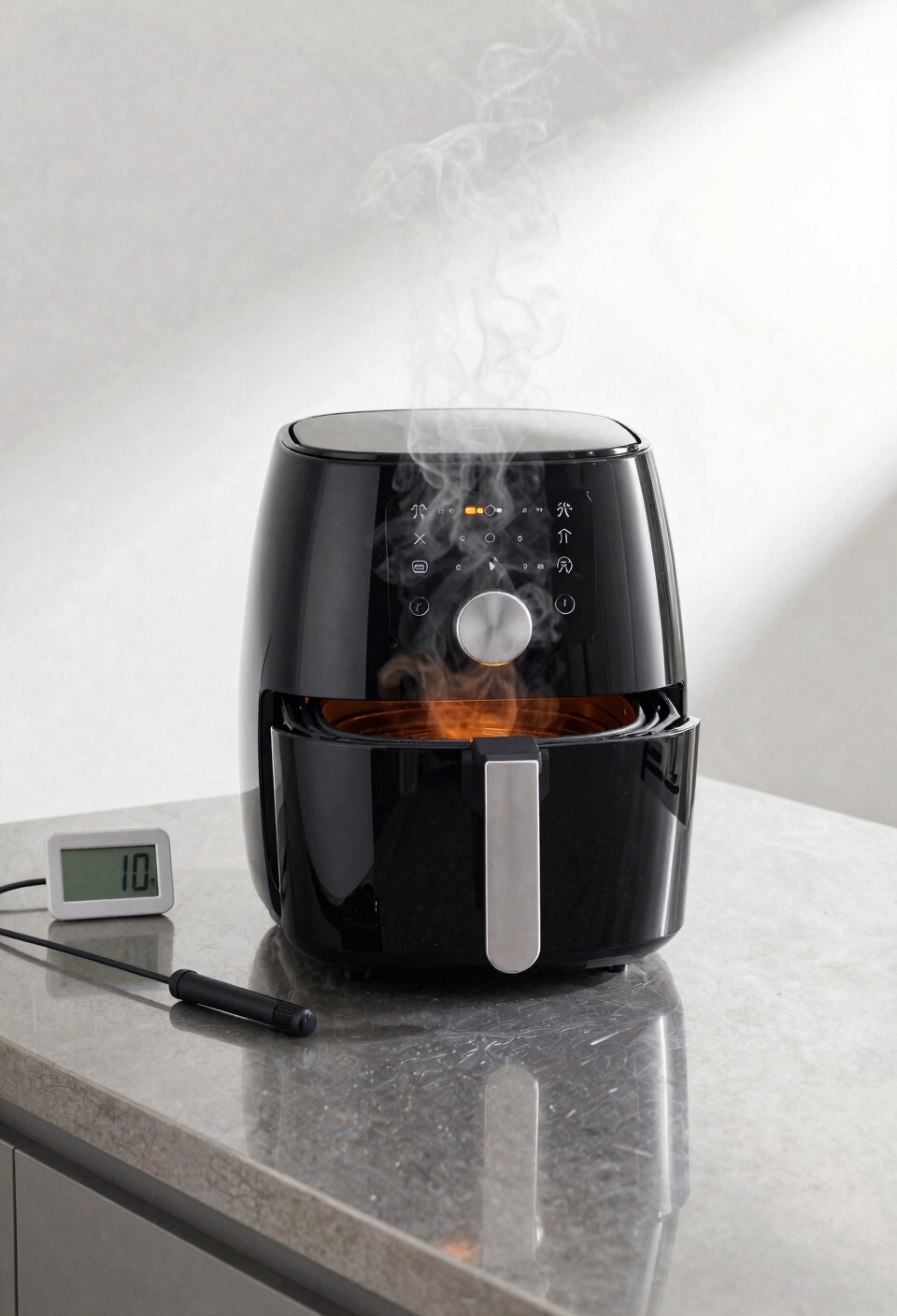
If your air fryer keeps throwing an E1 error at you, there’s a decent chance your temperature sensor has decided to take an unscheduled vacation. This error signals overheating or a faulty sensor—basically your air fryer’s way of saying something’s gone wrong with temperature control.
Now, here’s the thing: before you panic, try the basics. Unplug it, let it cool completely, and check those air vents for blockages. Sometimes dust buildup causes false readings.
If that doesn’t work, you’ll need sensor diagnostics. A technician can run temperature calibration tests to figure out if your sensor’s actually broken or just confused. Power fluctuations can trigger this too, so try a different outlet first. You might save yourself a repair bill.
Heating Element Failures Causing E2

When your air fryer throws an E2 error, you’re usually looking at heating element trouble or a loose connection that’s messing with your cooking game. Now, here’s the thing—your heating element is basically the heart of the operation, so when it fails, nothing gets cooked properly. Start your heating diagnostics by unplugging the unit and letting it cool completely. Check that all internal connections are tight and nothing’s visibly damaged. If the element replacement seems necessary, you’ll probably want a technician handling this one. Some E2 errors stem from sensor short circuits too, which complicates things. After thirty minutes of rest, try replugging it in. If the error persists, contact support—don’t risk further damage.
Resetting Your Air Fryer: The First Step
Before you start troubleshooting those heating elements or chasing down sensor issues, let’s talk about the nuclear option—the reset. I’m talking about power cycling your air fryer, which honestly fixes more problems than you’d think. Unplug the unit completely and let it sit for a solid five minutes. This gives the internal circuits time to fully discharge and reboot themselves. Some models also offer a factory reset option buried in the settings menu—check your manual for that one. Plug everything back in, power it on, and see if your error codes vanish. It’s simple, it’s free, and it works surprisingly often. Sometimes the best solution really is just turning it off and back on again.
Philips, Emeril, and Brand-Specific Errors
Now, here’s where things get a little more specific. Different brands handle errors differently, and that matters. Philips troubleshooting for their NA46x models reveals something interesting: cold storage often triggers E1 or E2 codes. You’ll need 30 minutes of rest before trying again. Emeril diagnostics tell a different story. Their E1 usually means your food thermometer is loose or faulty, while E2 points to heating element problems. Generic models? They’re more straightforward. E1 signals a broken sensor, and E2 indicates a short circuit. Here’s what I’ve learned: knowing your brand saves time. Check your manual first. It’ll tell you exactly what your air fryer’s speaking.
Food Thermometer Errors: A1 and A2
If you’ve got a food thermometer plugged into your air fryer, you’ve accessed a fancy feature—but you’ve also opened the door to A1 and A2 errors.
Here’s the thing: A1 means your probe isn’t properly plugged in. Check your probe placement first—it should be seated firmly in the jack. Wiggle it, reseat it, and try again.
A2 is trickier. It signals your food temperature’s climbing too fast, which usually means your probe’s malfunctioning or you’re cooking something that heats unevenly. Before you panic, run through calibration steps to verify your thermometer’s working correctly. If problems persist, you’re probably looking at replacing the probe itself. Now, some air fryers are finicky about thermometer compatibility, so double-check yours matches your model.
Air Fryer Maintenance: Prevent Future Errors
Most of the error codes we’ve talked about—the E1s, E2s, and all the rest—aren’t actually inevitable. You’ve got real power here. Regular cleaning keeps your air fryer running smoothly and prevents buildup that triggers overheating errors. I’m talking about wiping down the basket and heating element after each use. Filter replacement matters too, especially if you’re cooking fatty foods. A clogged filter restricts airflow, which sends temperatures soaring and sets off those pesky sensor alarms.
Now, here’s the thing: give your air fryer space to breathe. Keep at least 15 centimeters around the outlets. Let it cool completely between sessions. Check vents for blockages. You’ll dodge most errors before they happen.
When to Contact a Technician
Despite your best maintenance efforts, sometimes your air fryer throws you a curveball that DIY fixes can’t solve. Look, if you’ve worked through basic troubleshooting—unplugging, checking vents, testing different outlets—and that error code’s still blinking, it’s time to call in reinforcements. Before you reach out, run a quick diagnostic checklist: note which error code appears, document when it started, and confirm you’ve tried the standard fixes. Then check your warranty. Most manufacturers cover sensor and heating element failures, which’ll save you serious cash. Contact a technician if you’re dealing with persistent E1, E2, or E3 codes, internal circuit issues, or anything involving the heating element. Don’t let a stubborn problem sit around. Getting professional help beats replacing your whole unit.
Frequently Asked Questions
Can I Use My Air Fryer While Displaying an E3 Error Code?
Yes, you can use your air fryer with an E3 error since it’s a connectivity issue. However, I’d recommend contacting support first regarding safety risks and warranty concerns before continuing operation.
What Do Dashes on My Air Fryer Screen Indicate About Temperature?
Your air fryer’s blinking dashes aren’t a secret morse code message—they’re screaming that your internal temperature’s dangerously high. You’ll need temperature calibration or professional service before I’d risk using it again.
How Much Clearance Space Does an Air Fryer Need Around Outlets?
I’d recommend maintaining a minimum clearance of 15 cm around your air fryer’s air outlets. This outlet proximity guarantees proper ventilation and prevents overheating issues that could trigger error codes on your device.
Which Error Codes Require Unplugging and Replugging to Resolve?
I’d recommend unplugging and replugging your air fryer for error codes E4, E5, E6, E8, E9, E12, and E22. This power cycling method often triggers a firmware reset that resolves these issues.
Do Dual Air Fryers Commonly Show Errors When First Unpacked?
I’ve found that dual air fryers commonly show errors when you first unpack them. This typically happens during initial calibration or when software updates are processing. Don’t worry—these usually resolve automatically.
Conclusion
Look, error codes aren’t your air fryer’s way of giving up—they’re breadcrumbs leading you to the fix. Most issues you can handle yourself: clean the basket, check your connections, reset the unit. But if you’re staring at a code that won’t quit after troubleshooting, it’s time to call in reinforcements. You’ve got this.