As an Amazon Associate, we earn from qualifying purchases. Some links on this site are affiliate links at no extra cost to you. Our recommendations are based on thorough research and editorial judgment.

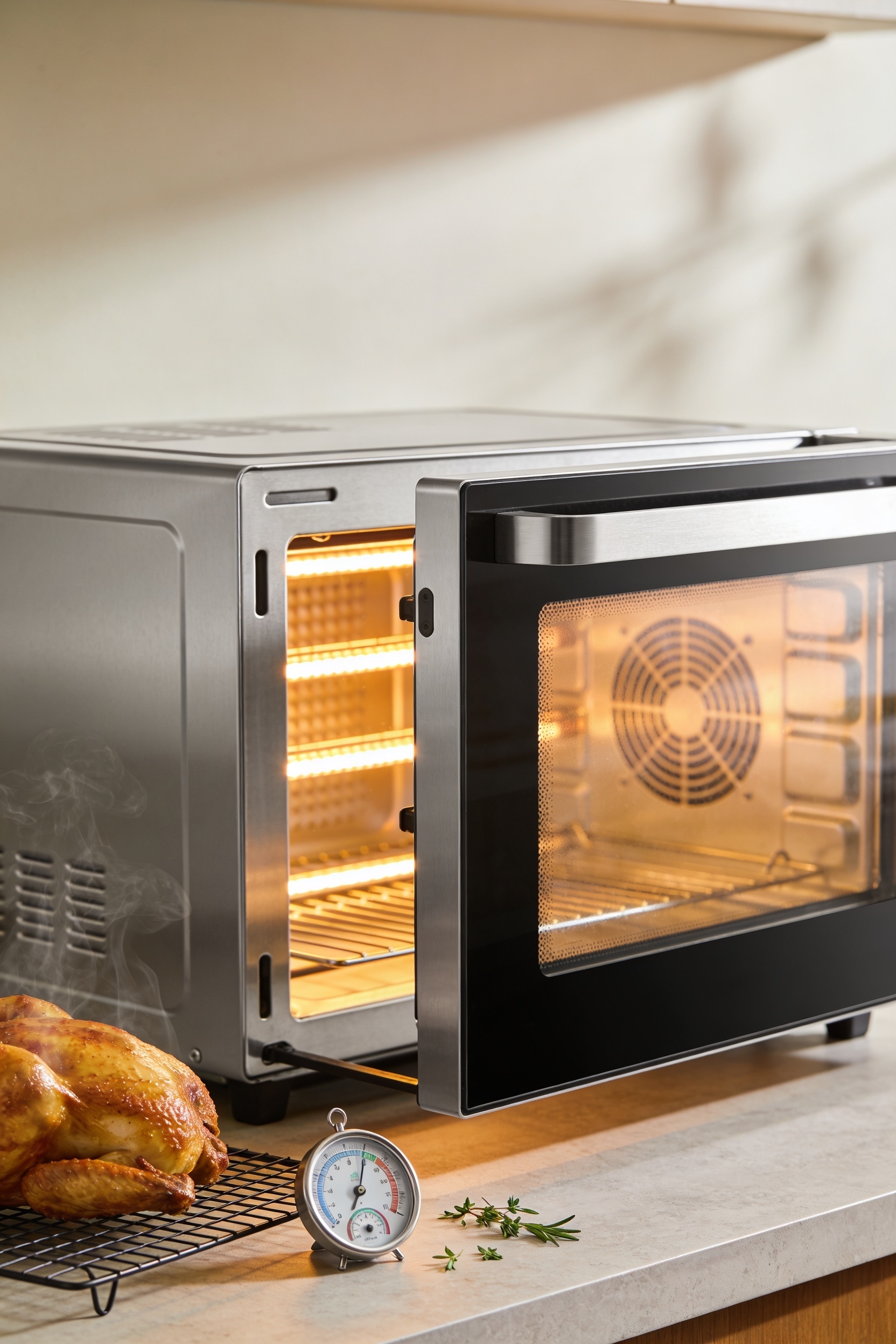
What Is Convection Cooking and How Does It Work?

Convection cooking uses a fan to blast hot air around your food continuously, which beats conventional ovens by cooking about 25 percent faster and way more evenly. The fan activates after heating elements warm up, circulating air that breaks the cool layer surrounding your food and promotes crispier browning. You’ll get golden, evenly cooked results without rotating pans halfway through. The trade-off? You’ll want to lower your recipe temperature by about 25 degrees and watch for common mistakes that’ll kill the whole advantage.
Key Takeaways
- A fan circulates hot air continuously throughout the oven chamber for even, active heat distribution around food.
- Heating elements on top, bottom, and rear work with the fan to eliminate hot spots and cold zones.
- Circulating air breaks the cool air layer around food, accelerating heat transfer and promoting faster, crispier cooking.
- Convection cooking reduces cooking time by approximately 25 percent compared to conventional ovens while using lower temperatures.
- Best used for roasting and vegetables; avoid for delicate pastries and cakes requiring still air environments.
What Makes Convection Ovens Different From Conventional Ovens?
While a conventional oven just sits there hoping heat magically reaches your food evenly, a convection oven actually does something about it. Here’s the thing: a convection oven uses a fan to push hot air around your food continuously. This fan placement—usually at the back with an exhaust system—breaks up that cool air layer sitting around your food, letting heat transfer way faster. Now, the insulation quality matters too. Better insulation means your oven maintains steady temperatures without working overtime. You’re looking at cooking that’s roughly 25 percent faster than conventional methods. The forced-air circulation eliminates those annoying hot spots and cold zones you’d normally battle. So instead of rotating pans halfway through, your food cooks evenly from edge to center. That’s the real difference.
How the Fan and Heating System Work Together
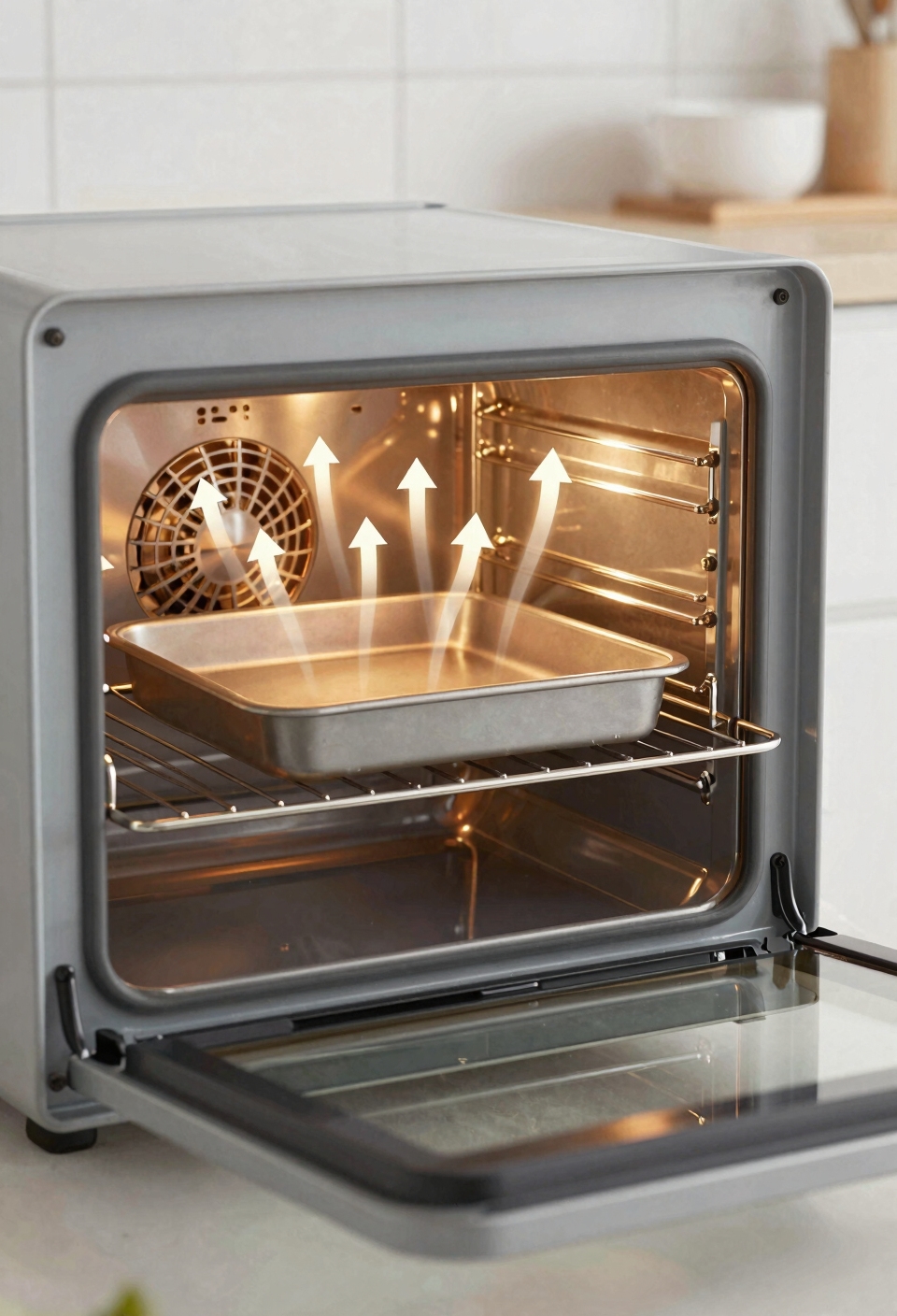
Now that you understand why convection ovens cook faster, let’s look under the hood at what’s actually making it happen. Here’s the thing: it all comes down to element placement and airflow patterns working in sync. Your oven’s got heating elements positioned on top, bottom, and usually the rear. The fan kicks in after those elements warm up, then pushes hot air throughout the chamber in consistent patterns. This movement breaks up that lazy layer of cool air that naturally sits around your food in regular ovens. The result? Heat reaches every surface evenly. No more rotating pans halfway through or discovering cold spots. That’s the magic right there.
Recommended Products
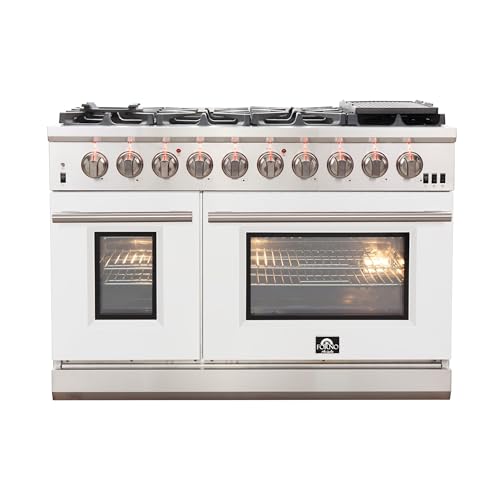
COMMERCIAL COOKING POWER: Features 8 sealed dual-ring brass burners delivering a cumulative total of 160,000 BTU. Each individual burner is engineered to achieve a powerful 20,000 BTU max output for rapid boiling and intense high-heat searing, while effortlessly dialing down to a highly delicate 1,000 BTU simmer setting for precise control over sensitive sauces and melting chocolate.

The six high-powered BTU burners & 1 Griddle Cooktop that give you the ultimate cooking flexibility: front left (single) 12,000 BTU, front middle (single) 18,000 BTU, front right (single) 12,000 BTU, rear left (single) 12,000 BTU, rear middle (single) 12,000 BTU, rear right (single) 12,000 BTU, griddle burner 15,000 BTU. The range gives you the power to master any meal.
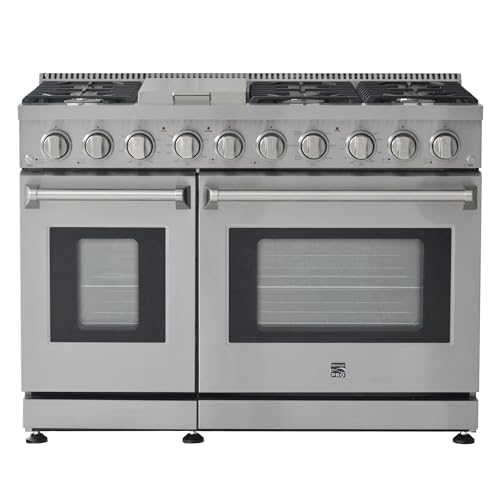
7-Burner Cooktop with Griddle: Cook with maximum flexibility using 7 sealed burners including an 18,000 BTU power burner and integrated griddle, ideal for everything from high-heat searing to pancakes and large family meals.
Why Convection Creates Crispy, Evenly Cooked Results
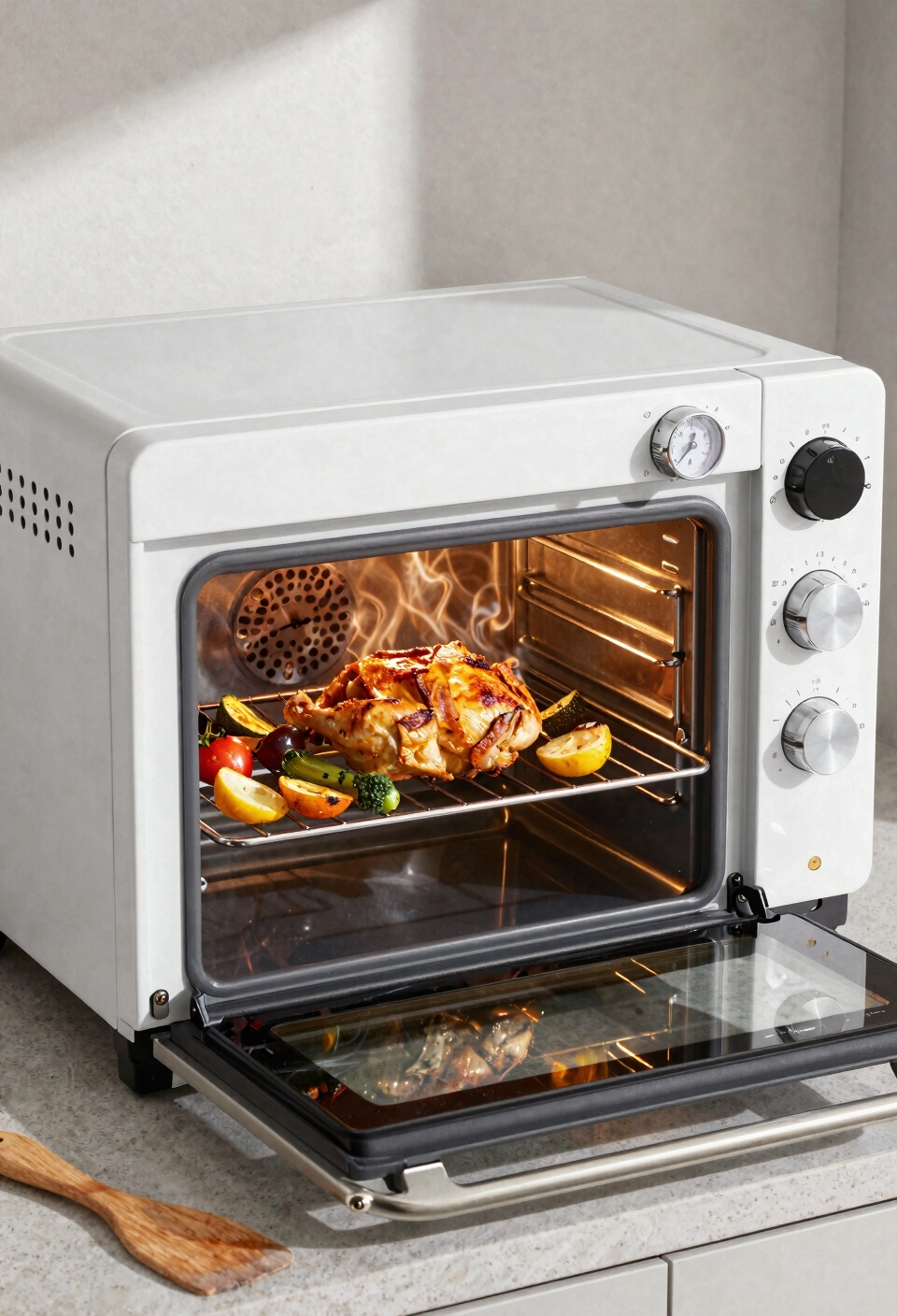
Because that circulating hot air breaks the boundary layer of cool air clinging to your food, you get crispiness and even cooking in ways a regular oven just can’t match. The constant air movement triggers the crispy Maillard reaction—that golden-brown exterior that tastes incredible. Meanwhile, moisture evaporation happens faster and more evenly across your entire dish. You’re not stuck with one side browning while the other stays pale. The heat reaches every angle simultaneously, so your roasted vegetables caramelize beautifully from edge to center. Your chicken skin crisps up while staying tender inside. That’s the magic: you’re locking in moisture where it matters while removing it where you want crunch. It’s genuinely hard to mess up.
Cook 25% Faster: Speed and Energy Savings
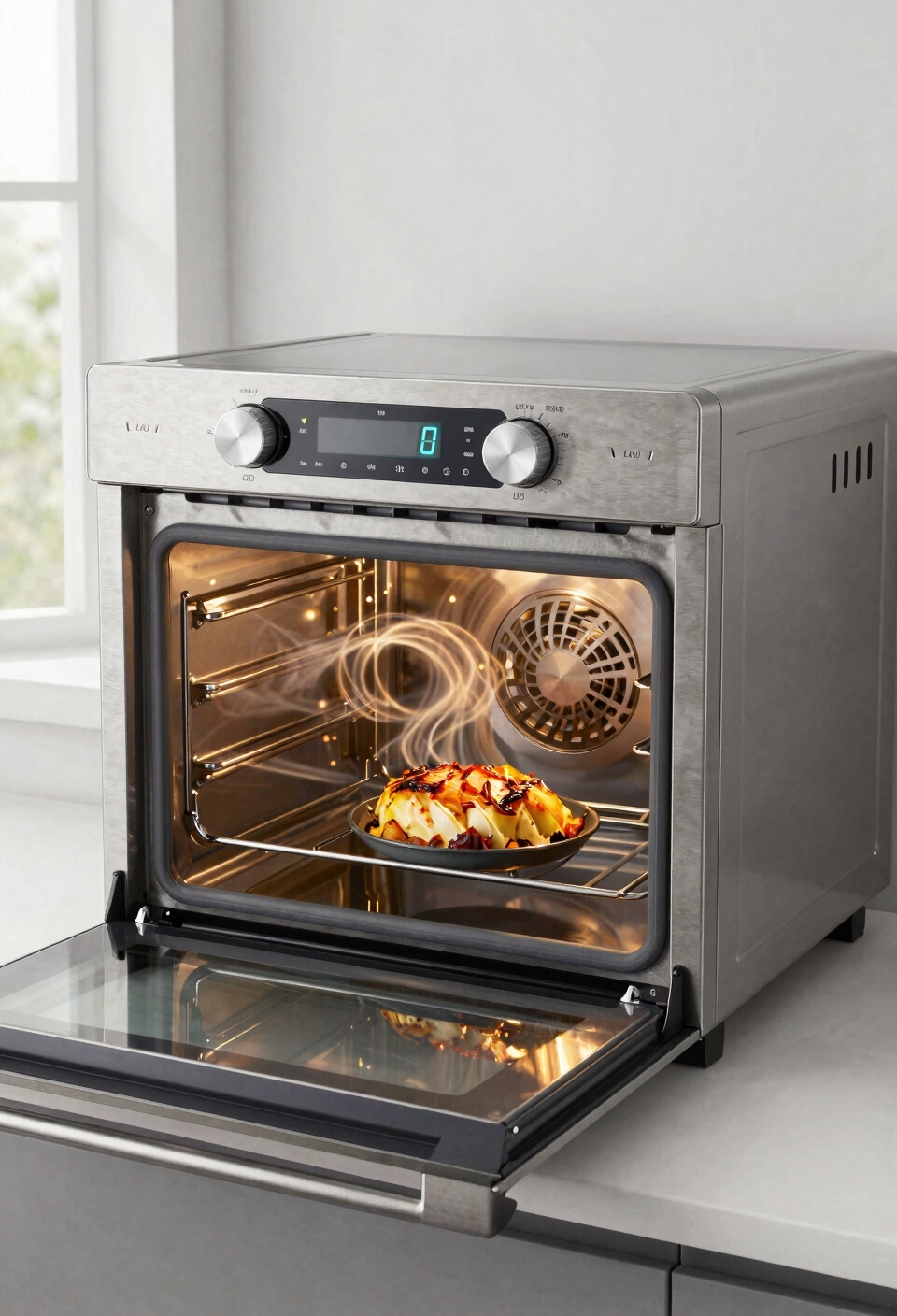
So you’ve got this gorgeous crispy exterior and perfectly cooked interior—but there’s another reason I’m obsessed with convection ovens, and it’s purely practical: they’re *fast*. I’m talking 25 percent faster cooking times than conventional ovens. That turkey that’d normally take five hours? You’re looking at four instead.
Here’s what matters for your time management: shorter cook times mean you’re actually freeing up your evening. Your energy bills get a real break too, since you’re running the oven less overall. The fan circulates heat so efficiently that you can drop the temperature 25 degrees and still nail perfect results. Less time cooking, lower energy use—it’s a win-win that actually affects your wallet.
Recommended Products

Microwave convection oven saves time by air frying, baking, and roasting food fast and more evenly

{ENERGY EFFICIENT} The Kratos 29Y-057 electric convection oven features a high efficiency heating tube with direct, forced hot-air system. Double-pane thermal glass windows provide easy visibility and ensure energy efficiency

Built-In WiFi, Powered by SmartHQ App
When to Use Convection vs. Conventional Heat
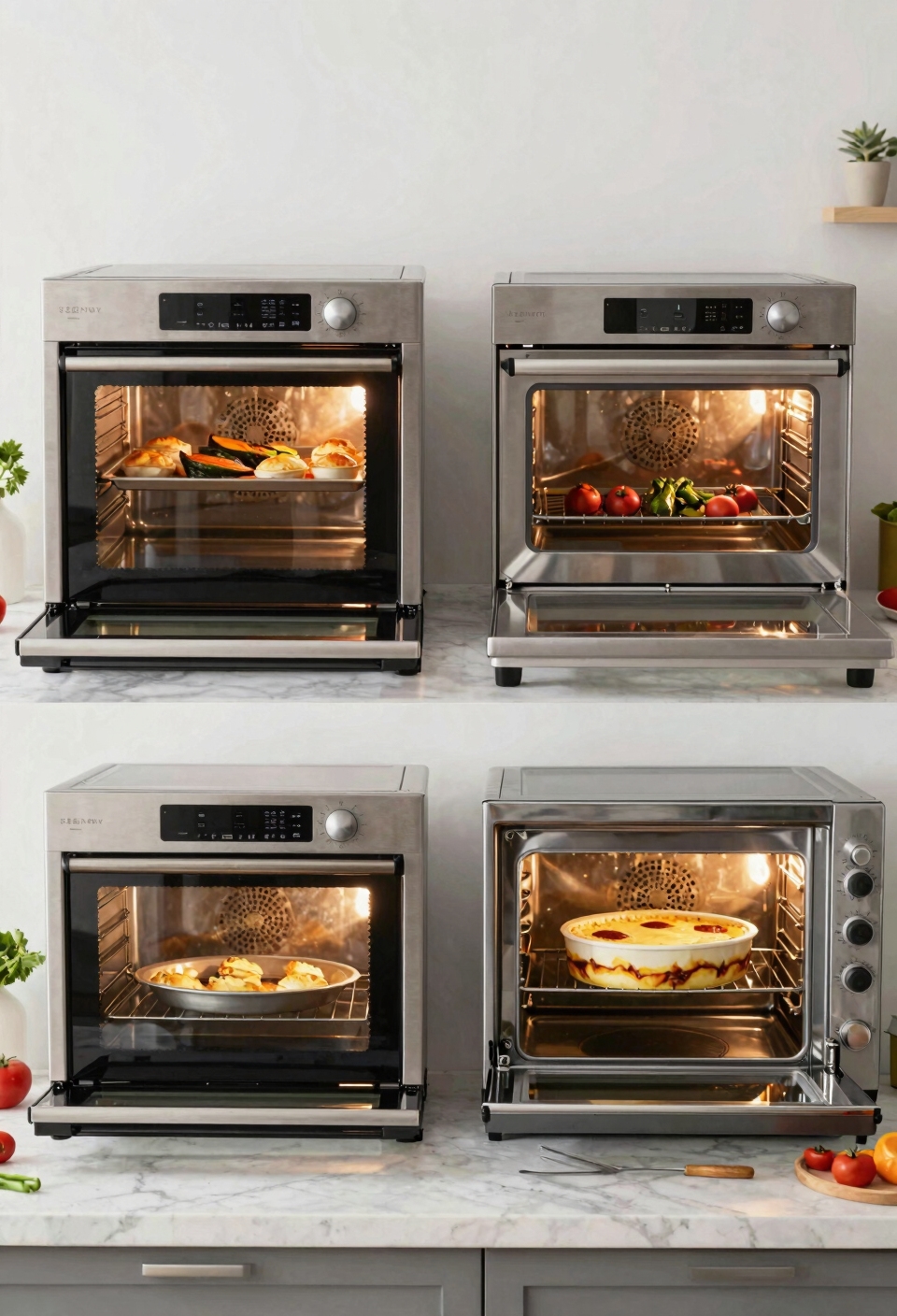
Are you looking for crispy edges and even browning, or do you need a stable, undisturbed environment where your food can rise and set without interference?
That’s the core question. I use convection for weeknight dinners—roasted chicken, sheet pan vegetables, anything needing a golden crust. It’s my go-to for speed and those caramelized edges you actually want.
But here’s the thing: delicate pastries, cakes, and custards? They hate convection. The circulating air disrupts rising and can dry them out. Stick with conventional heat for those.
Look, convection excels at roasting, reheating, and multi-rack cooking. Conventional ovens win with baked goods requiring still air. Know your oven’s strengths, and you’ll nail both approaches every time.
Convection Temperature Adjustments and Recipe Modifications
Once you’ve decided convection’s the right move, here’s the adjustment that’ll save you from burnt edges and undercooked centers: drop your oven temperature by 25 degrees Fahrenheit from whatever the recipe calls for. This temperature conversion accounts for how aggressively that fan circulates heat around your food.
Now, here’s the thing about recipe scaling—if you’re doubling a casserole or roasting multiple trays simultaneously, you might need to add five to ten minutes back to your cooking time. The convection fan still works magic, but more food means slightly longer heat penetration.
I’ll be honest, you might need to experiment once or twice. Every oven’s got its own personality. Jot down what works, and you’ll nail it next time.
Common Mistakes That Sabotage Convection Cooking
Getting your temperature and timing down is half the battle, but here’s where most people stumble: they treat a convection oven like it’s just a regular oven with a fan bolted on.
Using overcrowding is mistake number one. I’ve done it—stuffed everything in at once—and watched my results turn mediocre. The circulating air needs space to work. Don’t pack your racks.
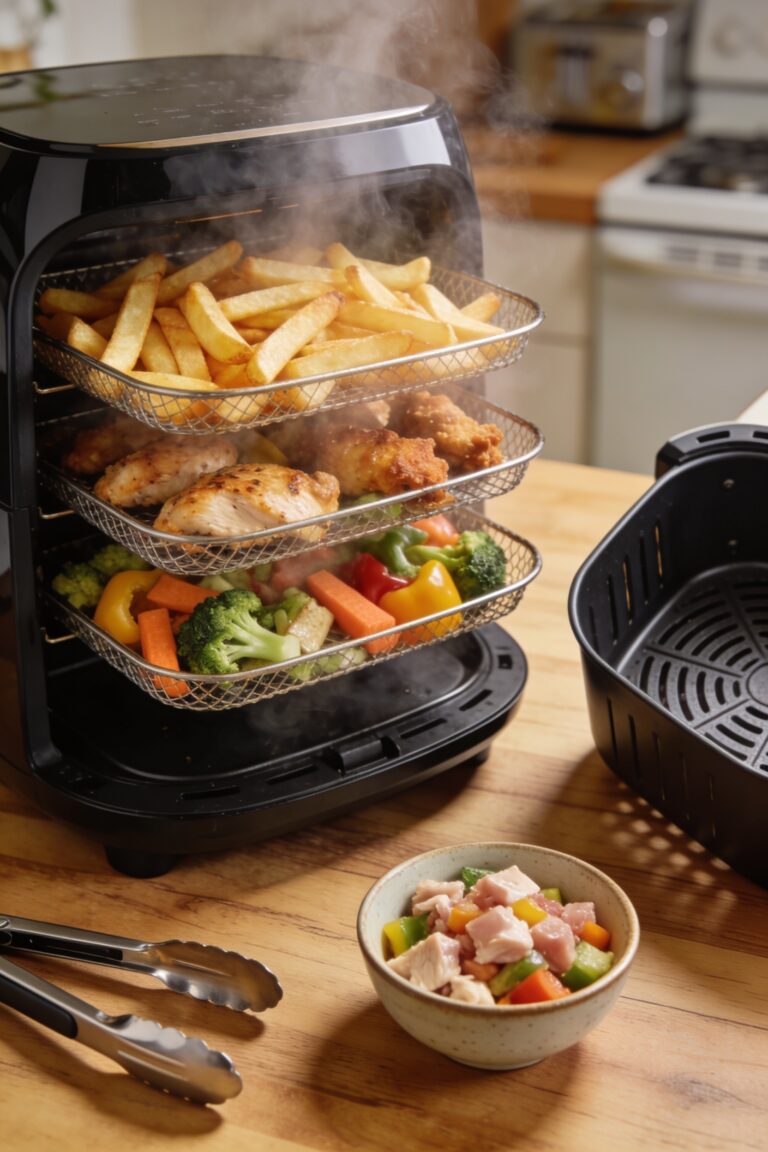
Uneven placement kills your game too. Sticking all your food on one rack defeats the whole purpose. Spread things out across multiple levels so the fan can reach everything equally.
Look, convection’s magic lies in consistent airflow. Block that, and you’re basically cooking conventionally with extra steps. Give your food breathing room, position it strategically, and you’ll actually taste the difference.
Frequently Asked Questions
Can I Use Convection Cooking for All Types of Baked Goods, or Are There Limitations?
I’d recommend avoiding convection for delicate pastries and custard-based desserts since the circulating air can dry them out. You’ll find it works great for roasted items, but still-air heat suits finicky baked goods better.
How Often Should I Maintain or Clean the Convection Fan for Optimal Performance?
I’d recommend monthly checks on your fan—inspect it while neglecting it risks performance decline. You’ll want fan lubrication annually, keeping those blades spinning smoothly for consistent, even heating throughout your oven’s chamber.
Are Convection Ovens More Expensive to Operate Than Conventional Ovens Long-Term?
No, I’d say convection ovens aren’t more expensive long-term. They cook 25% faster, reducing energy costs markedly. Plus, their efficient heating means lower appliance lifespan strain compared to conventional ovens.
What’s the Difference Between a Convection Oven and an Air Fryer?
I’ll tell you what sets them apart: air fryers are fundamentally compact convection ovens. Both use air circulation for rapid browning, but air fryers heat faster, occupy minimal space, and crisp foods more intensely through concentrated, high-speed air movement.
Can I Convert Conventional Oven Recipes to Convection Without Adjusting Temperature?
No, I’d recommend you reduce temperature by 25 degrees Fahrenheit and adjust time accordingly. Since convection cooks faster and more evenly, you’ll need these modifications for best results.
Conclusion
I’ve learned that mastering convection cooking isn’t complicated—it’s just about understanding how that fan changes everything. You’ll cook faster, save energy, and get crispier results once you nail those temperature tweaks and avoid crowding your oven. So why wouldn’t you give it a shot? Your next meal could be noticeably better with minimal effort.