As an Amazon Associate, we earn from qualifying purchases. Some links on this site are affiliate links at no extra cost to you. Our recommendations are based on thorough research and editorial judgment.

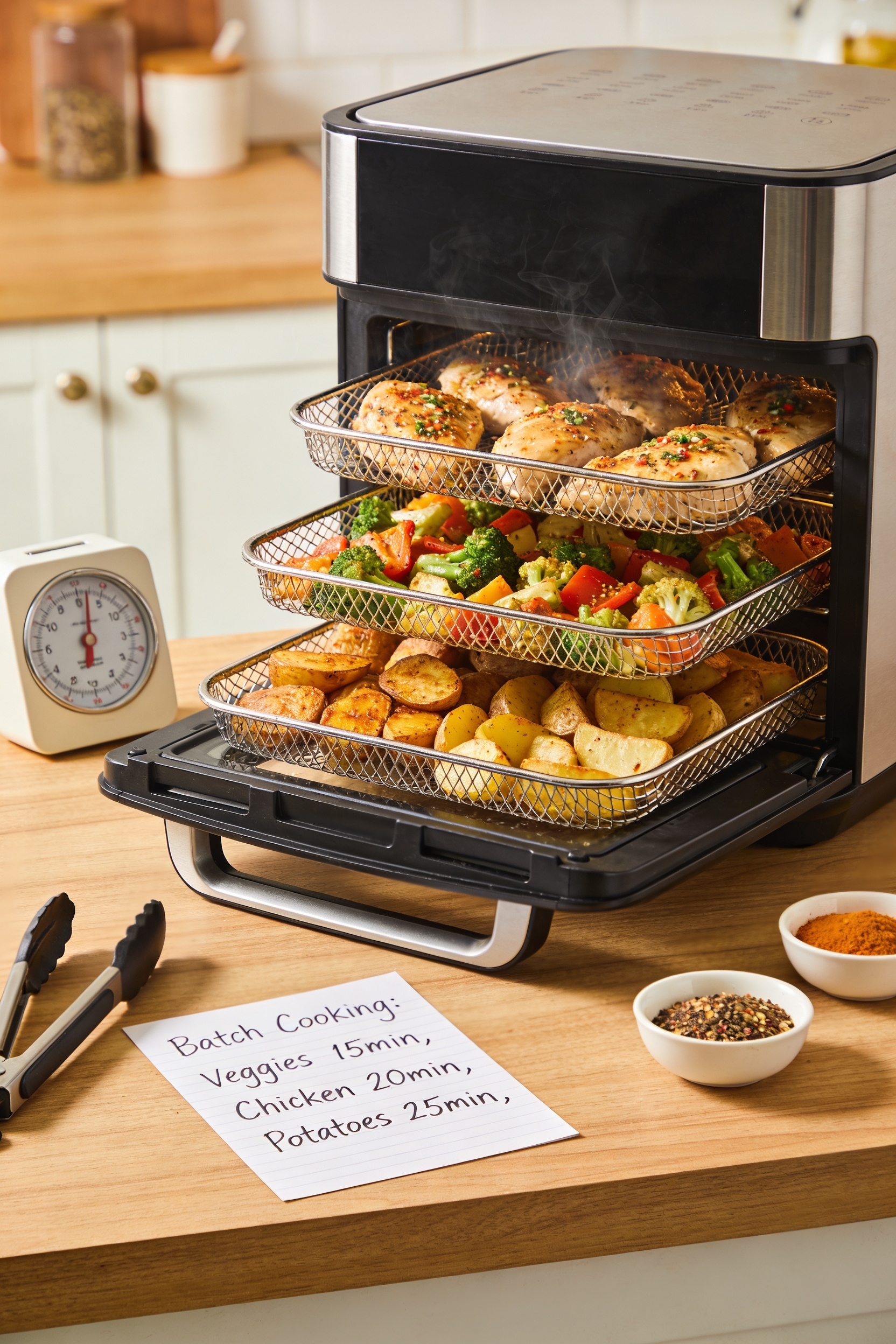
Air Fryer Batch Cooking: How to Cook More in Less Time

All right, here’s the thing: batch cooking proteins in your air fryer means prepping once and eating crispy chicken, meatballs, or tofu all week. Single-layer batches cook faster and crispier than cramming everything in at once. Pat proteins dry, season them, then work in multiple batches at the right temps—chicken thighs at 400°F for 18–20 minutes, meatballs at 380°F for 8. Freeze vacuum-sealed portions, reheat in minutes, and you’ll wonder why you didn’t start sooner.
Key Takeaways
- Cook proteins in single layers to maximize batch capacity and ensure even crisping across all items simultaneously.
- Respect basket size limits and split large quantities into multiple batches rather than overcrowding for consistent results.
- Prep all proteins in one session, then divide into grab-and-go containers for efficient weekly meal planning.
- Pair vegetables with compatible cooking times and batch them separately from proteins to streamline the process.
- Use vacuum-sealed storage and label dates to enable quick reheating and extend the usability of cooked batches.
Prep Your Proteins for the Air Fryer: Chicken, Meatballs, and Tofu
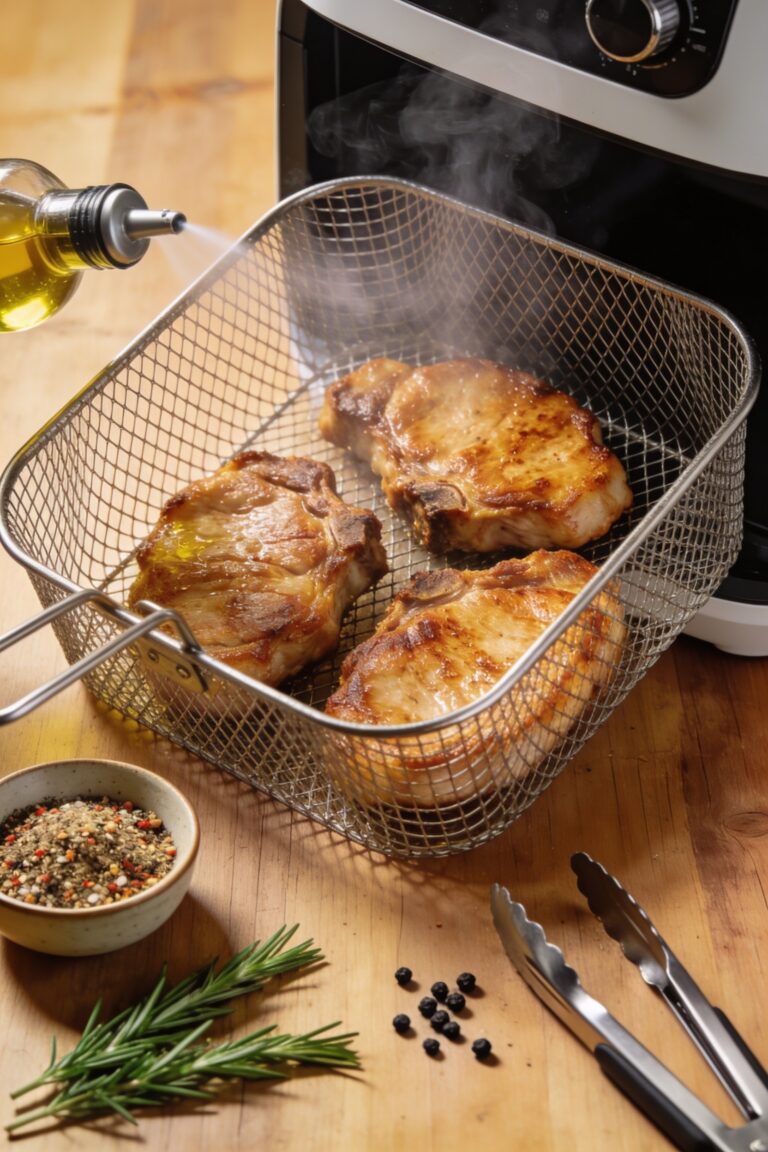
Getting your proteins ready makes all the difference between a soggy disappointment and something genuinely crispy. I pat my chicken thighs bone-dry before seasoning—moisture is the enemy of crispiness. For marinate variations, I’ll go simple with paprika, garlic powder, and thyme, or switch it up depending on my mood.
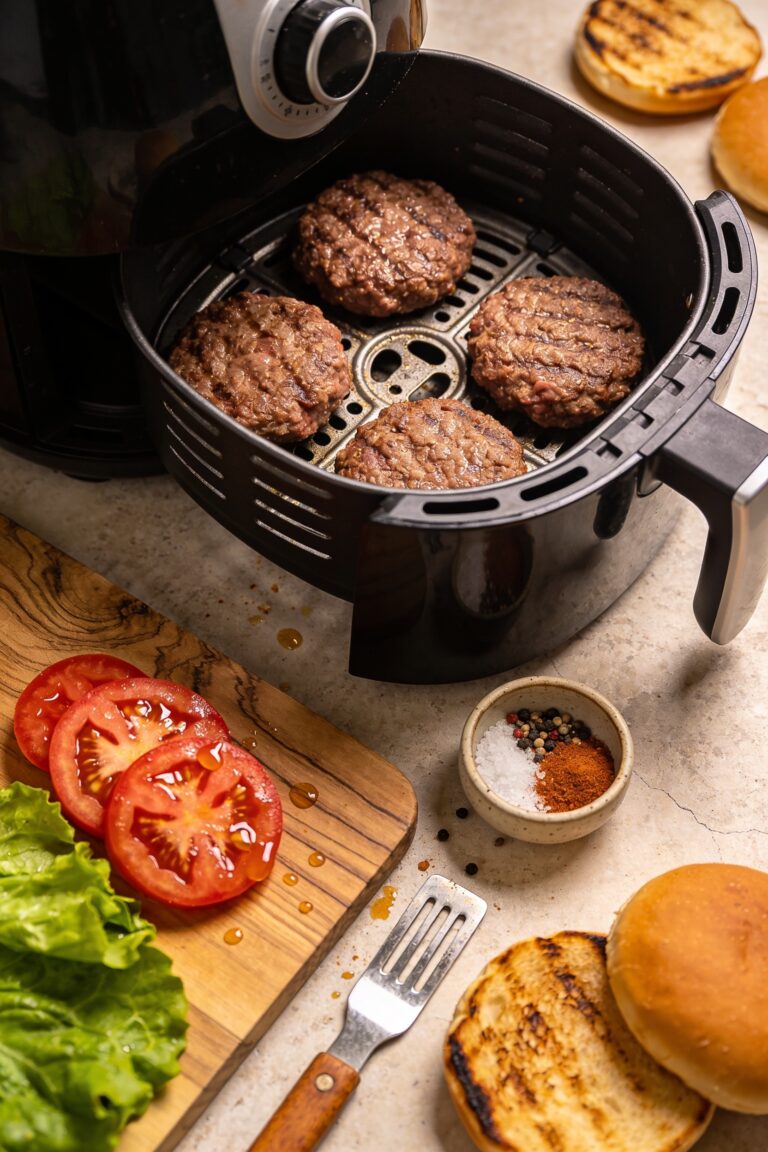
With meatballs, I combine ground beef, diced onion, and egg, then form them into uniform sizes. That consistency matters for texture testing—you want everything cooking at the same rate.
For tofu, I press it hard, cube it, and toss it in soy sauce and cornstarch. Bread your shrimp in egg and almond flour for that fried texture without actual frying. The key? Prep everything identically so nothing gets left behind or overdone.
Air Fryer Temperature and Timing for Every Protein
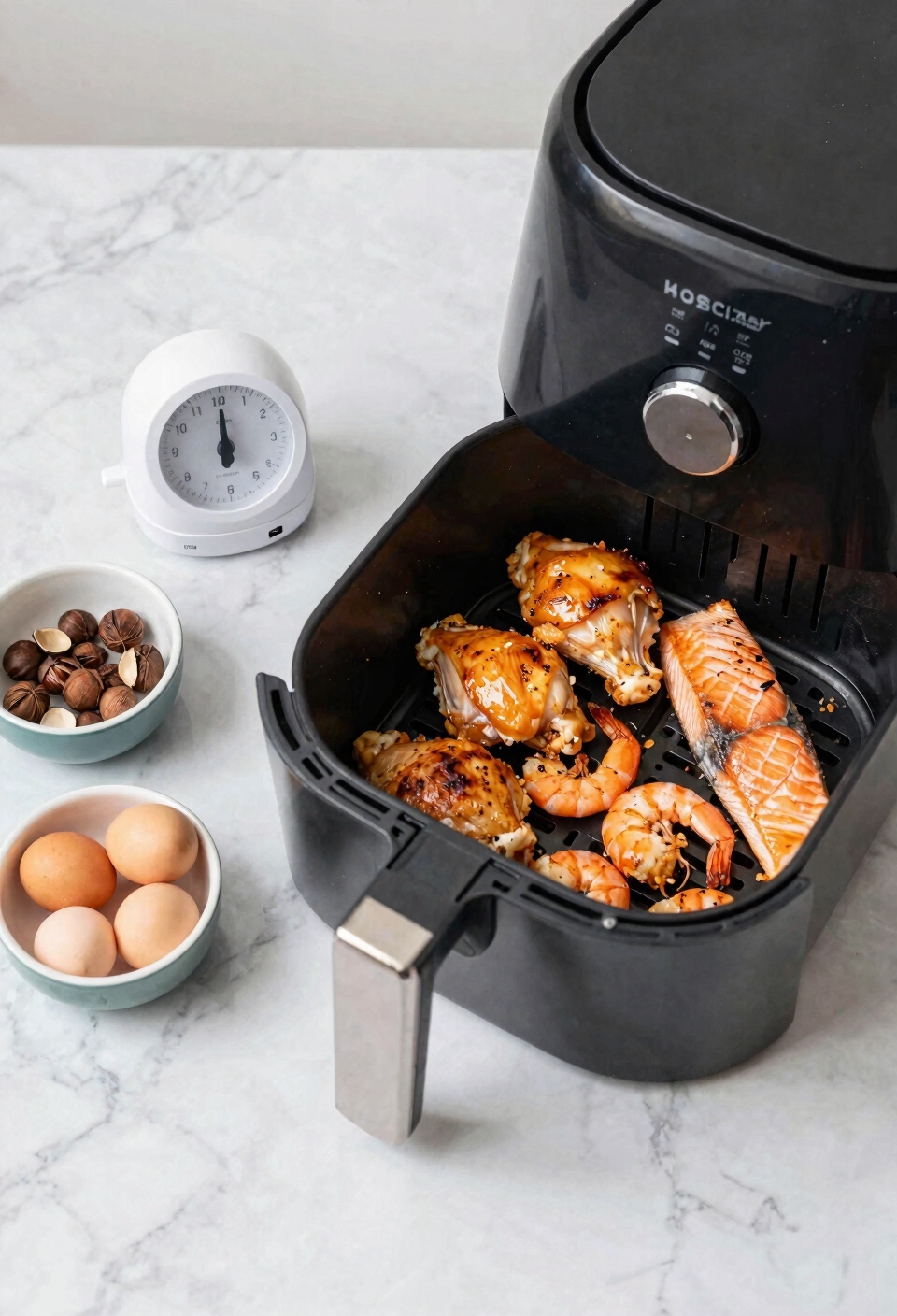
Now that your proteins are prepped and ready to go, nailing the right temperature and timing is what actually makes the magic happen. I’ve learned that chicken thighs need 400°F for 18-20 minutes, while meatballs do great at 380°F for 8 minutes. Tofu bites? Go 375°F for 12-15 minutes and shake them halfway through.
Here’s the thing about thick cuts—I always use an internal thermometer to check doneness, then let them rest. That carryover cooking keeps working even after you pull them out, so don’t panic if they look slightly underdone. Trust the process. Your proteins will finish cooking while they cool, giving you perfectly cooked results every single time.
Cook in Single Layers and Double Batches for Even Crispness
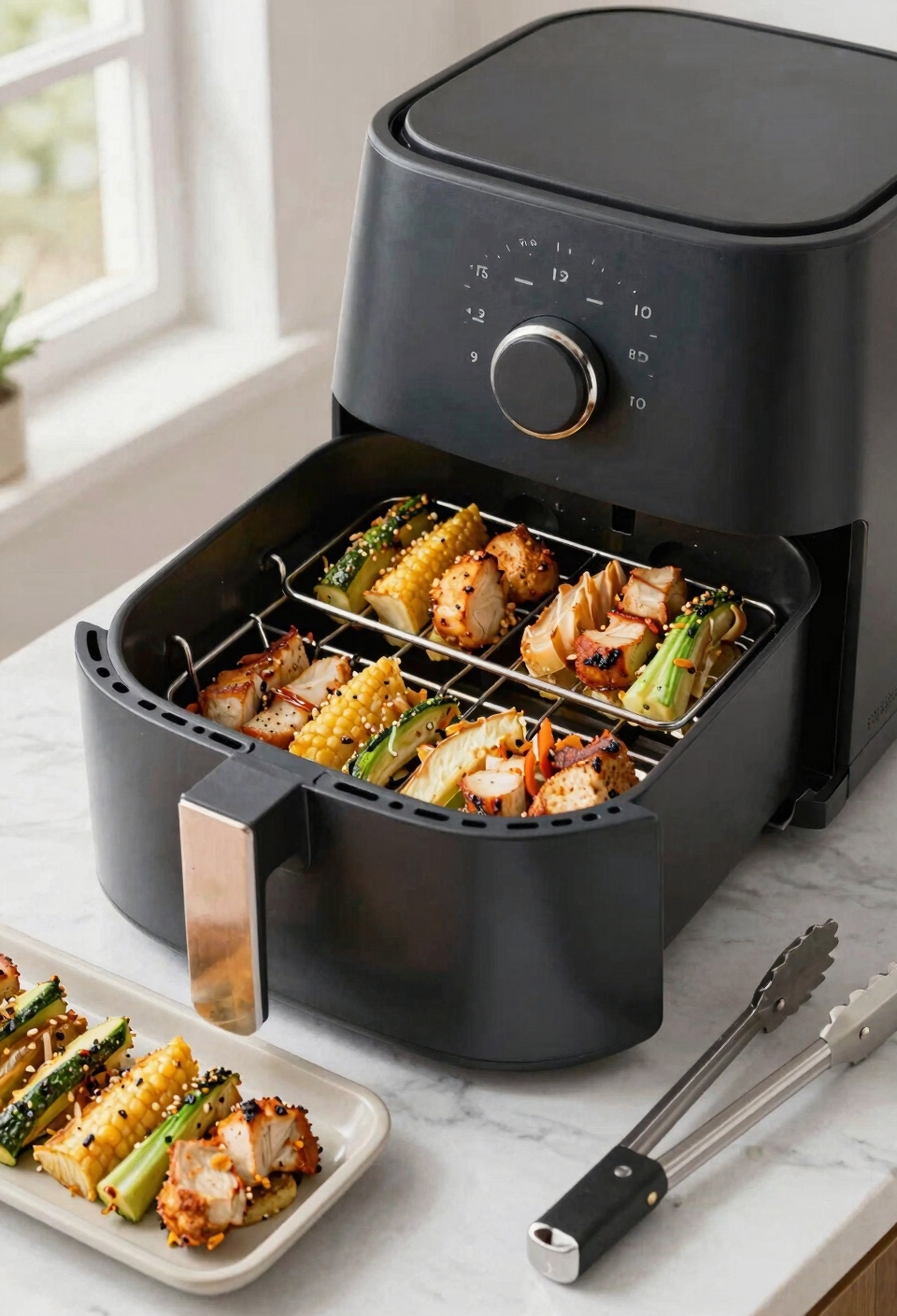
Once you’ve nailed your temperatures and timing, the next move is making sure every single piece cooks the way you want it to. Here’s the thing: single layering benefits are real. When you pack your basket too tight, you’re asking for soggy, unevenly cooked food. I learned this the hard way with chicken thighs that turned out half crispy, half sad.
Cook everything in a single layer, and you’ll get that even crisping you’re after. Now, batch size limits matter here. Don’t force 24 meatballs into one go when you can do two solid batches of 12. Your air fryer has limits, and respecting them means better results every time. You’ve got this.
Freeze and Reheat Your Batch-Cooked Meals in Minutes
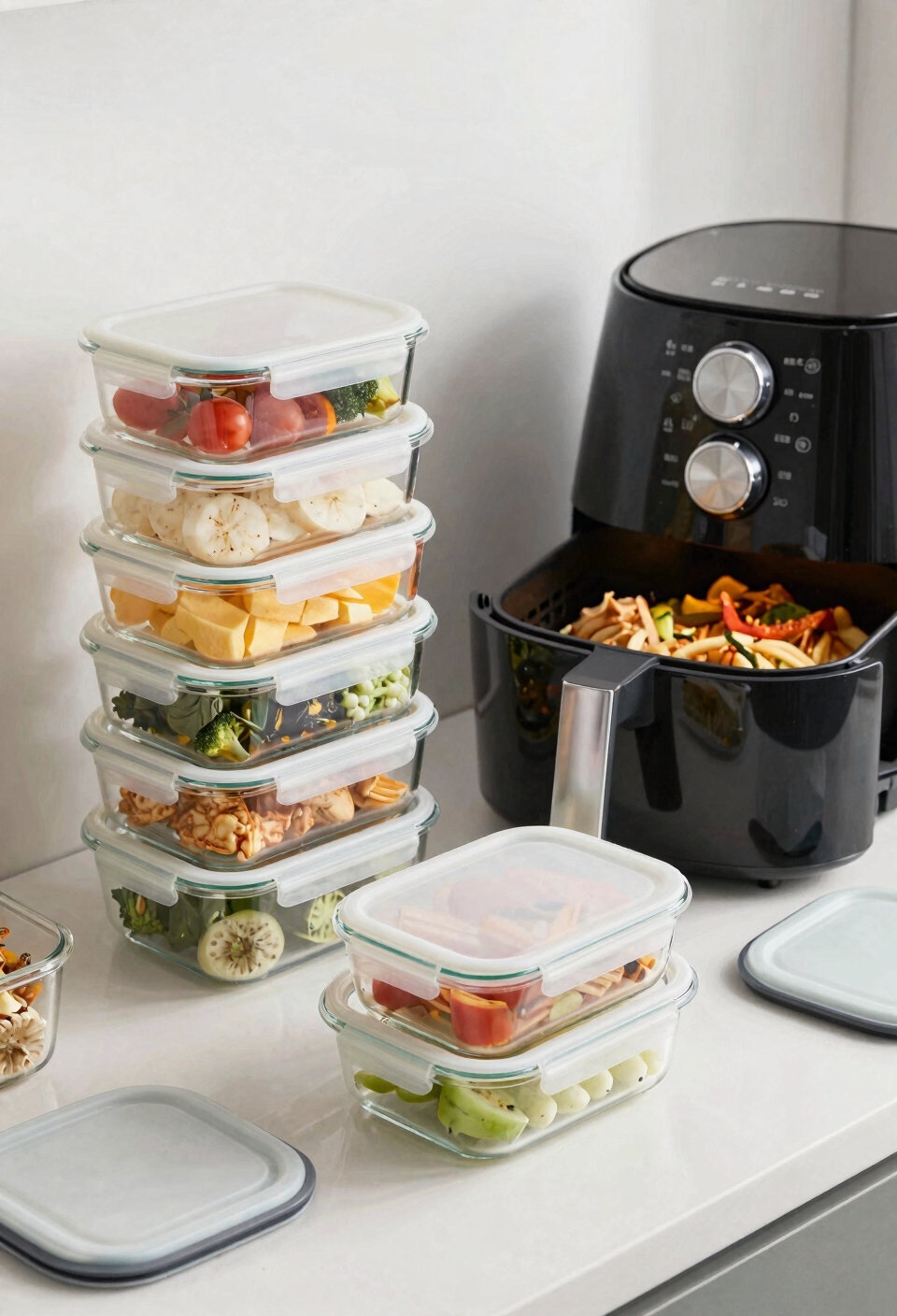
After you’ve batch-cooked a pile of chicken thighs, meatballs, or burritos, the real magic happens in your freezer.
Now, here’s the thing: proper storage makes reheating ridiculously easy. I vacuum seal most proteins to prevent freezer burn, which honestly extends their life and keeps them tasting fresh. Label everything with dates—your future self will thank you.
When you’re ready to eat, thaw your meals beforehand if possible. Reheat chicken at 320°F for just 3–5 minutes until it’s crispy again. Frozen meatballs? Crank it to 400°F for 15 minutes. For burritos wrapped in foil, microwave crisping works great on lower power first, then finish in the air fryer for that golden exterior.
This strategy transforms batch cooking from a Sunday chore into actual convenience.
Pair Proteins to Vegetables: Timing and Flavor Combinations
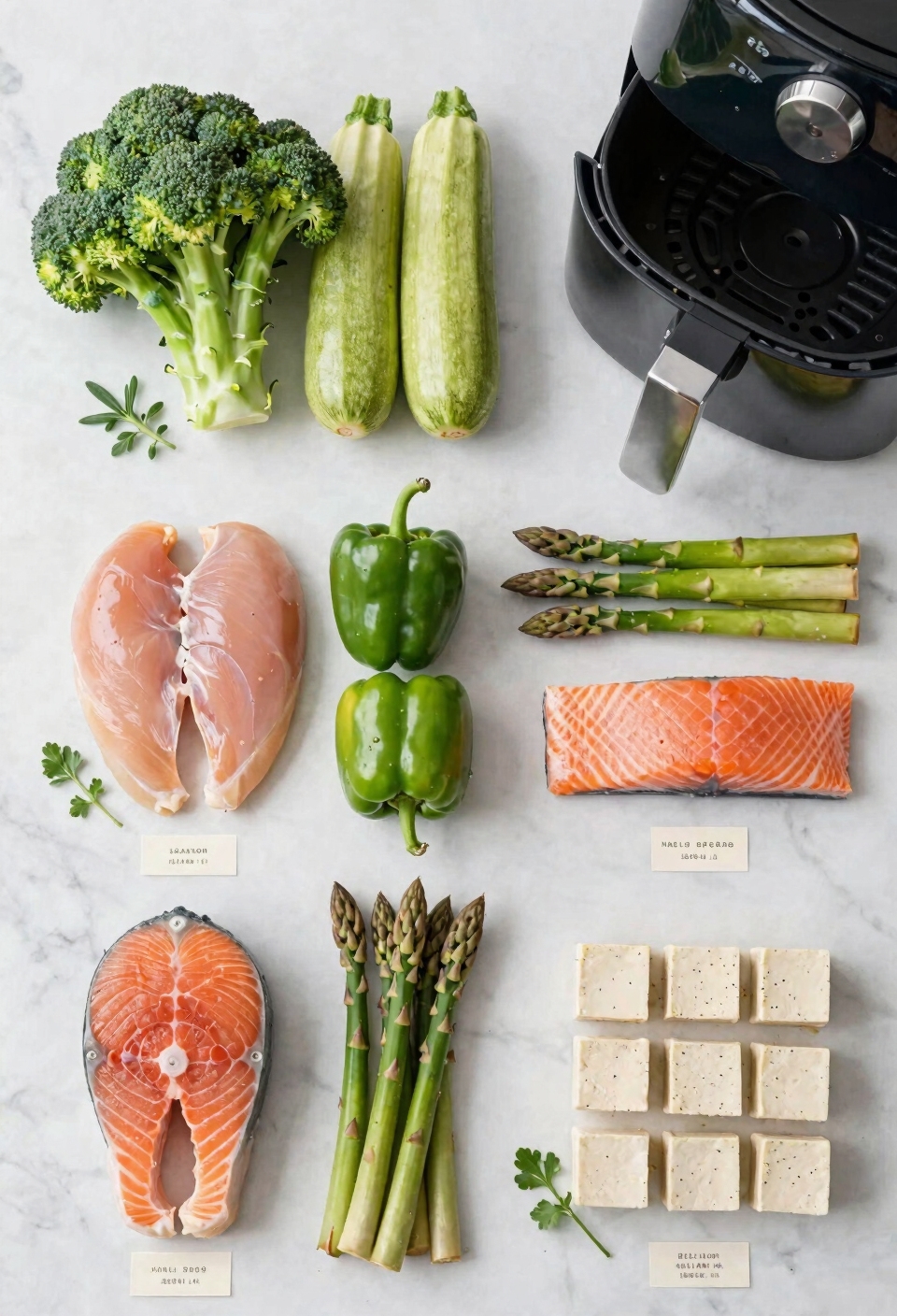
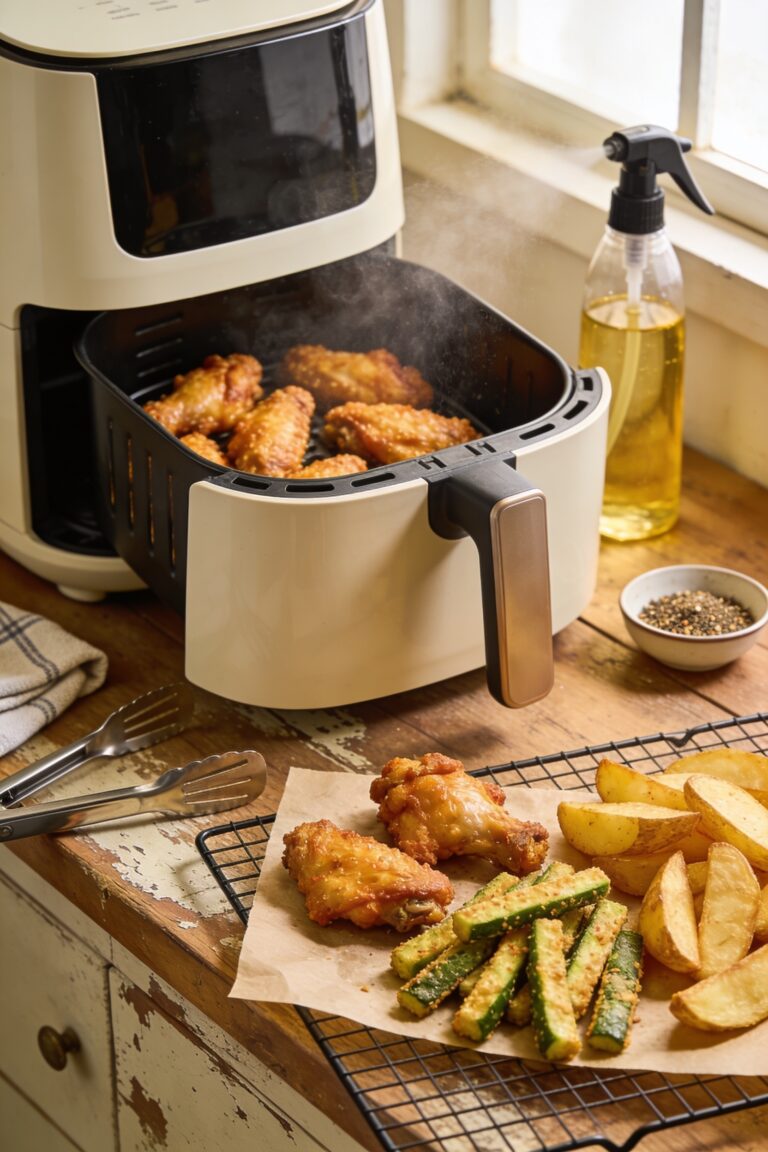
Your perfectly reheated meatballs and crispy chicken thighs deserve a solid sidekick, and that’s where vegetables come in. I’ve found that timing matters more than you’d think. Sweet potato fries need 10-15 minutes at 375°F, while green beans finish in about half that time. Here’s the thing: pair your proteins with vegetables that won’t compete for oven real estate. Herb pairings like garlic powder and thyme complement chicken beautifully, while a squeeze of lemon adds acid balance to rich meatballs. Toss green beans in salt, pepper, and garlic powder before air frying. The key is batching vegetables separately from proteins, then combining them in your meal containers. Your taste buds will thank you, I promise.
Avoid Common Batch Cooking Mistakes
Look, I’ve made every batch cooking mistake in the book—literally burned entire trays of chicken thighs while convinced I’d nailed the timing, crowded my air fryer basket so densely that nothing got crispy, and reheated frozen meatballs at the wrong temperature until they turned into sad little hockey pucks.
The overcrowding hazards are real. You need space for air to circulate, so resist stuffing that basket full. Single layers win every time.
Uneven seasoning kills me too. I’d season the top of my meatballs generously while forgetting the bottoms entirely. Now I toss everything thoroughly before cooking.
Here’s what changed the game: pat proteins dry, don’t rush the process, and actually use a thermometer. Your future meals will thank you.
Plan Your Weekly Batch Cooking Routine
When you’ve got a solid batch cooking plan, the rest of the week practically runs itself—no more staring into the fridge at 6 p.m. wondering what to eat. Start with grocery scheduling by picking your proteins first: chicken thighs, meatballs, tofu. Then build around them with sides like sweet potato fries and green beans. Portion mapping keeps things simple—decide if you’re making individual containers or family-sized batches. I prep on Sunday, cook everything in one air fryer session, then divvy it into grab-and-go containers. This approach cuts your weeknight stress dramatically. You’ll actually eat the healthy food you prepped instead of ordering pizza again.
Frequently Asked Questions
What Size Air Fryer Is Best for Batch Cooking Multiple Proteins Simultaneously?
I’d recommend a large capacity air fryer with stackable baskets for batch cooking proteins simultaneously. This setup lets you cook multiple items at once, maximizing efficiency and reducing your overall cooking time substantially.
How Do I Prevent Moisture Buildup When Air Frying Frozen Meals Without Thawing First?
I’ll cut to the chase: don’t skip thawing—it’s your ace in the hole. I use elevated racks for airflow gaps, make sure venting bags aren’t blocking steam release, and maximize circulation to prevent moisture buildup effectively.
Can I Mix Different Proteins in One Air Fryer Batch Without Flavor Transfer?
I’d recommend keeping proteins separate to avoid marinade interaction and spice migration. Strong flavors like garlic or paprika can transfer between items. If you’re short on space, use dividers or cook them sequentially instead.
What’s the Shelf Life of Batch-Cooked Meals Stored in the Freezer?
I’d recommend keeping your batch-cooked meals frozen for up to three months for ideal freezer duration. Watch for quality indicators like freezer burn or discoloration. When you notice these signs, it’s time to toss them out.
Do I Need Special Containers for Storing Prepped Proteins Before Air Frying?
You don’t need special containers, but I’d recommend airtight containers to keep proteins fresh. Silicone dividers help organize different proteins, preventing flavors from mixing while maximizing your fridge space efficiently.
Conclusion
Your air fryer isn’t just a kitchen gadget—it’s your secret weapon for reclaiming time. You’ve planted seeds of prep work that’ll bloom into ready-made meals all week long. Those golden, crispy batches? They’re freedom in a container. You’ve learned the rhythm now: temperature, timing, layers, freezing. Stack these strategies together, and you’ll transform Sunday into an investment that pays dividends every single day.