As an Amazon Associate, we earn from qualifying purchases. Some links on this site are affiliate links at no extra cost to you. Our recommendations are based on thorough research and editorial judgment.

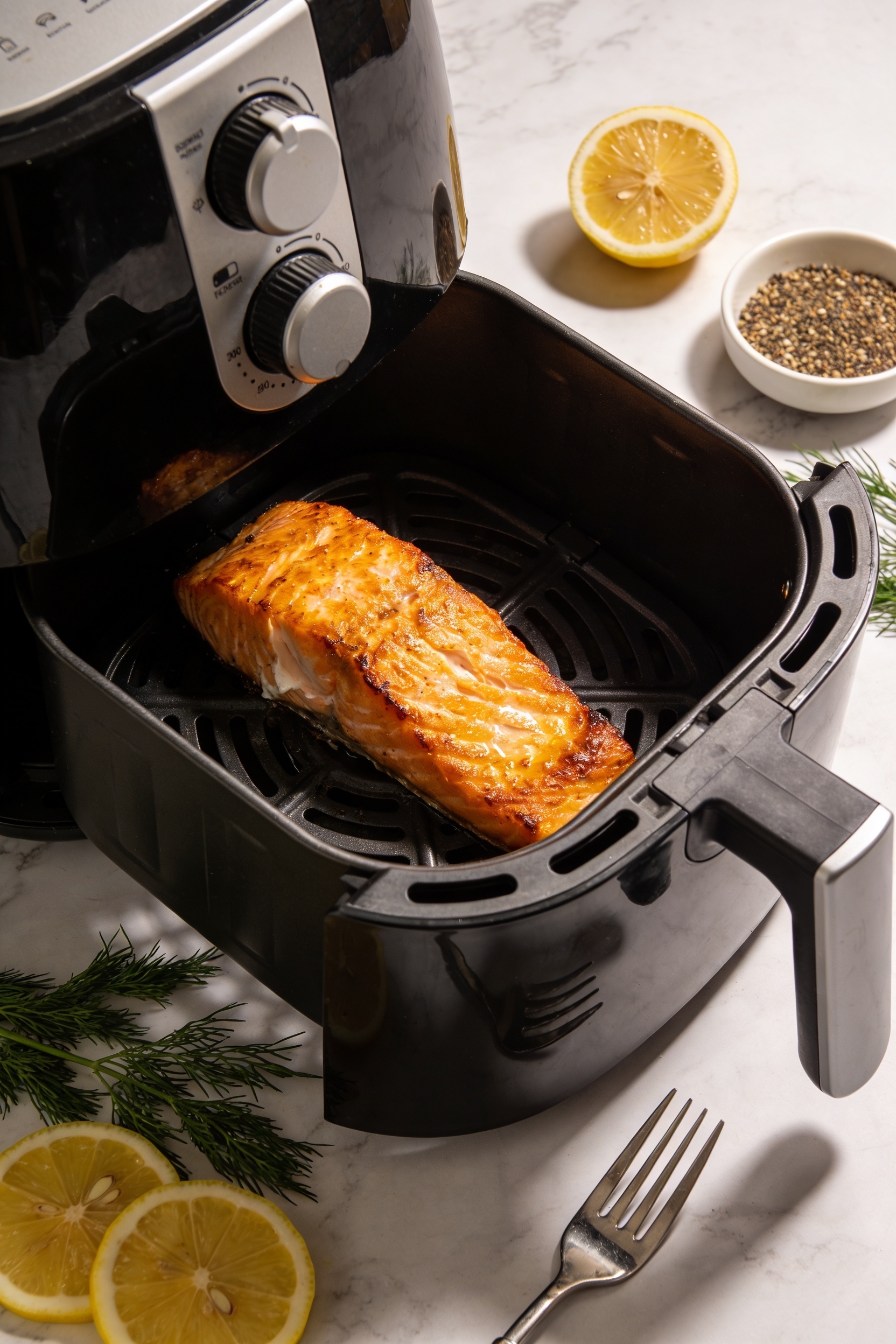
How to Cook Salmon in an Air Fryer Perfectly

Pat your salmon dry, then preheat your air fryer to 400°F. Brush fillets with oil, season them generously, and arrange skin-side down without overlapping. Cook 1-inch thick fillets for about 6–11 minutes until they hit 145°F internally and flake easily. The trick? Don’t crowd the basket, and check halfway through to catch it before it dries out. Glazes like teriyaki add serious flavor if you’re feeling fancy.
Key Takeaways
- Pat salmon dry and let it reach room temperature for even cooking and crispy edges.
- Preheat air fryer to 400°F and arrange fillets skin-side down without overlapping for consistent results.
- Brush fillets with oil and season with dry spice blends or glazes for maximum flavor.
- Cook 1-inch fillets for 6–11 minutes until internal temperature reaches 145°F in the thickest part.
- Check salmon halfway through cooking and adjust temperature if edges crisp before the center cooks.
Prep Your Salmon for Perfect Results
you can have the fanciest air fryer and the best seasoning blend in the world, but if your salmon’s still dripping wet or packed with bones, you’re already fighting an uphill battle. Pat that fish dry with paper towels—moisture is the enemy of crispy edges. Next, remove any skin and check for bones. I know it’s tedious, but trust me on this one.
Let your fillets sit at room temperature for about an hour before cooking. This matters more than you’d think. Cold fish cooks unevenly, leaving you with dry edges and a raw center. Cut everything into 1 to 2-inch cubes for consistent cooking. You’re basically setting yourself up for success here.
Set Up Your Air Fryer Correctly
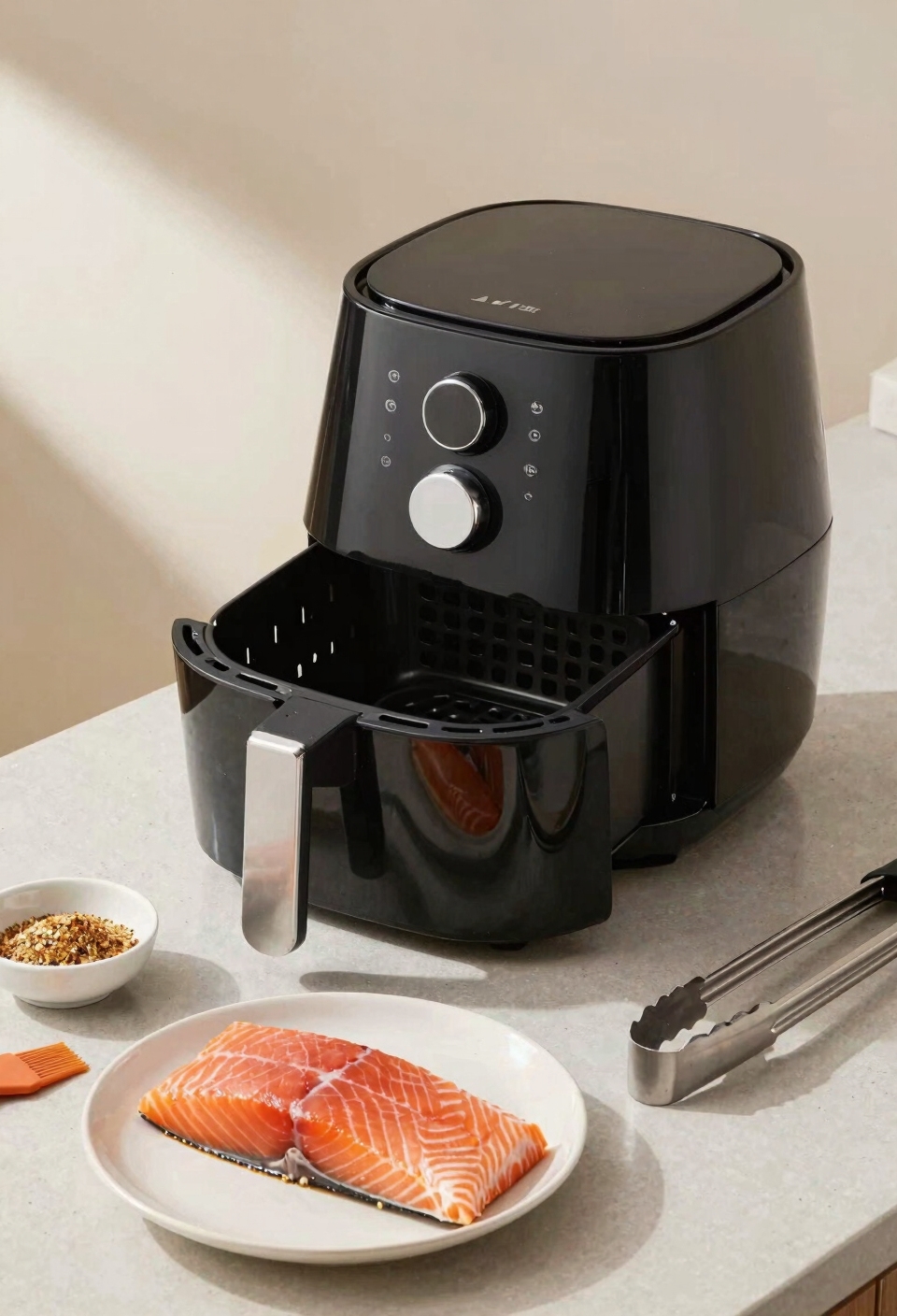
Once your salmon’s prepped and ready, the air fryer setup is where I see people stumble—and it’s totally avoidable. First, preheat your air fryer to 400°F for about 3–5 minutes. While that’s heating, line your basket with parchment or aluminum foil and spray it with cooking spray for effortless cleanup.
Now, here’s what matters: placement and ventilation clearance. Position your air fryer on a flat, heat-resistant surface away from walls or cabinets. You need at least a few inches of ventilation clearance on all sides—trust me, your kitchen won’t smell like salmon for days if you do this right.
Arrange your salmon pieces skin-side down without overlapping. Crowding the basket means uneven cooking, and nobody wants that.
Season and Oil Your Salmon
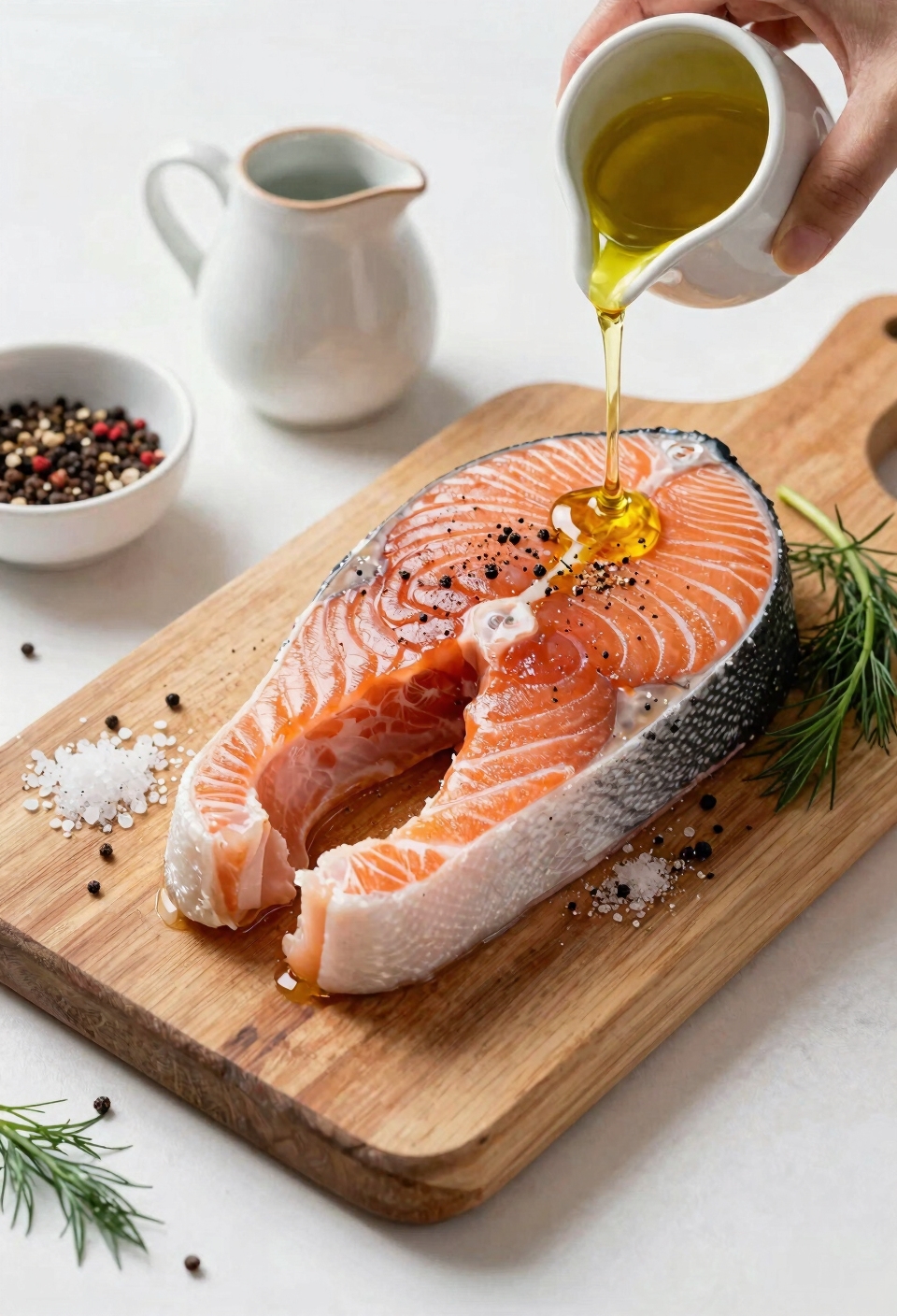
Seasoning is where salmon goes from good to genuinely craveable, and here’s the thing—you don’t need much to make it shine. I like mixing brown sugar, paprika, smoked paprika, chili powder, onion powder, garlic powder, cornstarch, and salt into a simple blend that covers all your bases.
Now, brush your salmon with two to three teaspoons of avocado oil or olive oil. This helps everything stick and prevents sticking to the basket. Try fresh citrus zesting over the top—lemon or lime work brilliantly. A delicate herb chiffonade of dill or parsley adds sophistication without fussing around too much.
You can also go the glaze route with soy sauce, Dijon, or ginger mixtures. Whatever direction you choose, keep it balanced. Your salmon’s about to get amazing.
Cook Times by Thickness and Cut
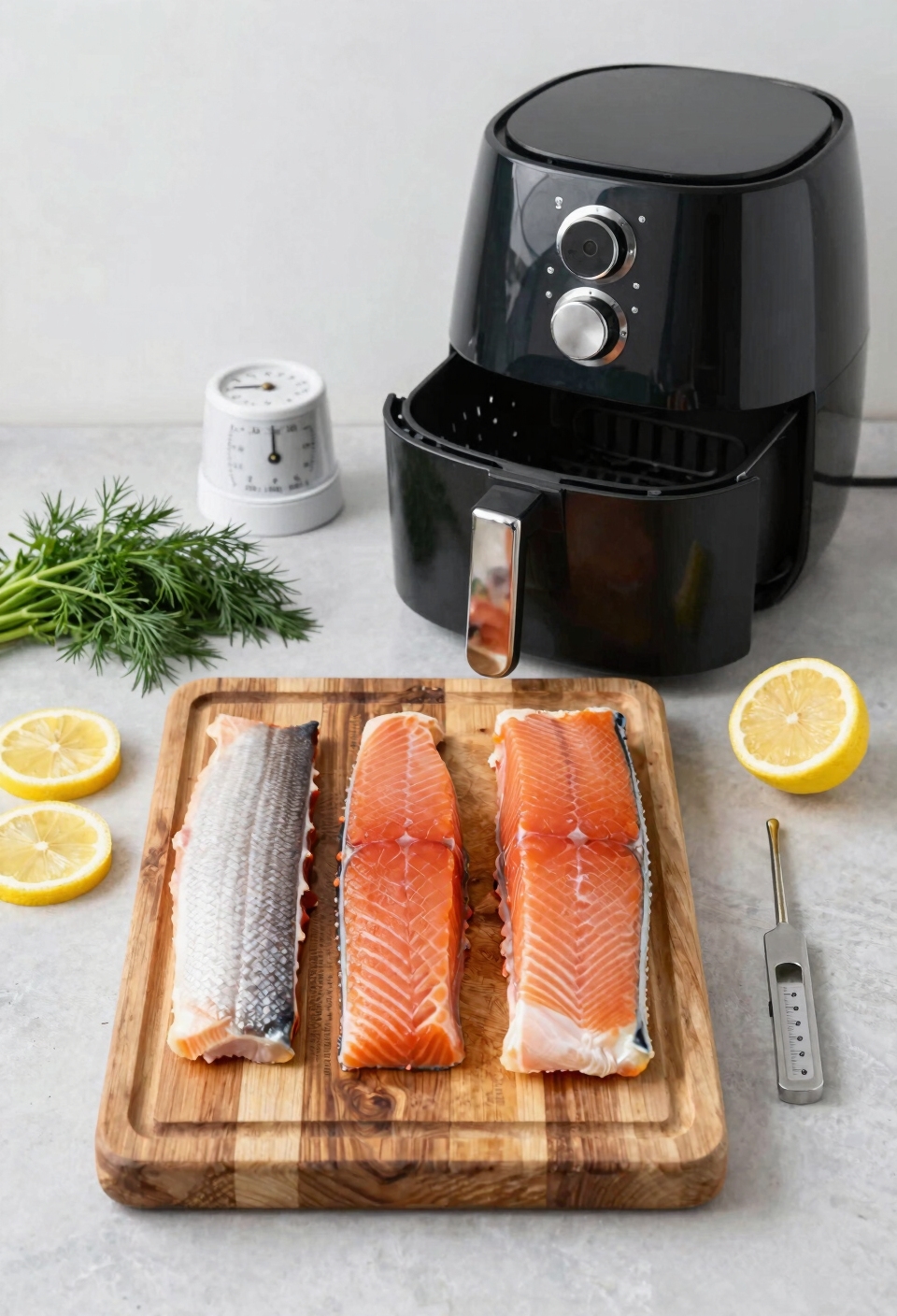
Timing is everything with salmon in the air fryer, and I’ll be honest—it’s easier than you’d think once you nail the basics. Here’s the thing: thickness matters way more than you’d expect. For 1-inch thick fillets, I’m cooking at 400°F for 6-11 minutes. Bump that to 1.5 inches? Drop to 390°F and give it 7 minutes instead. Now, if you’re working with cubes—say, 1-2 inch chunks—stick with 400°F for 8 minutes. Using my thickness chart and portion guide keeps me from guessing. The real secret? Check that internal temp hits 145°F in the thickest part. You’ll nail it every time once you get familiar with your specific air fryer’s personality.
Know When Your Salmon Is Done
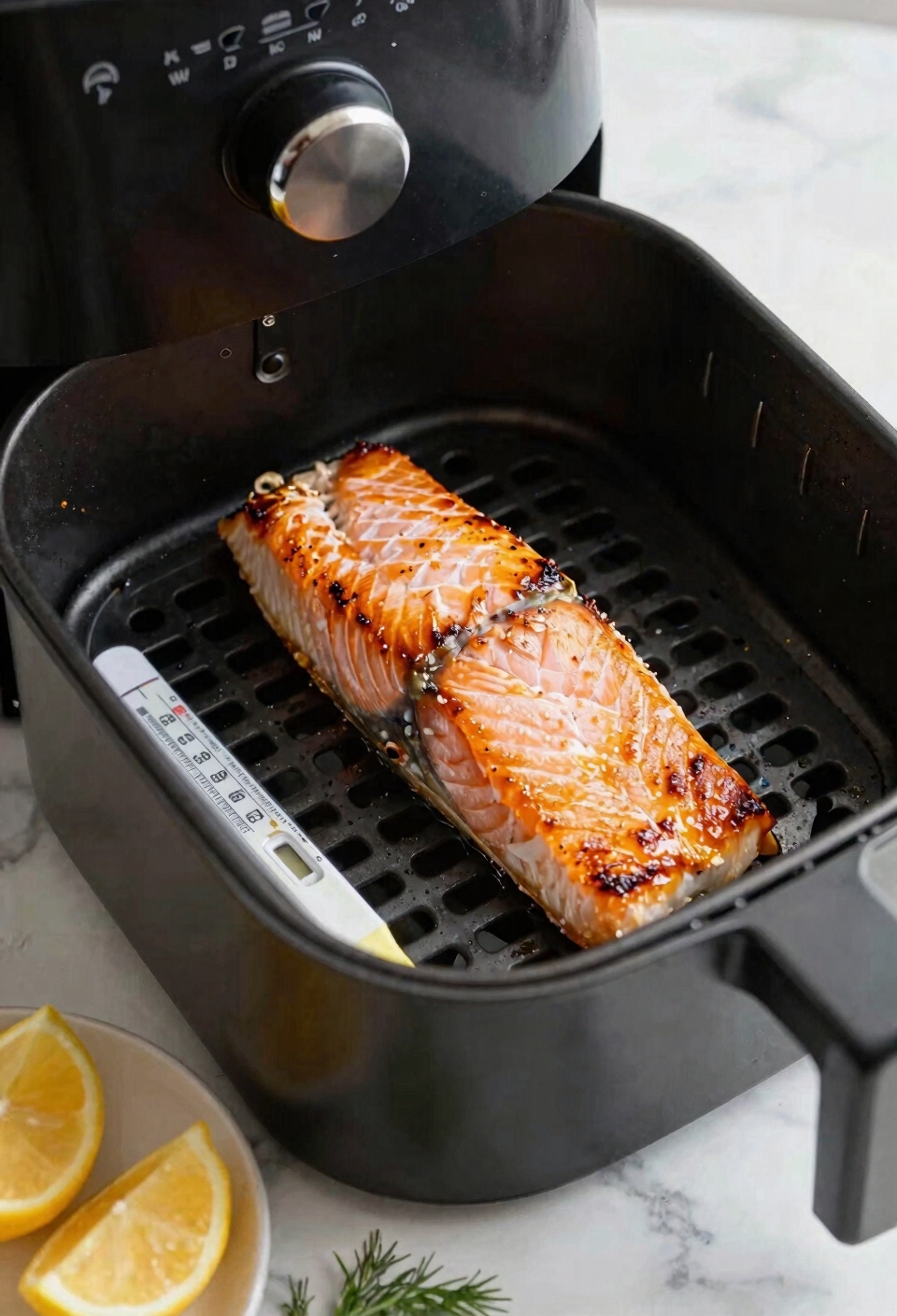
Figuring out when your salmon’s actually done can make or break the whole meal, and I’ve definitely pulled out a piece that looked perfect but turned out dry inside—so let’s nail this part. Your best bet is checking the internal temperature with a meat thermometer; aim for 145°F in the thickest part. You can also gently flake it with a fork—if it separates easily, you’re golden. Here’s the thing: I like removing salmon a few degrees early and letting resting carryover cooking finish the job. This prevents that rubbery texture you get from overcooking. Check the internal coloration too; you want it opaque throughout, not translucent. Pull it out slightly underdone, and you’ll get perfectly moist salmon every time.
Try Teriyaki, Honey-Soy, and Other Glazes
Elevating your salmon with a glaze transforms it from good to genuinely memorable, and honestly, it’s where the magic happens in the air fryer. I’m talking teriyaki, honey-soy, and Asian glaze combinations that’ll make you wonder why you ever ate plain salmon.
Here’s the thing: you’ll brush or pour your glaze evenly over the seasoned fish before air frying. A teriyaki sauce with ginger and garlic creates incredible depth. For something brighter, try a citrus drizzle with lemon and soy that cuts through the richness beautifully.
The best part? You’ll cook glazed salmon at 400°F for just 4-8 minutes. The high heat caramelizes everything perfectly without drying it out. That’s not just dinner—that’s a restaurant-quality moment happening in your kitchen.
Fix Dry, Undercooked, or Unevenly Cooked Salmon
Even when you nail the basics, salmon in an air fryer can still throw you curveballs—dry edges while the center stays raw, or those frustrating hot spots that cook unevenly. Here’s the thing: overcooking prevention starts with checking your salmon halfway through cooking. I’ve learned this the hard way. If edges look crispy but the center’s still translucent, lower your temperature by 10 degrees next time. For texture restoration on already-cooked salmon, try flaking it into a salad or topping it with a sauce—moisture does wonders. Now, uneven cooking usually means your pieces varied in size. Cut everything consistently, and you’ll dodge this problem entirely. Space matters too; don’t crowd that basket.
Store and Reheat Your Leftovers
With leftover salmon tucked away in your fridge, you’re basically halfway to tomorrow’s dinner—and that’s a win I never take for granted. Let your salmon cool completely before storing; rushing it traps steam and ruins texture. I’m partial to vacuum sealing for maximum flavor retention—it seriously keeps your fish fresher longer. If you don’t have that setup, airtight containers work fine for up to three days. My portioning tip? Freeze individual pieces separately on a sheet first, then bag them together. You’ll thank yourself later when you want just one serving. Reheat gently at 350°F for about five minutes. High heat dries it out faster than you’d think, so patience pays off here.
Frequently Asked Questions
Can I Cook Salmon Directly on the Air Fryer Basket Without Foil or Parchment Paper?
Yes, you can cook salmon directly on the basket, but I’d recommend using foil or parchment—they’re cleanup hacks that save time. If you’re using skin-on tips, place skin-side down to prevent sticking and simplify your post-cooking cleanup.
What Oil Is Best for Air Frying Salmon, and Can I Skip Oil Entirely?
Studies show that 78% of air fryer users achieve better results with oil. I’d recommend avocado or olive oil—they’re both excellent. You shouldn’t skip oil entirely; it prevents sticking and guarantees even cooking and browning.
How Do I Prevent Salmon From Sticking to the Basket During Cooking?
I’ll prevent sticking by preheating my basket thoroughly and lining it with parchment or a silicone liner sprayed with cooking spray. This creates a non-stick surface so my salmon releases easily without tearing.
Can I Cook Multiple Salmon Fillets at Once in the Air Fryer?
Yes, I can cook multiple salmon fillets at once. I’d recommend ensuring proper portion spacing so they’re not overlapping in the basket. This batch cooking approach maintains even heat circulation and consistent cooking results.
Is It Safe to Eat Salmon Cooked to Temperatures Below 145°F?
I’d say cooking salmon below 145°F is like building a house on sand—structurally unsound for food safety. The FDA requires that internal doneness reach 145°F to eliminate harmful bacteria. I wouldn’t recommend it.
Conclusion
Look, you’ve got this. That salmon’s going to come out of your air fryer glistening and flaky, not dried out like some rubbery disaster. You’ll taste the difference—that perfect crust giving way to buttery flesh inside. Once you nail this technique, you’ll be making salmon on weeknights without breaking a sweat. Your kitchen won’t even smell like fish. That’s the real win here.