As an Amazon Associate, we earn from qualifying purchases. Some links on this site are affiliate links at no extra cost to you. Our recommendations are based on thorough research and editorial judgment.

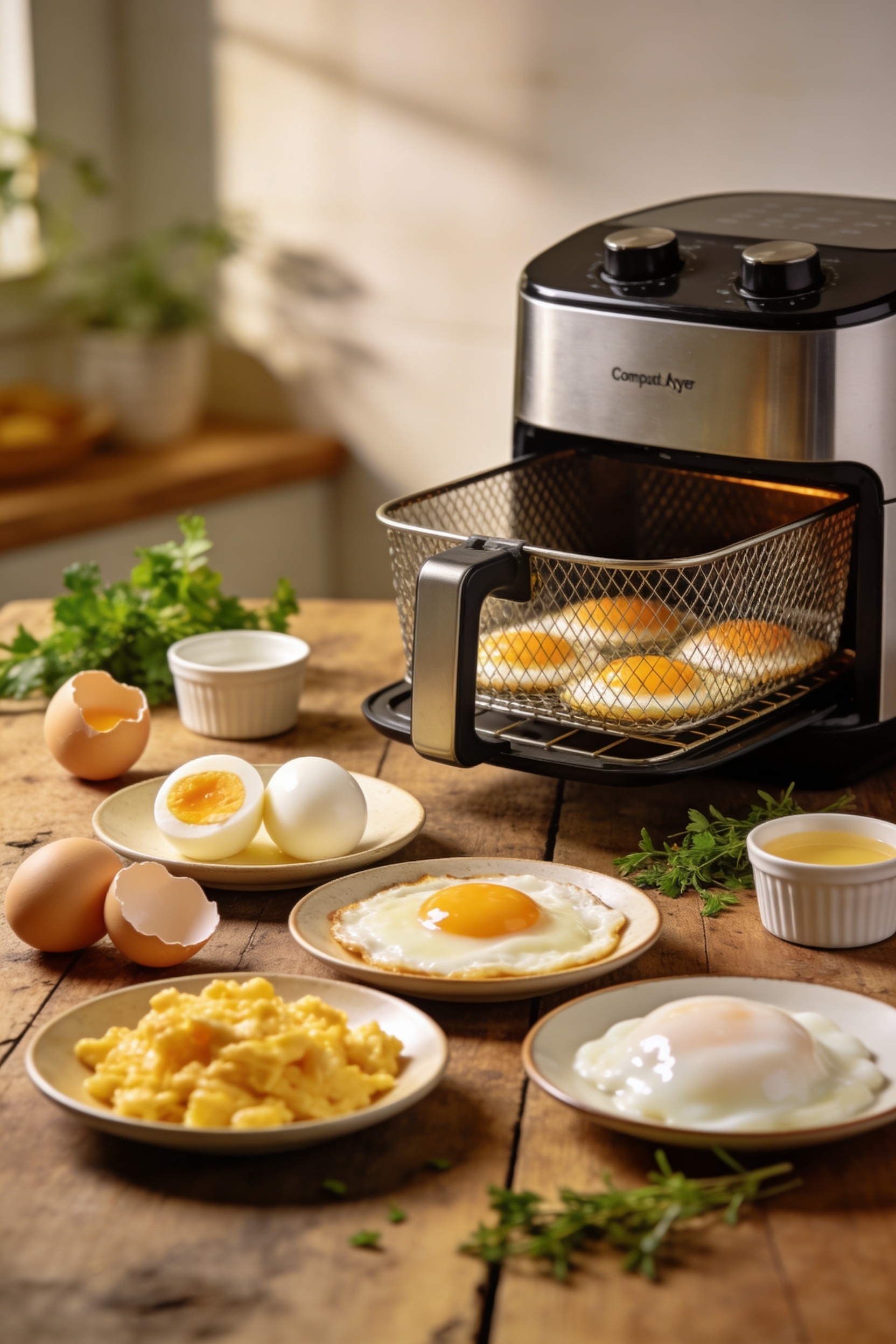
How to Cook Eggs in an Air Fryer: Every Style Explained

I’ve figured out how to cook pretty much any egg style in an air fryer, and honestly, it’s way easier than stovetop cooking once you dial in the timing. Boiled eggs take 9–15 minutes at 270°F depending on doneness. Fried, scrambled, and poached eggs each have their own sweet spot temperatures and times that deliver consistent results every single time. The key? Proper spacing, right temperature, and not overthinking it. Stick around to master every style.
Key Takeaways
- Boil eggs at 270°F: soft-boiled 9–10 minutes, jammy 11–13 minutes, hard-boiled 14–15 minutes with ice bath.
- Fry eggs at 350°F for 3–4 minutes; adjust temperature down for runny yolks or up for over-hard.
- Scramble eggs by preheating to 400°F, cooking at 300°F for 3 minutes, stirring twice, then finishing one minute.
- Poach eggs in ramekins filled with water at 360°F for 6 minutes; add 1–2 minutes for firmer yolks.
- Frittatas cook in non-stick cake pan at 320°F for 10 minutes, stir, then 10–12 minutes until firm.
Air Fryer Pans and Accessories That Actually Work
Look, I’ve made my share of egg disasters in air fryers—rubbery scrambles, stuck fried eggs, frittatas that refused to release from their pans—and I’ve learned the hard way that your cooking vessel matters just as much as your temperature and timing. Non-stick cake pans are your foundation, but here’s where it gets interesting. Silicone molds transform your game for individual portions and meal prep. They’re flexible, practically nonstick, and won’t scratch. For boiled eggs, stackable racks maximize your basket space without compromising air circulation. Ramekins work beautifully for poached eggs. Honestly, investing in quality non-stick cookware eliminates 90 percent of your frustration. You’ll spend less time scrubbing and more time enjoying perfectly cooked eggs.
Air Fryer Boiled Eggs: From Soft to Hard in 9–15 Minutes
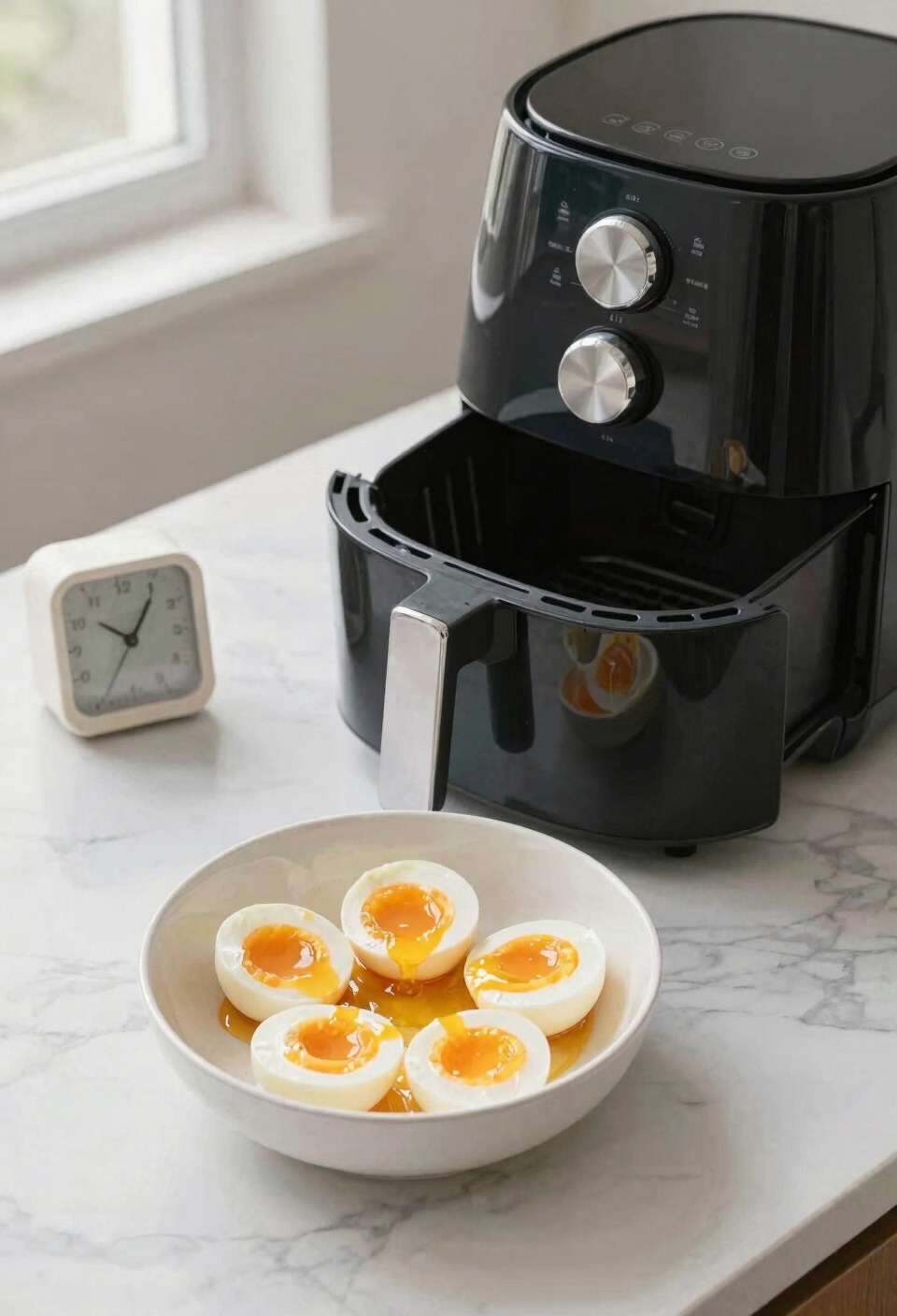
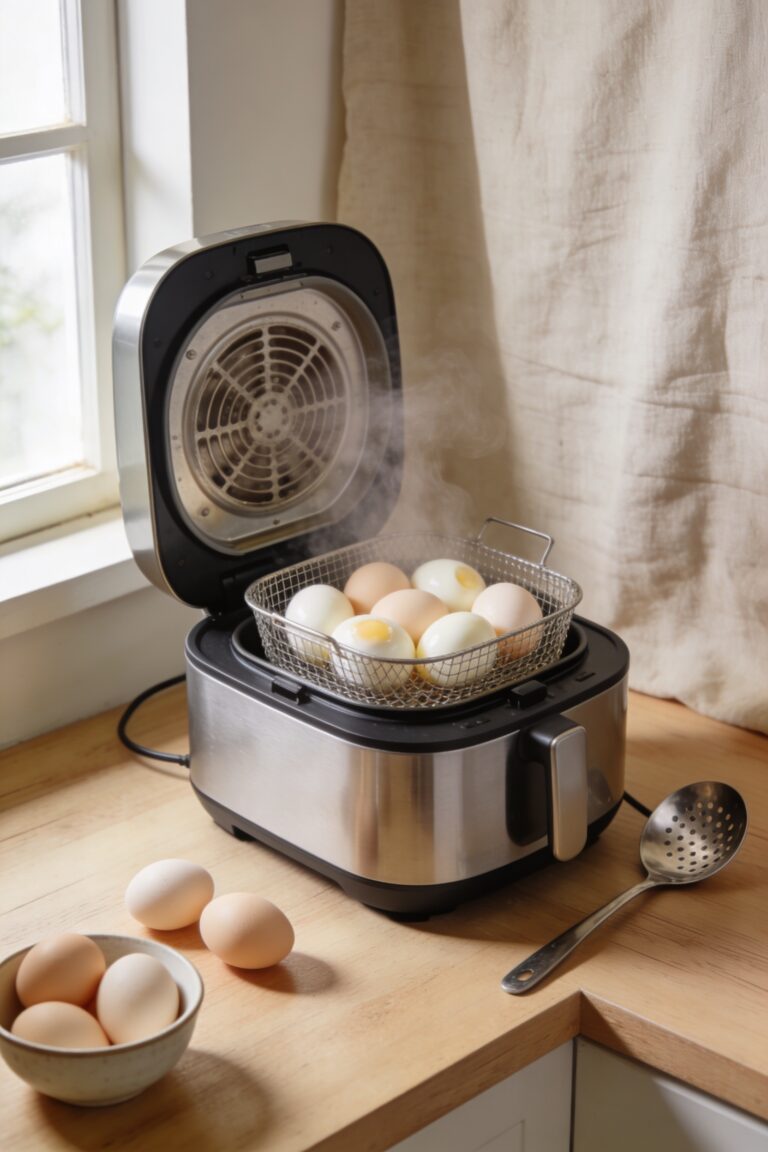
If you’ve ever fought with a pot of boiling water trying to time eggs perfectly, you’re going to love how the air fryer handles this. I preheat mine to 270°F for just two minutes, then arrange eggs in a single layer with breathing room between them. For soft-boiled eggs, I cook nine to ten minutes. Jammy yolks need eleven to thirteen minutes. Hard-boiled? Fourteen to fifteen minutes, then straight into an ice bath to stop the cooking. Now, shell thickness and altitude adjustments do matter—thicker shells might need an extra minute, and higher elevations sometimes require tweaking temperatures slightly. But honestly, once you nail your air fryer’s quirks, you’ll never boil eggs the old way again.
Air Fryer Fried Eggs With Perfect Runny or Solid Yolks
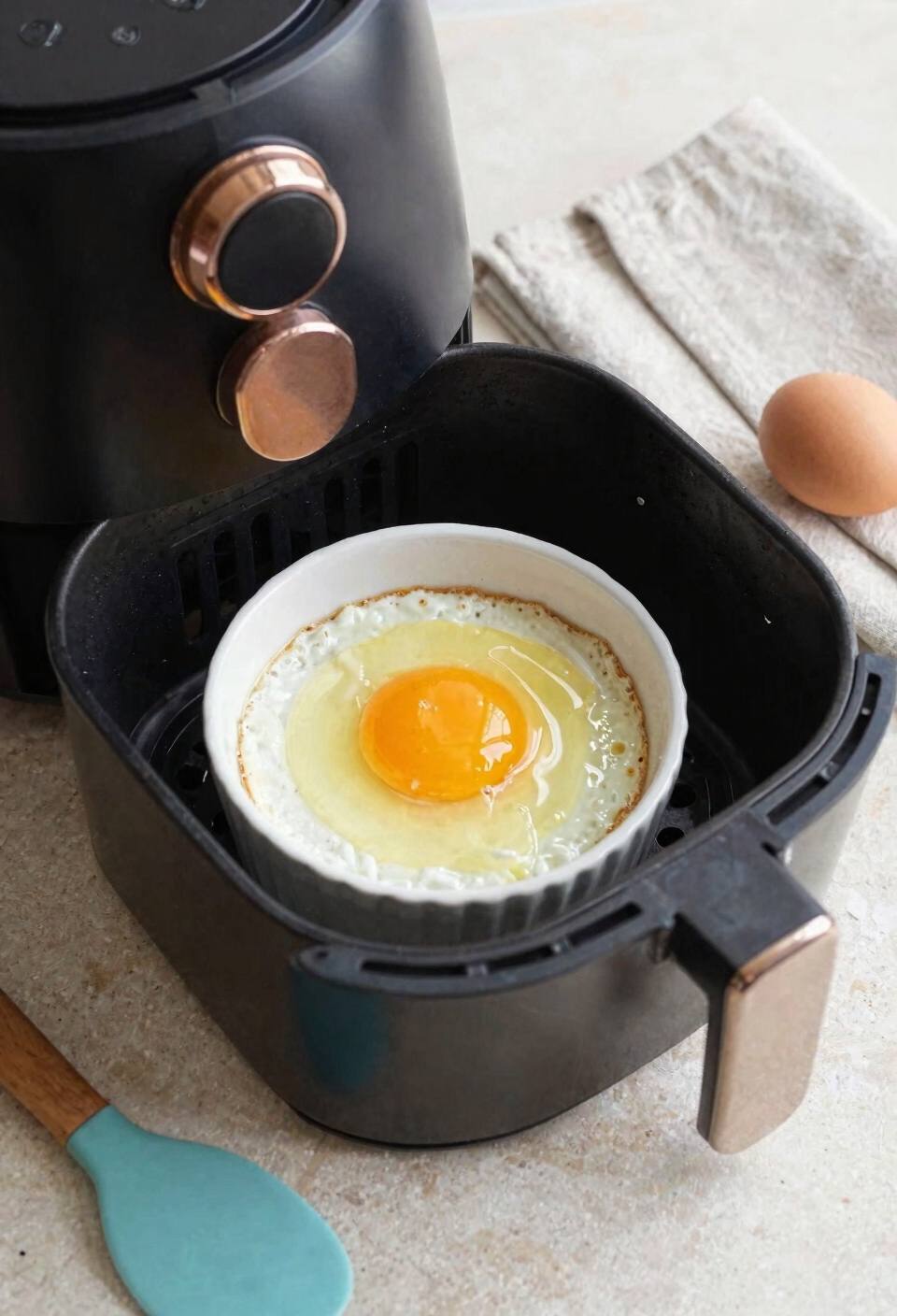
Swap out your skillet for an air fryer and you’ll never stress over runny edges or broken yolks again. All right, here’s what you do: grease a non-stick tray or small aluminum pan with oil, then preheat your air fryer to 350°F for five minutes. Crack your eggs into the hot pan and cook for three minutes if you want that gorgeous runny yolk. Want something firmer? Add another minute. For over-hard eggs, drop the temperature to 325°F and cook about eight minutes—though timing varies by model. Pan alternatives like ramekins work too. Season your yolks however you like. The beauty here is consistency. No more guessing. Your eggs come out perfect every single time.
Air Fryer Scrambled Eggs: Fluffy Results Every Time
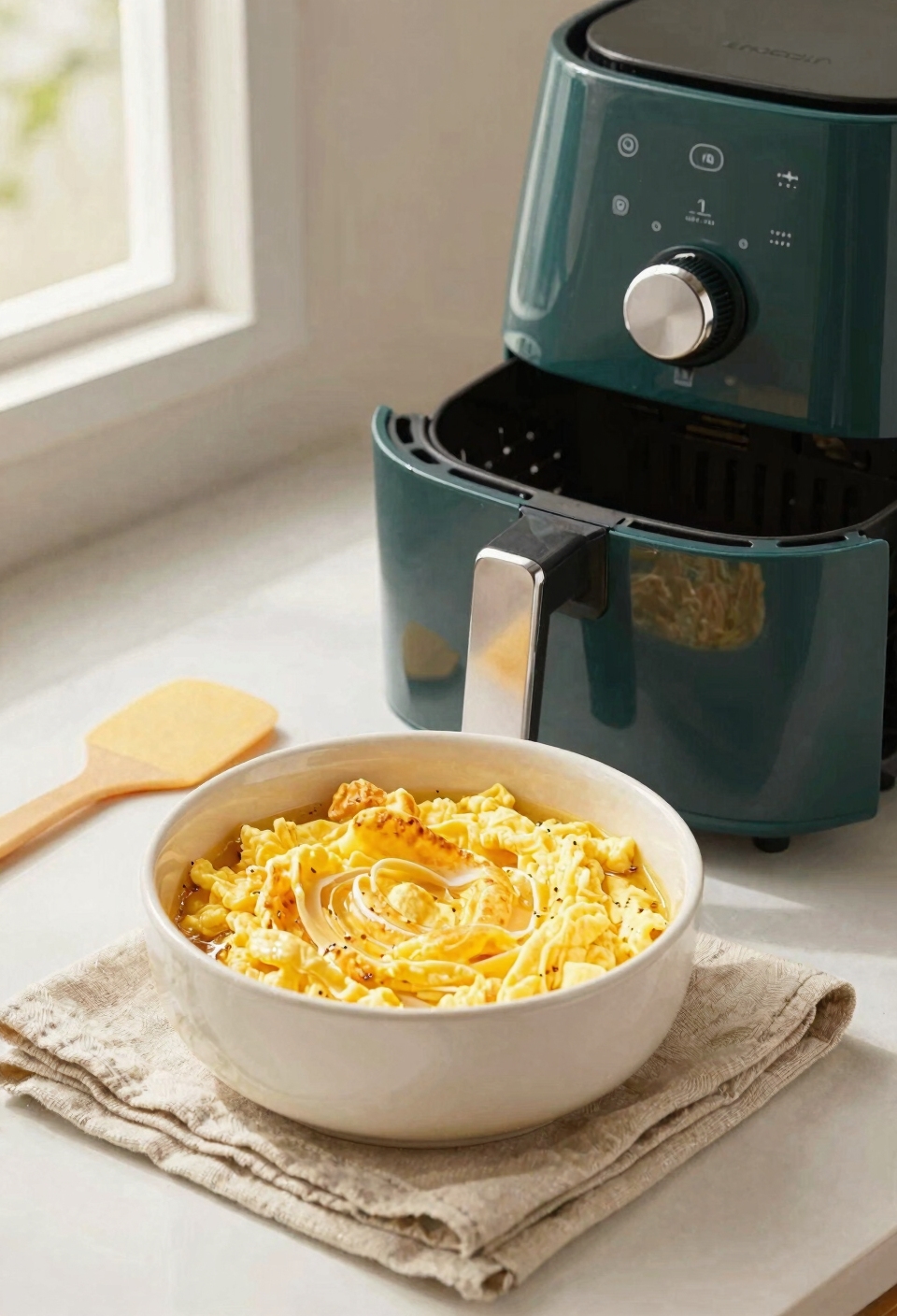
Scrambled eggs in an air fryer might sound like overkill, but I’m telling you—they come out impossibly fluffy every single time, no hovering over the stove required. Here’s the thing: the circulating heat creates this magic that traditional pans just can’t match.
Start by preheating to 400°F for five minutes, then spray your cake pan with avocado oil. Pour in your whisked eggs and cook at 300°F for three minutes. Now stir thoroughly—this is essential for that cloud-like texture. Cook two more minutes, stir again, then finish with one final minute.
Want to experiment? Herb variations like chives or dill add serious flavor, while texture enhancers such as cream or butter make them even richer. Check doneness and add one-minute increments until you nail your preferred consistency. You’ve got this.
Air Fryer Poached Eggs: Perfect Every Time
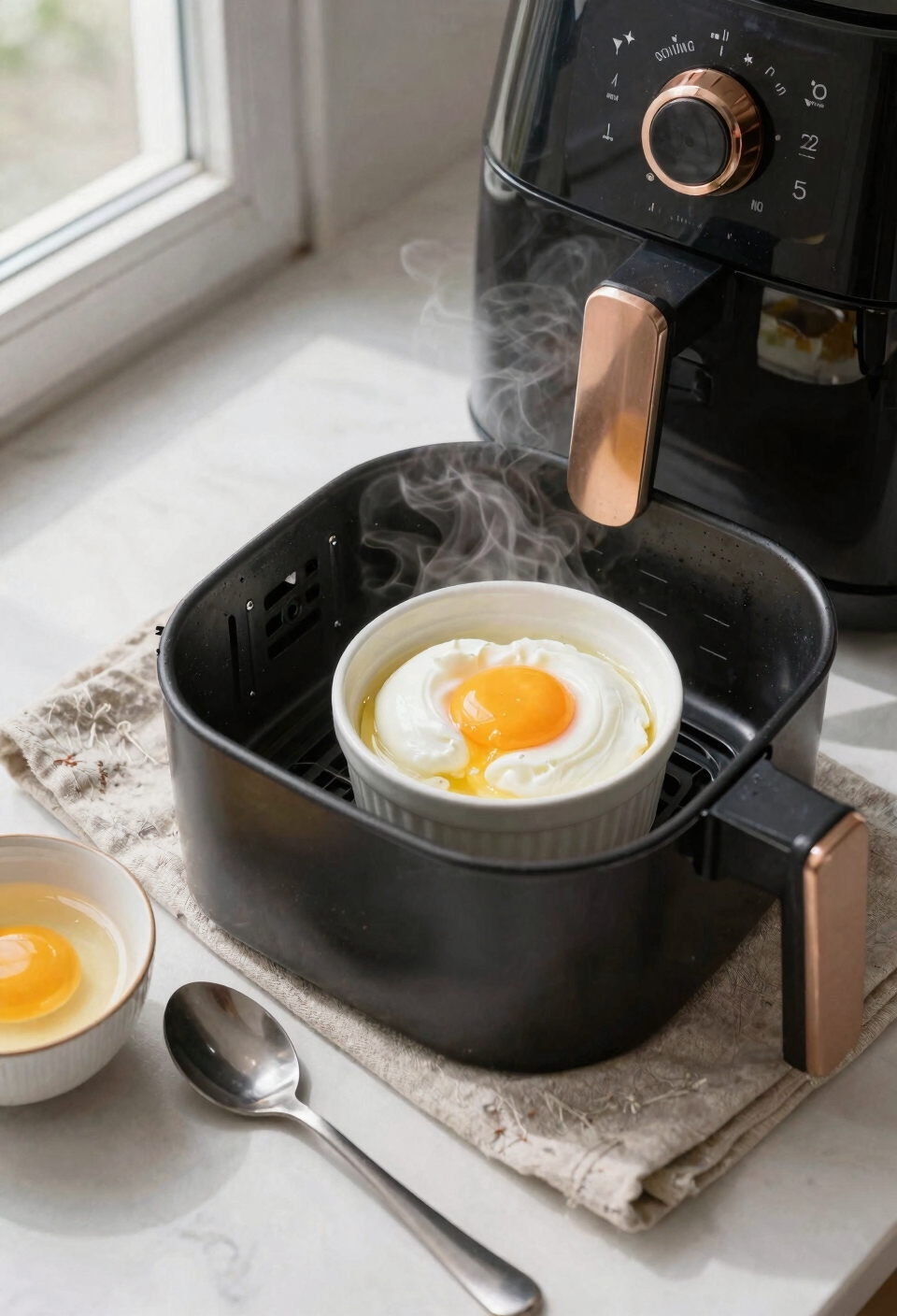
How do you get that perfect poached egg—the one with a set white and a gloriously runny yolk—without standing over a pot of simmering water?
Your air fryer’s got you covered. I fill ramekins with water and gently crack eggs into them, keeping those yolks centered and beautiful. Cook at 360°F for 6 minutes, then peek inside. Need them firmer? Add another minute or two.
Now, here’s the thing: you don’t need fancy ramekin alternatives. Small cups work great. And while water seasoning isn’t essential, a tiny pinch of salt elevates the flavor without fuss.
The beauty of air fryer poaching? No hovering. No guesswork. Just perfectly cooked eggs, ready when you are.
Air Fryer Frittatas and Omelettes for Meal Prep
Batch-cooking frittatas and omelettes in your air fryer might just be the meal-prep move that actually sticks. I use a non-stick round cake pan preheated to 320°F, add eight whisked eggs with whatever fillings I’m feeling, then cook for ten minutes before stirring. Another ten to twelve minutes gets me to that perfect firmness level.
Now here’s where meal prep gets real: silicone molds let you make individual portions that freeze beautifully. You make ahead in batches, portion them out, and suddenly you’ve got breakfasts ready to reheat all week. Freezer storage works surprisingly well—I’ve kept them for weeks without issues. This approach actually makes portion control feel effortless rather than annoying.
Doneness Chart: Air Fryer Temps and Times
Now that you’ve got the technique down, here’s the thing: knowing exactly when your eggs are done is where air fryer cooking really shines. I’ve found that temperature mapping across different styles makes all the difference. Soft-boiled eggs need 270°F for 9 minutes, while hard-boiled demand 14-15 minutes at the same temperature. Fried eggs? 350°F gets you there in 3-4 minutes depending on yolk preference. Scrambled eggs are trickier—start at 400°F for preheating, then drop to 300°F with multiple stirs.
Here’s my honest take: altitude adjustment matters too. If you’re cooking at higher elevations, add a minute or two. Your air fryer’s actual temperature might vary slightly from what it displays, so I recommend cracking an egg or two as your personal calibration test.
Fixing Overcooked Whites, Rubbery Yolks, and Uneven Cooking
Despite your best efforts, sometimes eggs come out of the air fryer looking more like rubber than breakfast—and that’s frustrating because you followed the recipe to the letter. Here’s the thing: shell shock happens to everyone. The fix? Lower your temperature by 25 degrees and reduce cooking time by a minute or two. Uneven cooking usually means your eggs aren’t spaced properly. Give them breathing room so hot air circulates evenly. For texture rescue on rubbery yolks, try poaching instead of boiling—the water acts as a temperature buffer. You can also crack eggs into ramekins rather than the basket directly. Now, keep notes on what works in your specific air fryer. Every model runs slightly different, and that’s your secret weapon.
Storing and Reheating Air Fryer Eggs
Once you’ve mastered cooking eggs in your air fryer, you’ll probably find yourself making them in batches—because let’s face it, meal prep is a game-changer when breakfast is already half done. All right, here’s what you need to know about keeping them fresh. Store your cooked eggs in an airtight container in the fridge for up to four days. They’ll stay good, though I won’t lie—the texture changes slightly. When you’re ready to eat them, microwave reheating works best. Pop them in for about thirty seconds to a minute, depending on how many you’re warming up. The yolk might not taste *exactly* like fresh, but it’s close enough that you’ll still be happy you prepped ahead.
Why Air Fryer Eggs Cook Faster and More Consistently
Air fryers have this almost magical quality when it comes to cooking eggs—they’re faster and way more consistent than traditional methods, and I’ll tell you exactly why. The secret’s all about convection currents. Hot air circulates rapidly around your eggs from every angle, cooking them evenly without those annoying cold spots you get on the stovetop. You’re getting precise heat control too, which means less guesswork. Here’s the thing: air fryers also excel at moisture retention. They create a contained environment where steam stays put instead of escaping everywhere, keeping your eggs tender and preventing that rubbery texture that happens with overcooking. Once you dial in your timing—and I promise it’s easier than you’d think—you’ll get identical results every single time. That consistency? That’s what keeps me coming back.
Frequently Asked Questions
Can I Cook Eggs Directly in the Air Fryer Basket Without Using a Pan or Ramekin?
I wouldn’t recommend cooking eggs directly in the basket due to safety concerns—raw egg can drip through and damage your air fryer. Using a pan or ramekin also guarantees proper airflow circulation for even cooking results.
How Do I Prevent Eggs From Sticking to the Pan During Air Frying?
I’ll prevent sticking by greasing my pan generously with oil before preheating. I also use parchment liners on the bottom for extra protection. These methods guarantee my eggs release easily every time.
Can I Cook Multiple Batches of Eggs Simultaneously in One Air Fryer?
I’m delighted to share that you can absolutely maximize your air fryer’s potential. Yes, you’ll work within your basket capacity while managing batch timing carefully. I’d suggest cooking similar egg styles together for consistent results.
What’s the Best Way to Peel Air Fryer Boiled Eggs Easily Without Cracking Them?
I’d recommend giving your eggs a cold shock in an ice bath immediately after cooking—this stops the process and loosens the shell. For the peel technique, I gently roll the egg to crack the shell all over, then peel under cool running water for easiest removal.
Do Different Air Fryer Brands Require Adjustments to Cooking Times and Temperatures?
Like snowflakes, no two air fryers are identical. Yes, brand differences and wattage variations markedly impact cooking times. I’d recommend starting with my guidelines, then adjusting based on your specific model’s performance.
Conclusion
All right, here’s the thing: once you nail air fryer eggs, you’ll wonder why you ever stood over a hot stove. Don’t those crispy edges and perfectly set yolks beat waiting for water to boil? You’ve got the temps, the times, the troubleshooting. Now get in there and cook some eggs. Your breakfast game’s about to level up big time.