As an Amazon Associate, we earn from qualifying purchases. Some links on this site are affiliate links at no extra cost to you. Our recommendations are based on thorough research and editorial judgment.

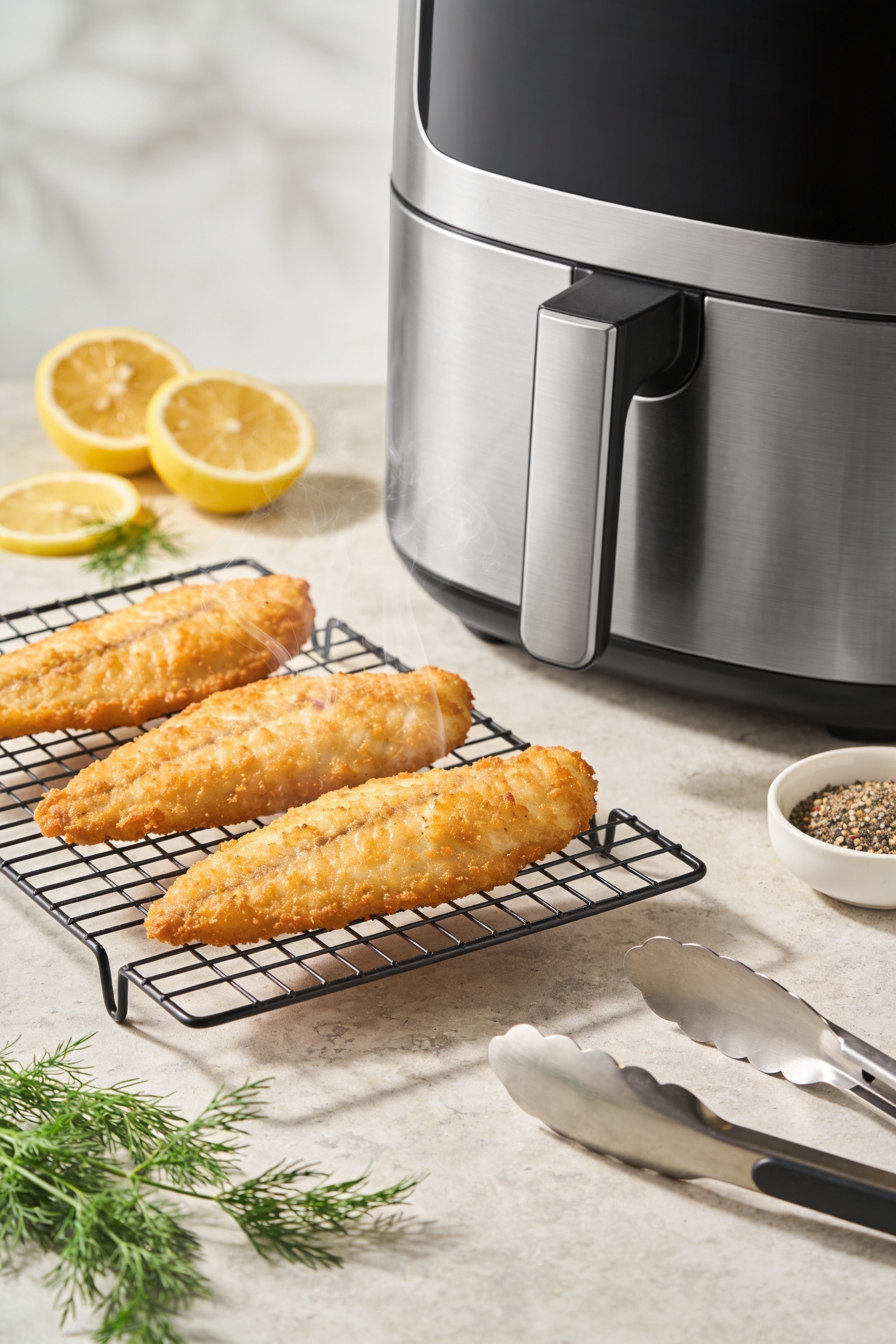
How to Cook Fish in an Air Fryer Perfectly Every Time

All right, here’s the thing: perfectly crispy air fryer fish comes down to three moves. Preheat at 400°F, pat your fillets dry, then season them before cooking. Arrange them with space between each piece, cook about seven minutes per side, and spray oil right before flipping. Check for that opaque, flaky center and hit 145°F internally—that’s your golden ticket. Stick around if you want the tricks that’ll make your fish actually taste restaurant-quality.
Key Takeaways
- Preheat air fryer to 360–400°F based on fillet thickness, then arrange fillets in single layer with adequate spacing.
- Pat fillets dry, season or bread thoroughly, and lightly brush with oil to promote even cooking and crispiness.
- Cook first side 7–10 minutes at 400°F, flip gently, spray upward side with oil, then cook 4–8 minutes.
- Verify doneness by checking for opaque, flaky center and internal temperature reaching 145°F with a meat thermometer.
- Avoid overcrowding the basket to prevent steaming; allow one minute rest after cooking for carryover heat finishing.
Prepare Your Fish Fillets for Air Frying
Start by rinsing your fish fillets under cold water, then pat them dry with paper towels—but here’s the thing, leave them just slightly damp. This patting moisture technique matters because it helps seasonings stick better to the surface.
Now, grab a Ziplock bag and add your preferred seasonings. Salt, pepper, paprika, garlic powder, lemon pepper—whatever you’re feeling. Toss those fillets around until they’re fully coated.
If you’re going breaded, dip each fillet in wet batter first, then press it firmly into panko or breadcrumbs. Make sure you’ve got no bald spots; nobody wants bare patches.
Finally, brush everything with oil or melted butter for that crispy exterior you’re after. Your rinse technique and proper patting lay the foundation for perfectly cooked fish.
Get Your Air Fryer Ready
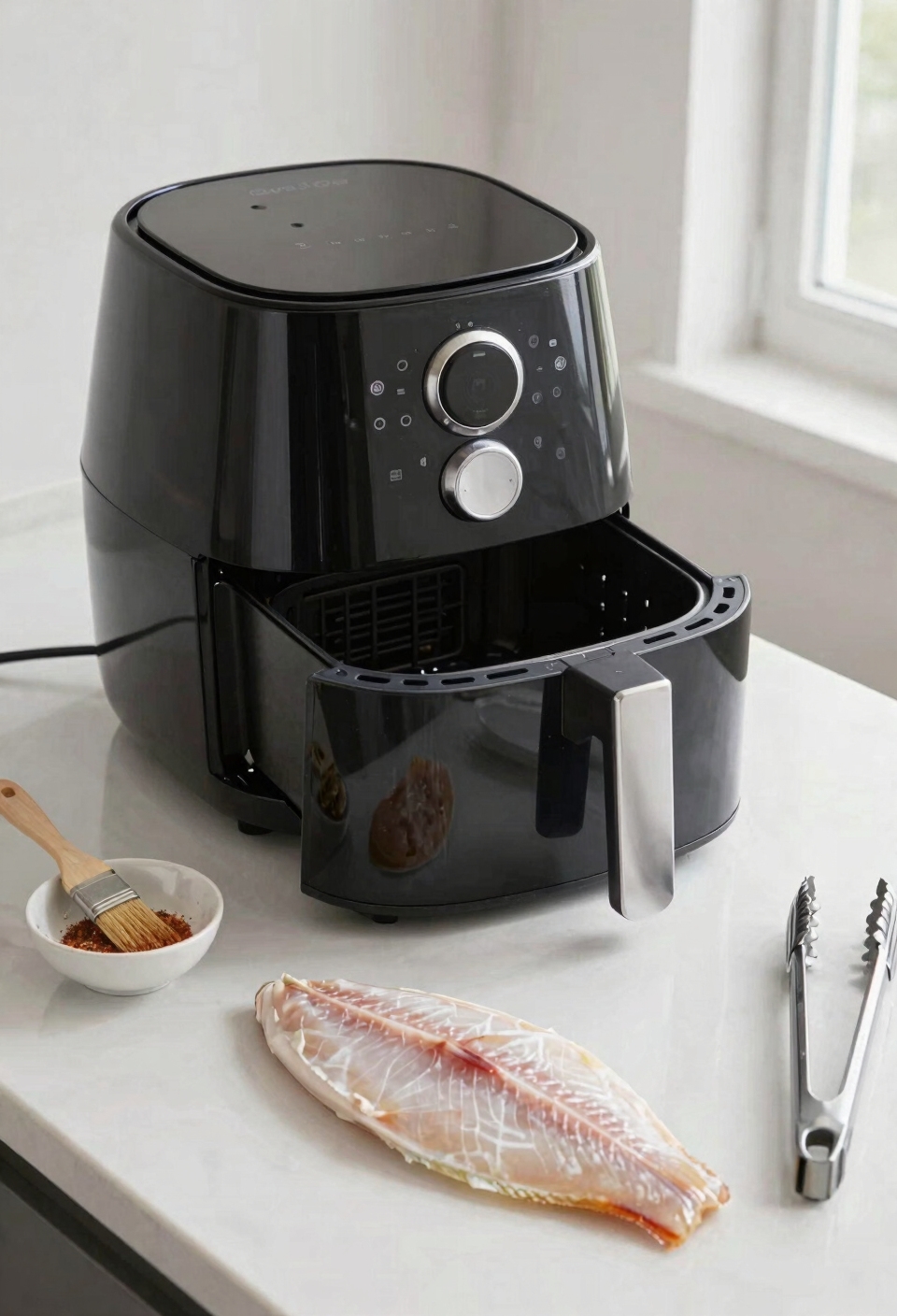
Before those fillets hit the basket, you’ll want to give your air fryer a quick prep—and I mean quick, because we’re talking maybe three minutes tops. Start by preheating your machine at 360-400°F, depending on your fish thickness. This preheat timing guarantees even cooking and gives you that crispy exterior right from the start.
While it’s warming up, grab your clean basket and give it a light spray of nonstick oil or neutral cooking spray. Trust me, this prevents your fish from sticking and makes cleanup way easier. Arrange your fillets in a single layer with breathing room between each one—no overcrowding allowed. That space is essential for actual frying instead of steaming your fish into submission.
Pick the Right Temperature for Your Fillet
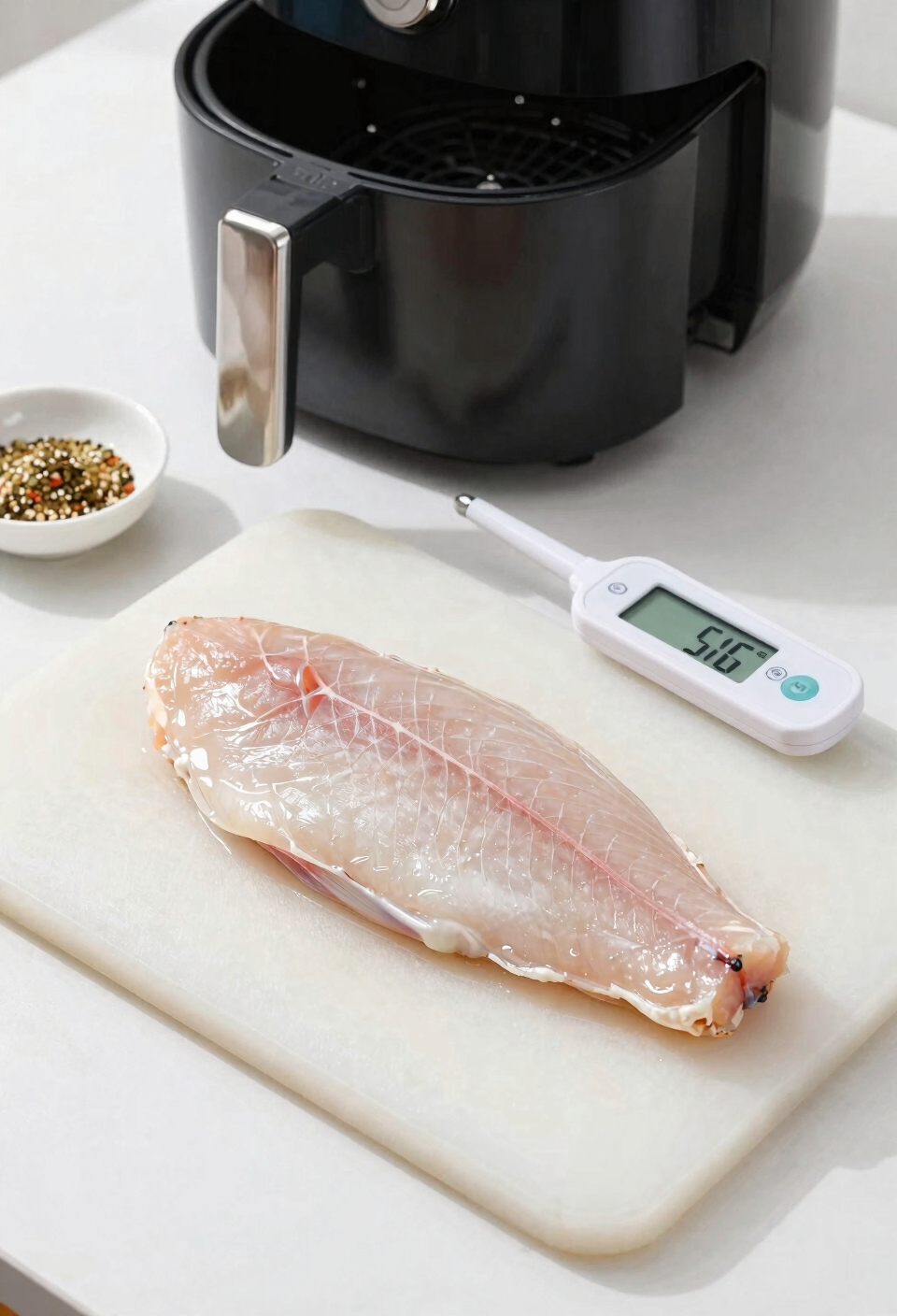
Now that your air fryer’s prepped and ready to go, temperature becomes your best friend—and honestly, it’s where a lot of people go wrong. I’ve learned that different fish grades and fillet thicknesses demand different oven temperatures to nail that perfect balance.
Standard fillets? Hit 400°F for that crispy exterior. Thicker cuts need 360°F so they cook evenly without drying out. Thinner fillets? Drop to 375°F for quicker, crispier results. Breaded varieties do great at 390°F.
Here’s the thing: thinner fish cooks faster, so lower heat prevents overcooking. Thicker pieces need gentler heat and longer time. Either way, you’re targeting that magic 145°F internal temperature. Match your temperature to your fillet, and you’ll nail it every time.
Prevent Common Air Fryer Fish Mistakes
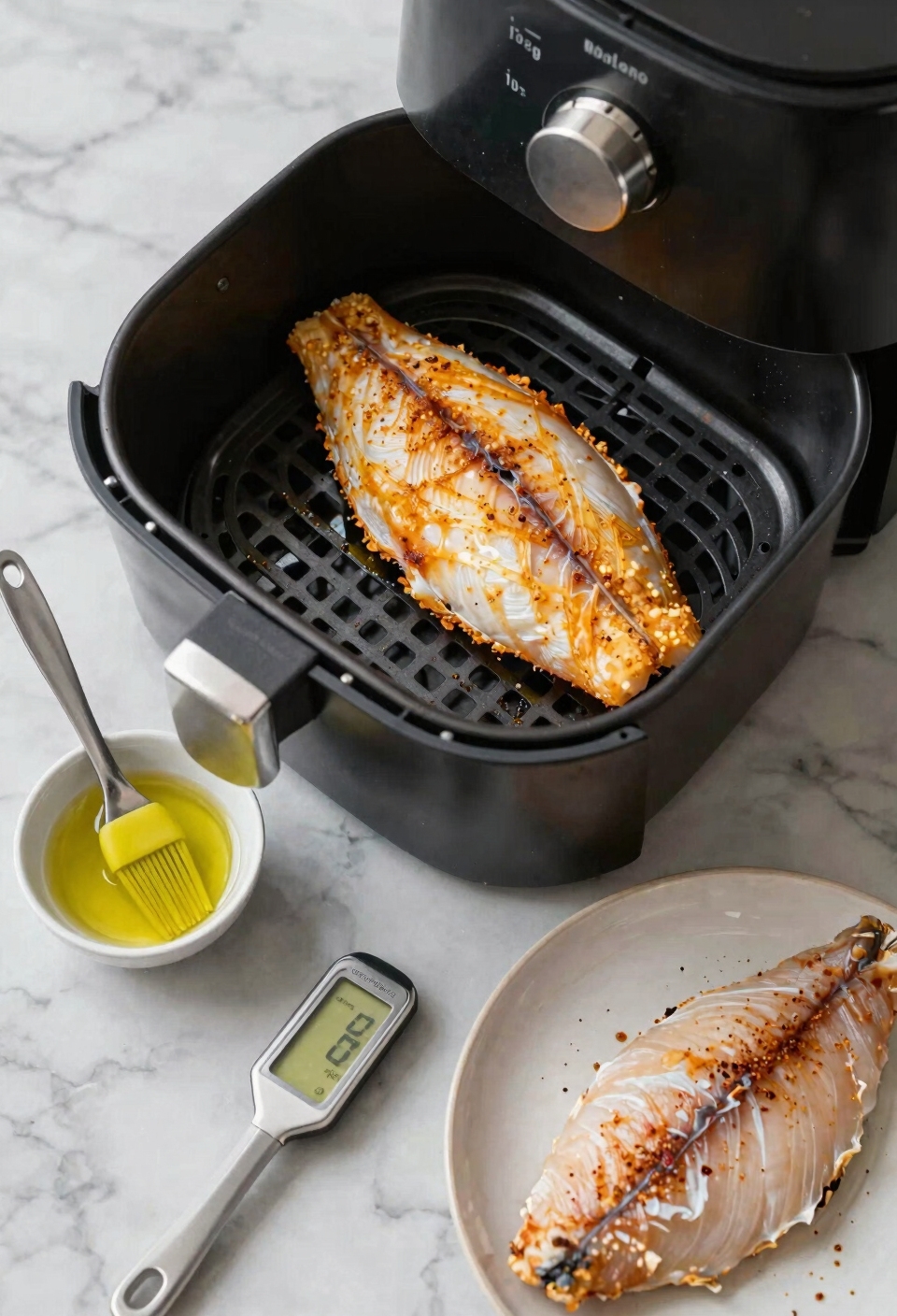
Even with the right temperature dialed in, I see people mess up fish in the air fryer all the time—and most of these mistakes are totally preventable. The biggest culprit? Overcrowding avoidance gets ignored constantly. You cram too many fillets in there, and boom—they steam instead of fry. Give them breathing room.
I also watch folks use the wrong basket. A cramped or poorly designed one traps moisture underneath. Make sure yours has good airflow on the bottom.
Don’t skip the oil spray midway through cooking either. That’s what gets you that golden, crispy exterior. And always verify doneness at 145°F internally—flaky and opaque. Skip these habits, and your fish transforms from disappointing to genuinely delicious.
Air Fry and Flip Your Fish for Even Crispiness
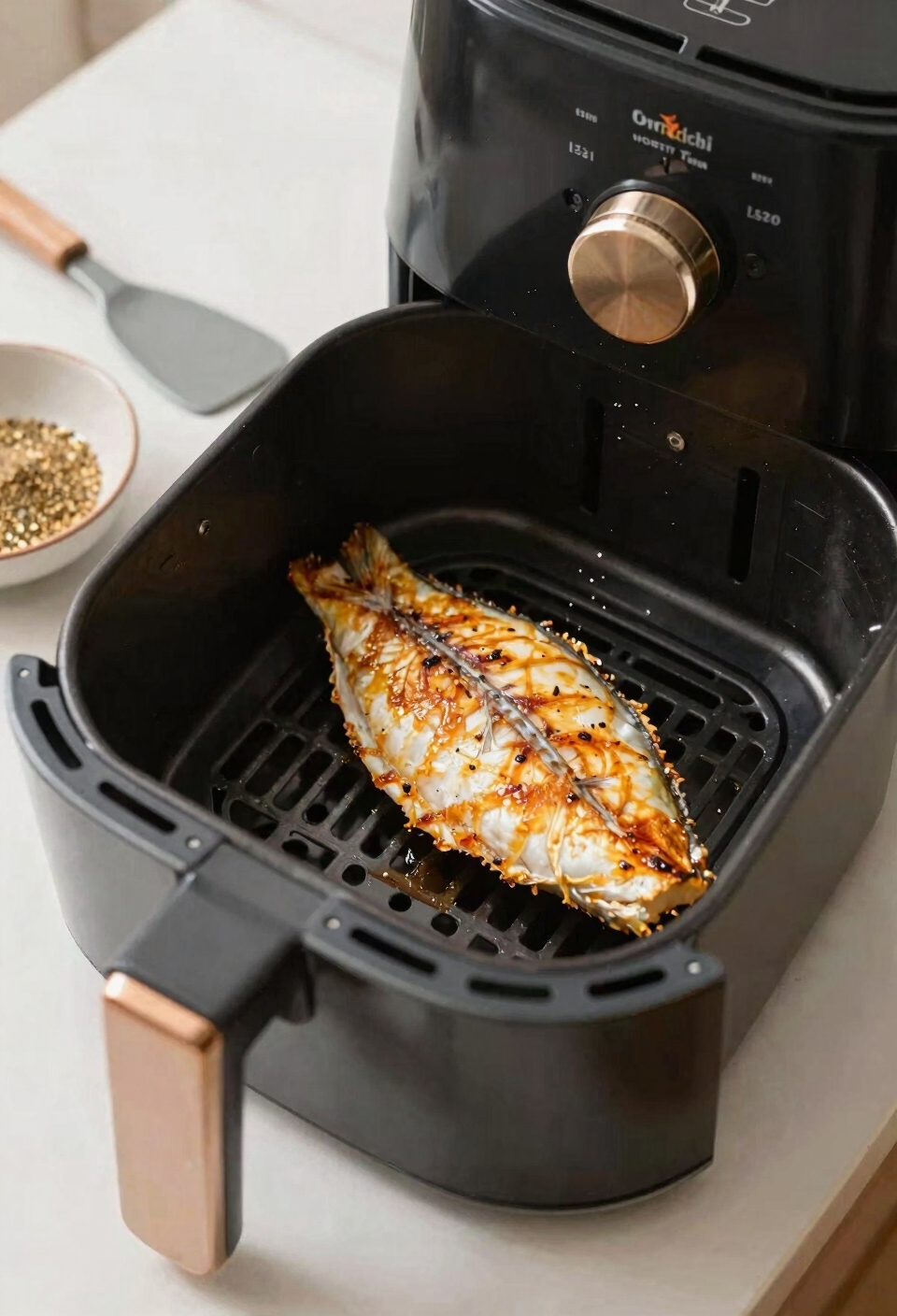
Once you’ve got your fish in the basket and the air fryer humming away, the real magic happens with a well-timed flip. Here’s the thing: most fillets need about 7-10 minutes on the first side at 400°F before you flip them over. That’s when you’ll notice those crispy edges starting to form—don’t rush it.
When flip timing comes around, give the fish a gentle turn and cook the other side for 4-8 minutes. Now, spray a light coat of oil on that upward-facing side right before flipping. This move locks in crispiness while keeping the inside tender. You’re basically creating an even golden crust all over, which honestly beats deep frying any day.
Spray Oil Strategically for Maximum Crunch
Use avocado or olive oil, covering everything evenly—no flour spots visible. That oil helps breadcrumbs crisp beautifully without making your fish greasy. You want complete coverage but not soaked. The result? Restaurant-quality crunch that’ll make you question every skillet meal you’ve ever made.
Verify Doneness Without Overcooking
Now here’s where a lot of people mess up—they nail the crispy exterior but then pull their fish out looking like a hockey puck. Here’s the thing: you’ve got reliable visual cues telling you when to stop cooking.
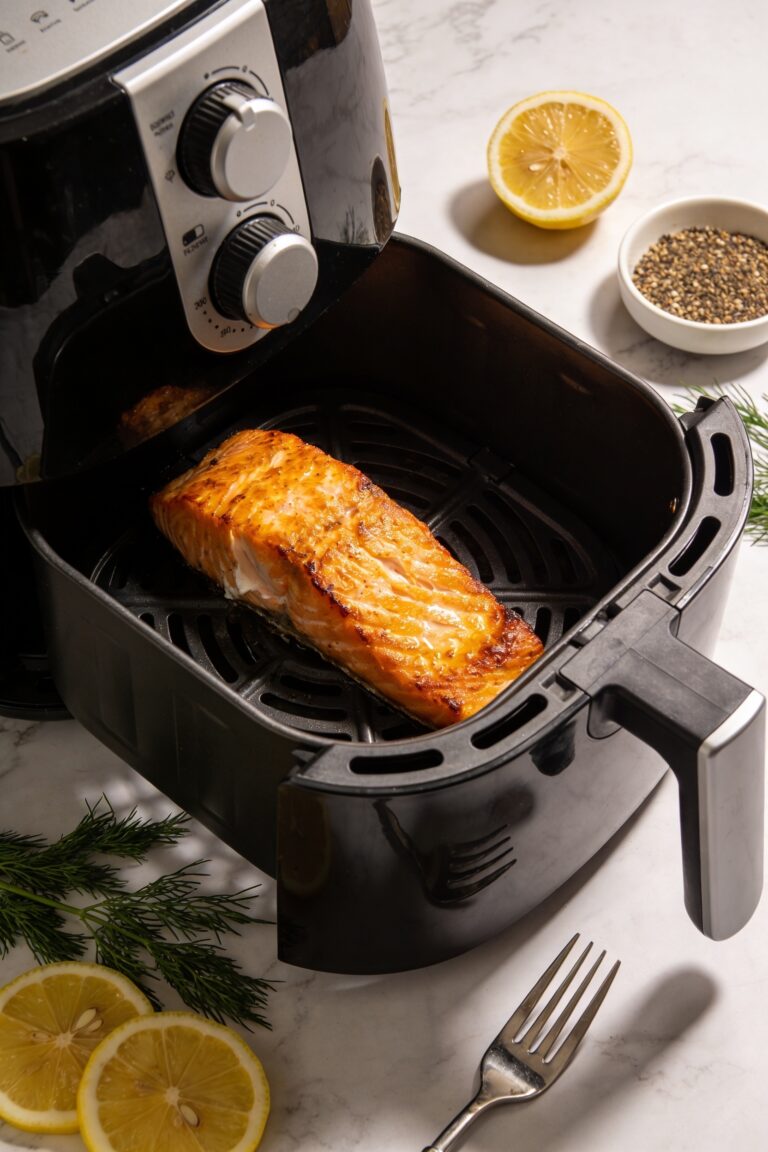
Look for that opaque, flaky center. Fork it gently and see if the flesh separates easily into chunks. That’s your green light. You can also check the internal temperature—145°F means you’re done.
Don’t skip rest times either. Let your fish sit in the basket for a minute after cooking stops. This helps carry over heat finish the job without turning everything into jerky.
The beauty? You won’t need a meat thermometer for every batch once you’ve done this a few times. Your eyes become the expert.
Season and Bread Fish Fillets Before Air Frying
Seasoning and breading your fish fillets before they hit the air fryer basket is where the magic actually happens—this is your chance to build flavor and texture before the heat does its thing. I like tossing my fillets in a Ziplock bag with salt, pepper, paprika, and garlic powder for simplicity. Want more depth? Try herb marinades that’ll infuse real complexity into every bite. For breaded versions, dunk fillets in wet batter, then press firmly into panko to create texture contrasts between the crispy exterior and tender inside. A light brush of olive oil helps everything brown beautifully. You’re not just coating fish here—you’re engineering how it’ll taste and feel when you eat it.
Frequently Asked Questions
Can I Cook Frozen Fish Fillets Directly in the Air Fryer Without Thawing First?
Yes, I can cook from frozen fish fillets directly without thawing. No thaw tips: increase cooking time by 3-5 minutes, use 360°F, and make certain fillets aren’t overcrowded for even heat distribution and perfect results.
How Do I Prevent Fish From Sticking to the Air Fryer Basket During Cooking?
I’ll coat the basket with nonstick spray or oil—your fish’s safety net. I also use parchment liners underneath, ensuring nothing sticks while you achieve that perfect, crispy exterior every time.
What’s the Best Way to Reheat Leftover Air-Fried Fish While Maintaining Crispiness?
I’d reheat your leftover air-fried fish at 350°F for 3-4 minutes, using light oil misting to restore residual crispness. This method reactivates the exterior’s texture without drying out the tender inside.
Can I Cook Multiple Types of Fish With Different Thicknesses in One Batch?
I’d recommend against it—think of your air fryer as a stage where timing’s everything. With mixed thicknesses, you’ll need staggered cooking: add thicker fillets first, then introduce thinner ones halfway through for even doneness.
Does Air Frying Fish Produce a Fishy Smell, and How Can I Minimize It?
I’ve found that air frying does produce some fishy smell, but it’s minimal compared to pan-frying. For neutralizing odors, I’d recommend ventilation tips like opening windows and using your exhaust fan during cooking.
Conclusion
Look, you’ve got this. Fish frying is frankly faster and far easier than you think. You’ll produce perfectly crispy, deliciously done fillets by following these fundamentals. Your air fryer’s about to become your best friend in the kitchen. Season smartly, spray strategically, and stay sharp about doneness. Before you know it, you’re serving restaurant-quality fish at home. That’s a win worth celebrating.