As an Amazon Associate, we earn from qualifying purchases. Some links on this site are affiliate links at no extra cost to you. Our recommendations are based on thorough research and editorial judgment.

Air Fryer Cooking Times: Complete Guide for Every Food

Air fryer cooking times depend on your machine’s wattage, basket size, and what you’re cooking. Higher wattage means faster results, while cramped baskets concentrate heat better than sprawling ones. Chicken breasts take 16–22 minutes at 200°C, burgers need 7–14 minutes at 325°F, and frozen veggies crisp up in 8–12 minutes. Preheat for 3–5 minutes, arrange food in single layers, and always start checking early—your specific machine has its own personality. Stick around to discover how to nail every cut.
Key Takeaways
- Smaller air fryers and higher wattage models cook faster; monitor initial cooks to learn your machine’s heating characteristics.
- Chicken breasts cook 16–22 minutes at 200°C; arrange in single layers to ensure reliable, even results.
- Hamburger patties require 7–14 minutes at 325°F; fattier cuts need longer than lean cuts to render properly.
- Reduce traditional oven temperatures by 25°F and cooking time by 20–25% when converting recipes to air fryer.
- Preheat 3–5 minutes, avoid wet batters and delicate greens, and reheat leftovers at 380°F for 3–5 minutes.
How Air Fryer Wattage and Size Affect Cooking Times
Smaller air fryers heat up faster and cook more efficiently because they’ve got less space to fill with hot air, so even if your wattage isn’t astronomical, you might still beat out a larger conventional oven by a country mile. Now, here’s the thing about wattage impact—it’s real. An 800-watt model won’t hustle quite like an 1800-watt powerhouse. Higher wattage means speedier cooking, period. But basket size matters too. A cramped basket concentrates heat better than a sprawling one, so you’re getting faster results regardless. That said, don’t stress if you’ve got a lower-wattage fryer. You’ll just need slightly longer cooking times. The trade-off? You’re still beating conventional ovens. Just monitor your food initially to nail down your machine’s personality.
Poultry Cooking Times by Cut and Size
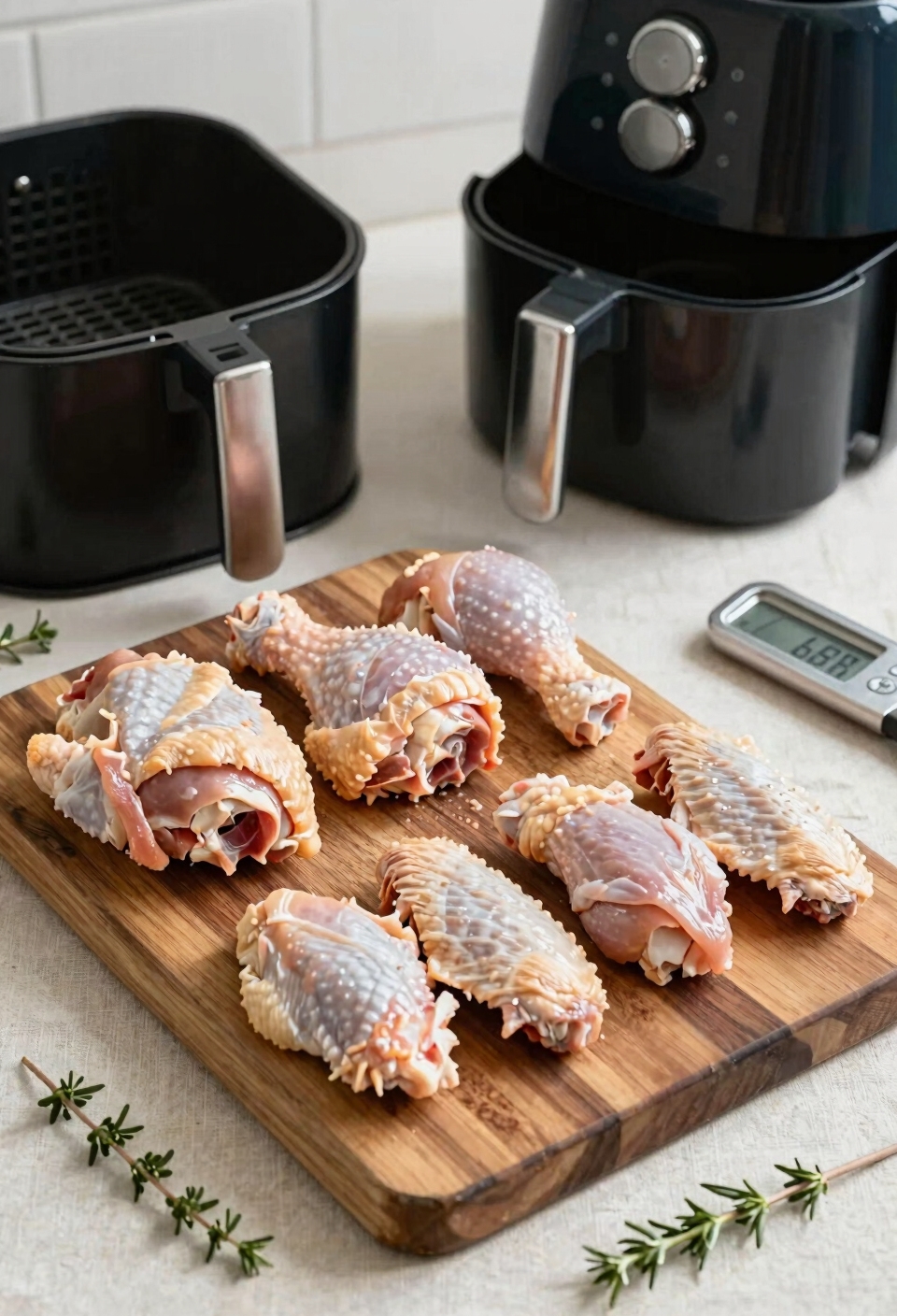
Now that you’ve got a handle on how your air fryer’s wattage and basket size affect the game, let’s talk about what you’re actually cooking in there—and poultry is where I see most people make their rookie mistakes. Chicken breasts need 16-22 minutes at 200°C, while boneless thighs run 18-20 minutes at 380°F. The key is checking thigh doneness by looking for that slight firmness—not rubber, not jiggly. Tenders cook fast, just 8-10 minutes at 360°F. Now here’s where portion scaling matters: cramming your basket full adds time, so don’t pack them in like sardines. Give them breathing room and you’ll nail it every time.
Beef and Burger Cooking Times for Perfect Doneness
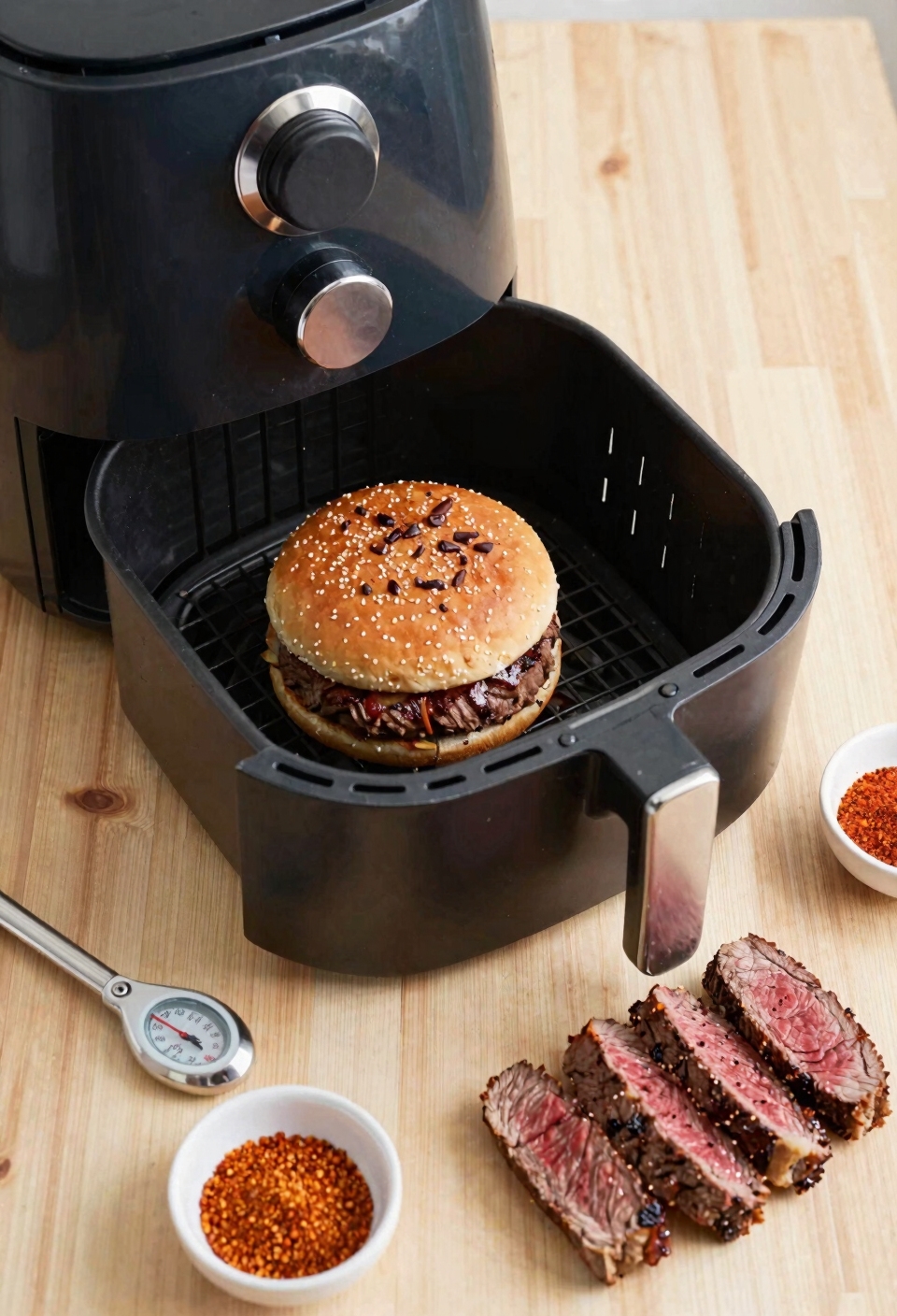
Beef is where your air fryer really shows its muscles, and I’ve learned the hard way that timing here is everything. Standard hamburger patties need 7-14 minutes at 325°F, though it depends on thickness and your air fryer’s wattage. For steaks, a one-inch sirloin takes 9-14 minutes at 400°F depending on how you like it cooked. Now, here’s where fat content matters—fattier cuts need slightly longer to render properly, so don’t rush them. Filet mignon, being leaner, cooks faster at about 18 minutes for an 8-ounce cut. Always let your beef rest for a few minutes after cooking. This keeps juices locked inside instead of running all over your plate. Trust me on this one.
Pork, Sausage, and Breakfast Meat Timing
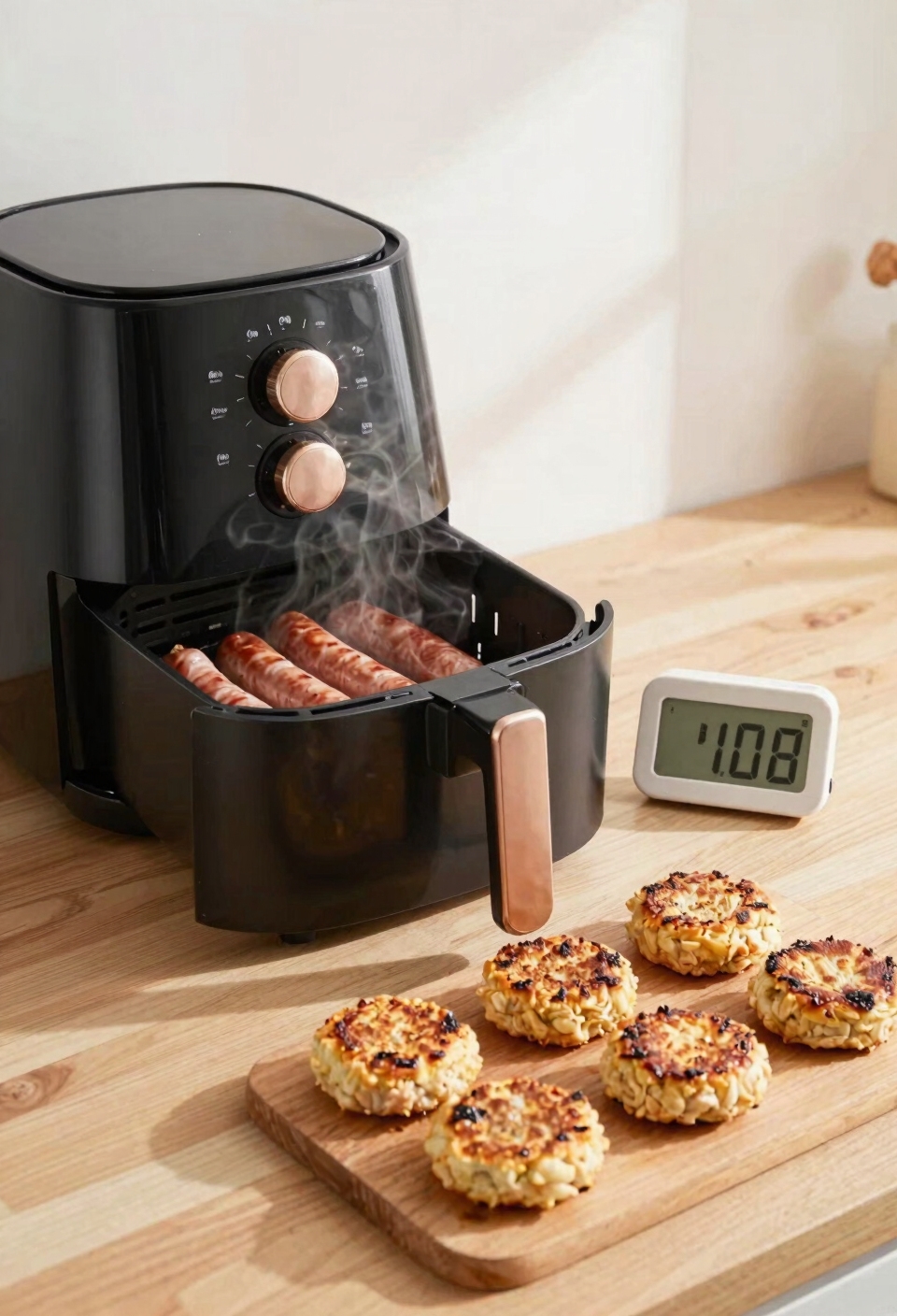
While beef steaks grab all the attention, pork and breakfast meats are where I’ve actually had the most fun experimenting. Fresh sausages cook in 8-15 minutes at 200°C—seasonal sausages especially benefit from the air fryer’s quick heat. Bone-in pork chops need just 12 minutes at 400°F, and heritage pork varieties work beautifully this way too.
Now, bacon’s where things get real. Thick-cut bacon takes 6-10 minutes at 400°F, making it possibly the easiest breakfast item you’ll ever prepare. Ham slices need 10-12 minutes at 380°F. Lamb loin chops round out this category at 8-12 minutes at the same temperature.
The beauty here? You’re looking at genuinely quick meals that don’t sacrifice flavor or texture.
Air Fryer Cooking Times for Frozen Vegetables and Potatoes
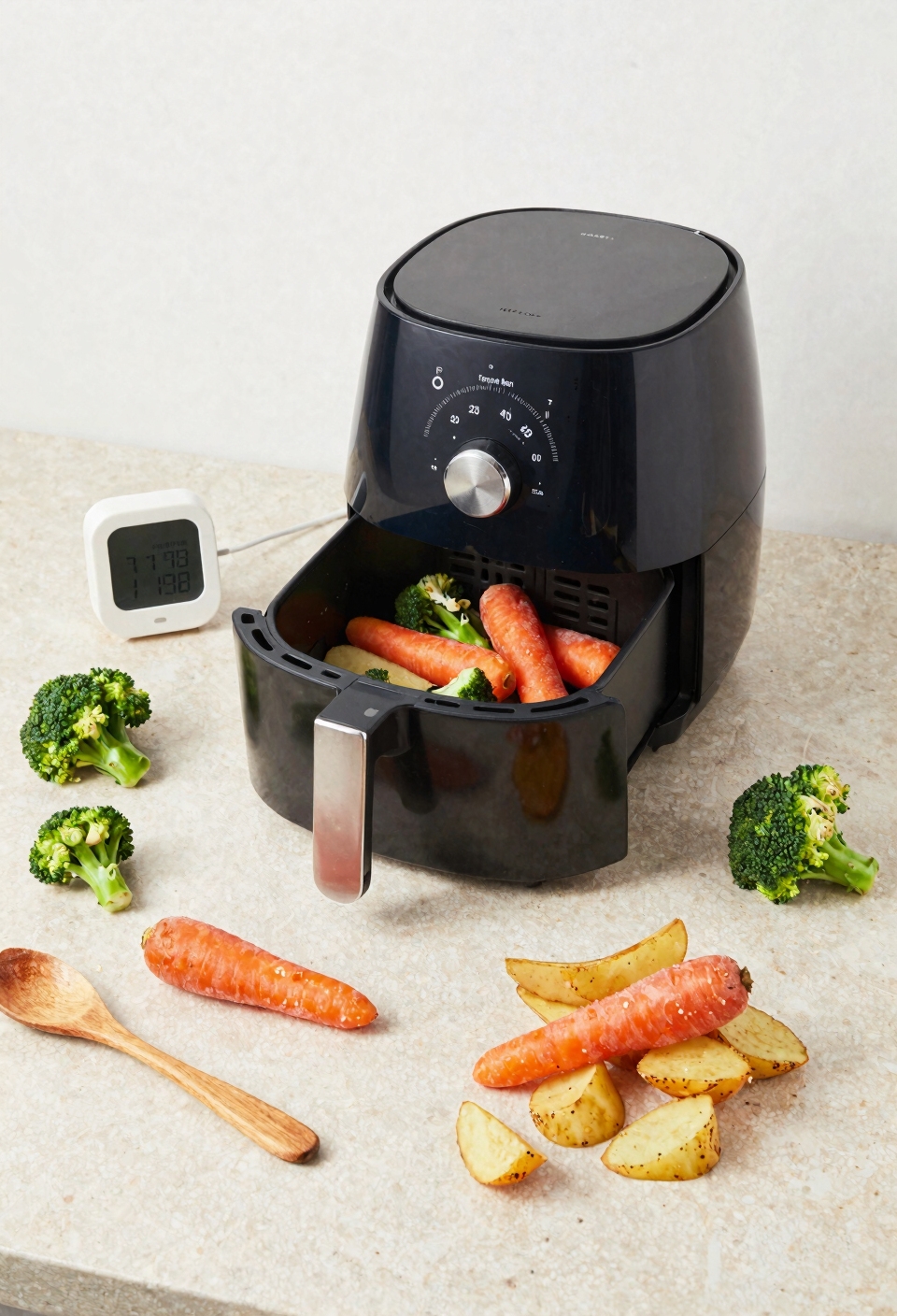
If you’ve been intimidated by frozen vegetables turning into soggy disappointments, the air fryer’s about to become your new best friend. I’ve discovered that flash frozen broccoli comes out crispy, not mushy, when you hit it with 350°F for eight to twelve minutes. Your frozen potato wedges? Sixteen minutes at 360°F, no extra oil needed.
Now here’s where things get interesting. Seasoned sweetpotatoes cook faster than you’d expect—roast potatoes generally need fifteen to twenty-six minutes at 200°C, which blows conventional oven times out of the water. The key’s checking halfway through. You’re not locked into suggested times; crunchier vegetables just need a couple minutes less. Temperature and air circulation do the heavy lifting here, so you can actually trust the process.
Temperature and Time Conversions From Oven Recipes
Now that you’ve got the hang of air fryer timing for frozen stuff, you’re probably wondering what to do with all those regular oven recipes gathering dust in your cookbook.
Here’s the thing: converting oven to airfryer recipes isn’t rocket science, but it does require a formula. Drop your temperature by 25 degrees Fahrenheit, then shave about 20-25% off the cooking time. That recipe ratio works surprisingly well across most dishes.
Preheat impact matters too. Give your air fryer three to five minutes to heat up first—it jumpstarts the cooking process and guarantees even results. The compact heating environment does the heavy lifting faster than your conventional oven ever could, so don’t skip this step.
Foods You Can’t Cook in an Air Fryer
Not everything belongs in an air fryer, and I’ve learned this the hard way—usually by staring at a basket full of culinary disappointment. Wet batter coatings are your enemy here. They won’t crisp up properly; instead, you’ll get a soggy, uncooked mess that’ll make you question your life choices.
Delicate greens? Forget about it. Baby spinach and lettuce basically disintegrate into nothing. Raw grains won’t cook through either, no matter how long you leave them.
Look, the air fryer’s amazing for tons of stuff, but it’s not a miracle worker. Knowing what it can’t handle saves you time, frustration, and wasted ingredients. Stick to foods that benefit from dry heat circulation, and you’ll be golden.
Arrange Your Food Right to Prevent Uneven Cooking
Once you’ve figured out what foods work in your air fryer, the next hurdle is actually cooking them properly—and I’m talking about arrangement. Here’s the thing: air fryers work by circulating hot air around your food, so crowding everything in like you’re playing Tetris defeats the purpose.
Single layering is your friend. Spread items out so air can reach every surface. When you’re cooking multiple batches, try staggered loading instead—add fresh food partway through cooking so items aren’t competing for heat. I know it sounds fussy, but this simple habit eliminates those frustrating cold spots and soggy sections.
Your food’ll cook evenly, and you’ll actually get the crispy results you paid for.
Air Fryer Reheating Times and Temperatures
So here’s the thing: reheating leftovers in your air fryer is honestly one of my favorite discoveries, because it actually makes food *better* instead of turning it into a rubbery disappointment like the microwave does. You’ll want to set your air fryer to 380°F and give your food about 3-5 minutes. If it needs more heat, toss in another 1-2 minutes. The beauty? Your air fryer excels at moisture preservation while maintaining that original texture you loved. Plus, there’s scent retention—your food tastes like it did fresh, not like sad leftovers. Just don’t overcrowd the basket. Give everything breathing room, and you’ll get consistently warm, delicious results every single time.
Why Your Cooking Times May Differ: and How to Adjust
If you’ve been following the cooking times I’ve listed and wondering why your chicken came out overdone while your friend’s turned out perfect, welcome to the wonderfully frustrating world of air fryer variables.
Here’s the thing: not all air fryers are created equal. Your wattage, basket size, and even sensor calibration affect how fast things cook. Altitude adjustments matter too—if you’re cooking at higher elevations, you’ll need extra time since heat behaves differently up there.
Now, the best approach? Start with my suggested times, then check your food early. Every air fryer has its own personality. Set a timer for the lower end, peek inside, and add minutes as needed. You’ll nail it after a few tries, I promise.
Frequently Asked Questions
Can I Stack Food in My Air Fryer Basket, and Does It Affect Cooking Time?
You can stack food, but I’d recommend avoiding it when possible. Stacking blocks airflow effects and reduces heat circulation, which greatly lengthens cooking time. I suggest arranging items in a single layer for best results.
How Do I Know When My Air Fryer Preheating Is Complete Before Cooking?
As they say, “a watched pot never boils,” but I’ll tell you straight: most air fryers emit a preheat sound and display an indicator light when they’re ready. You’ll know you’re good to go once both signal completion.
Should I Flip or Shake Food During Cooking for Even Results?
Yes, I’d recommend you turn halfway through cooking or gently toss your food using tongs for even results. You can also rotate the basket to guarantee uniform browning and crispiness throughout your meal.
What’s the Best Way to Clean My Air Fryer After Cooking Greasy Foods?
Like a greasy skillet that’s seen better days, your air fryer basket needs attention. I’d recommend deep cleaning with warm soapy water and a soft brush for odor removal after cooking fatty foods.
Can I Use Parchment Paper or Foil Liners in My Air Fryer Safely?
Yes, you can safely use parchment paper or foil liners in your air fryer. I’d recommend exploring parchment alternatives like silicone mats for better airflow. Remember proper liner disposal after cooking to maintain your appliance’s condition.
Conclusion
Look, I’ve basically handed you a million cooking times today, but here’s the thing: your air fryer isn’t a mind reader. Start with my times, then trust your gut. Every machine’s got its own personality. Adjust temperatures, shake your basket, peek at your food. You’ll nail it eventually. Now get cooking—those crispy fries aren’t going to make themselves.