As an Amazon Associate, we earn from qualifying purchases. Some links on this site are affiliate links at no extra cost to you. Our recommendations are based on thorough research and editorial judgment.

Air Fryer Temperature Guide: What Setting for Every Food

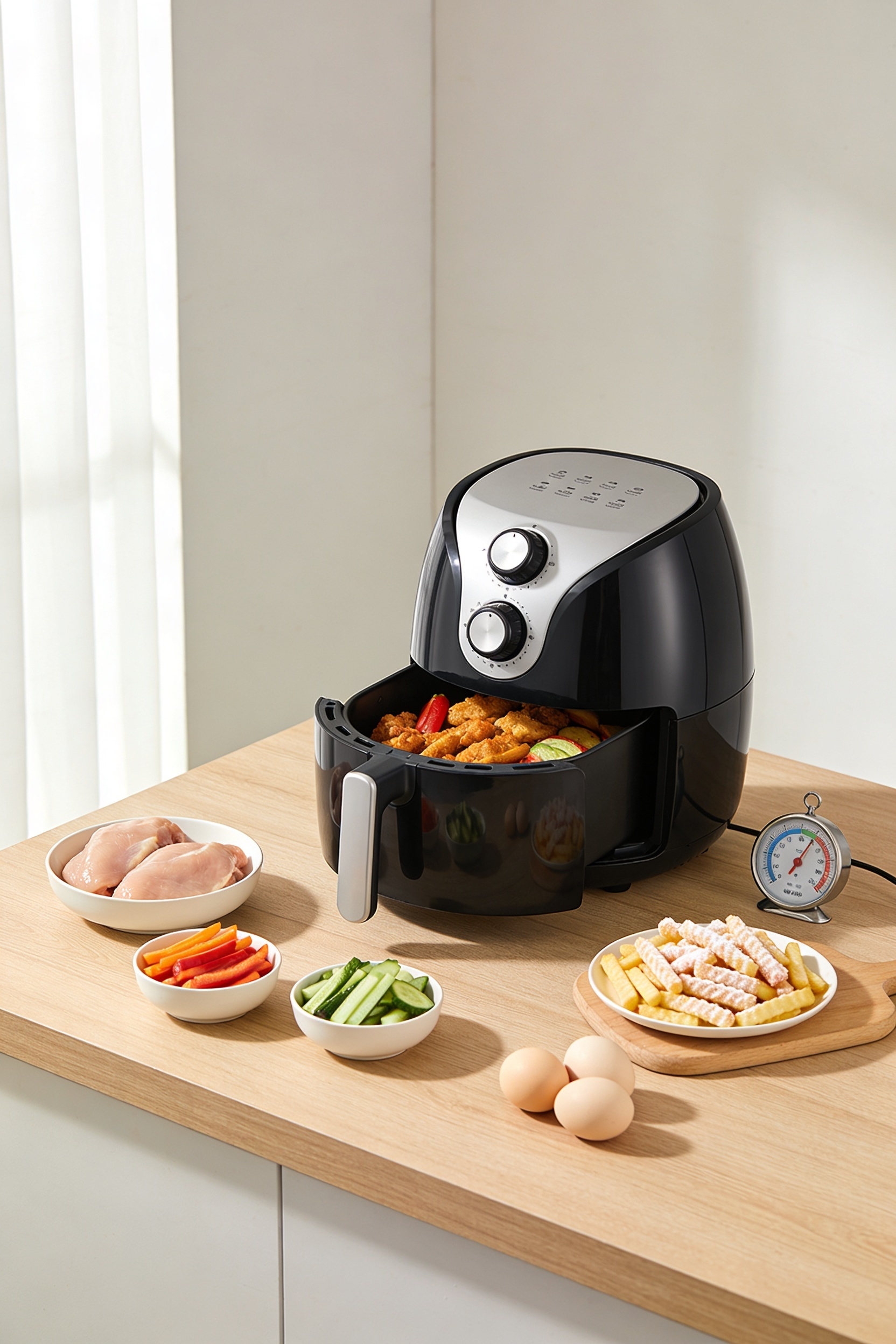
air fryers aren’t just hot boxes like regular ovens. They blast superheated air at high speed, so you’ll drop temperatures about 25°F lower and cut cooking time by 20–25%. Most vegetables hit their sweet spot around 380–400°F, while proteins like chicken need 165°F internal temp for safety. Frozen foods cook even faster thanks to that intense circulation. The real secret? Start checking early—every machine’s got its own personality. Stick around if you want the specific temperature playbook for everything.
Key Takeaways
- Most vegetables cook well at 380–400°F; carrots need 15 minutes, while cauliflower and potatoes require about 12 minutes.
- Beef and pork cook at 370–400°F; burgers take 16–20 minutes, pork chops about 12 minutes, and filet mignon 18 minutes.
- Poultry and turkey must reach 165°F internal temperature; frozen chicken breasts cook at 380°F for 16–19 minutes.
- Frozen items cook faster due to rapid air circulation; fish sticks need 10–12 minutes and thick-cut fries 14–16 minutes.
- Convert oven recipes by lowering temperature 25°F and reducing cooking time by 20–25%; check food halfway through for best results.
Air Fryer Temperature Fundamentals: How They Differ From Ovens
If you’ve ever wondered why your air fryer cooks so much faster than your regular oven, there’s actually a simple reason behind it. The secret lies in airflow dynamics. Your air fryer circulates superheated air at high speed around your food, creating intense heat from all angles simultaneously. Regular ovens? They heat more passively, so you’re waiting longer. Here’s the thing—that rapid airflow means you’ll lower your standard oven temperature by about 25°F and cut cooking time by 20-25%. Your basket capacity matters too. Smaller baskets circulate air more efficiently, cooking faster than larger ones. Don’t overcrowd your basket, or you’ll lose that advantage. You’re basically working with convection on steroids.
Air Fryer Temperatures for Vegetables
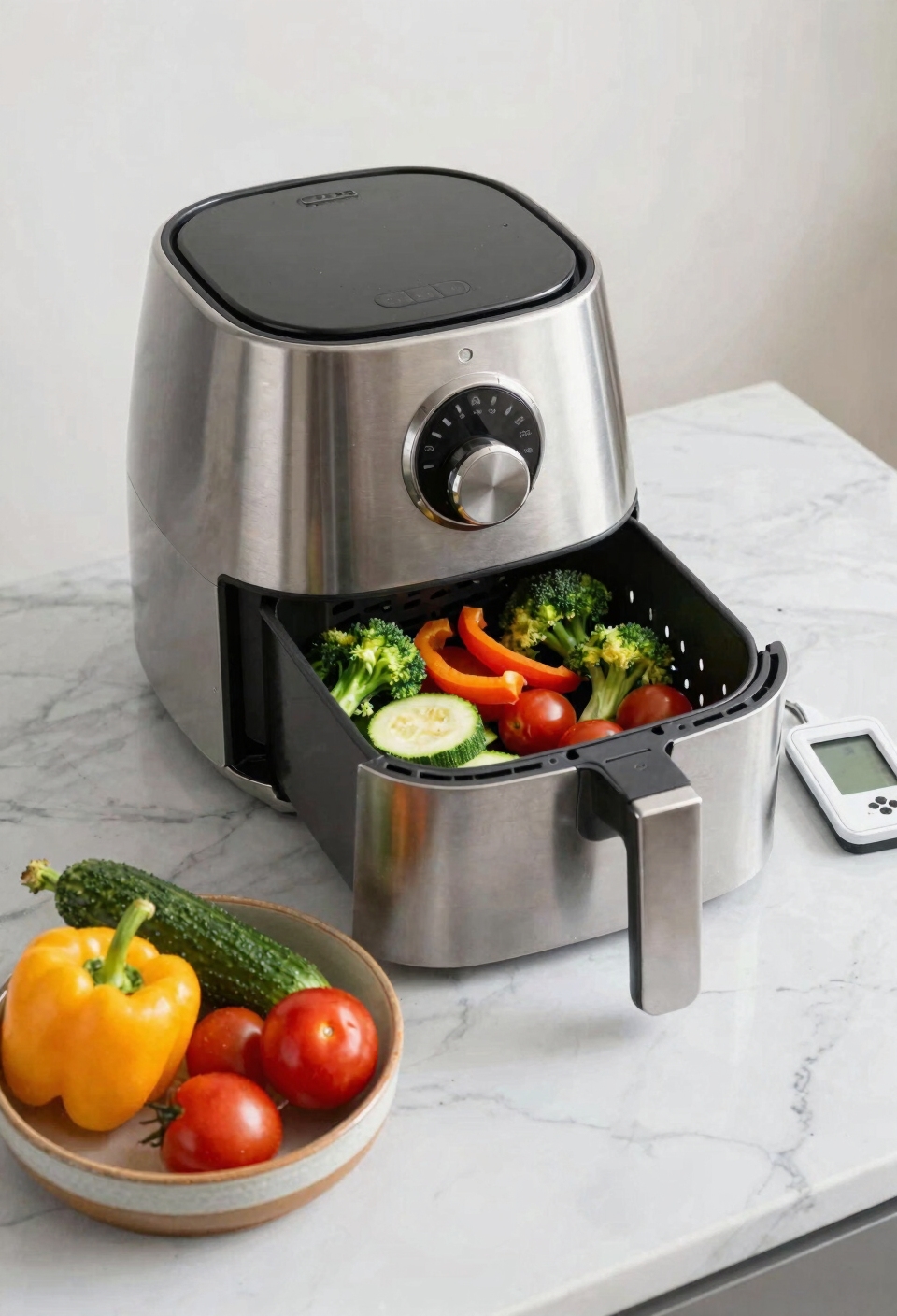
Vegetables are probably the easiest thing you’ll ever air fry, and I mean that literally—they’re nearly impossible to mess up. Most veggies cook beautifully between 380°F and 400°F, depending on what you’re working with. Carrots need about fifteen minutes at 380°F, while cauliflower and potatoes prefer 400°F for twelve. The magic here is steam retention—your air fryer’s circulating heat actually locks moisture inside, keeping everything tender. Now, seasoning infusion happens best when you toss your vegetables with oil and spices beforehand. That coating helps flavors stick around while everything gets crispy. All right, the real win? You’ve got complete control over texture. Want them softer? Cook longer. Prefer crispier edges? Knock a few minutes off.
Beef and Pork: Air Fryer Temperatures and Doneness
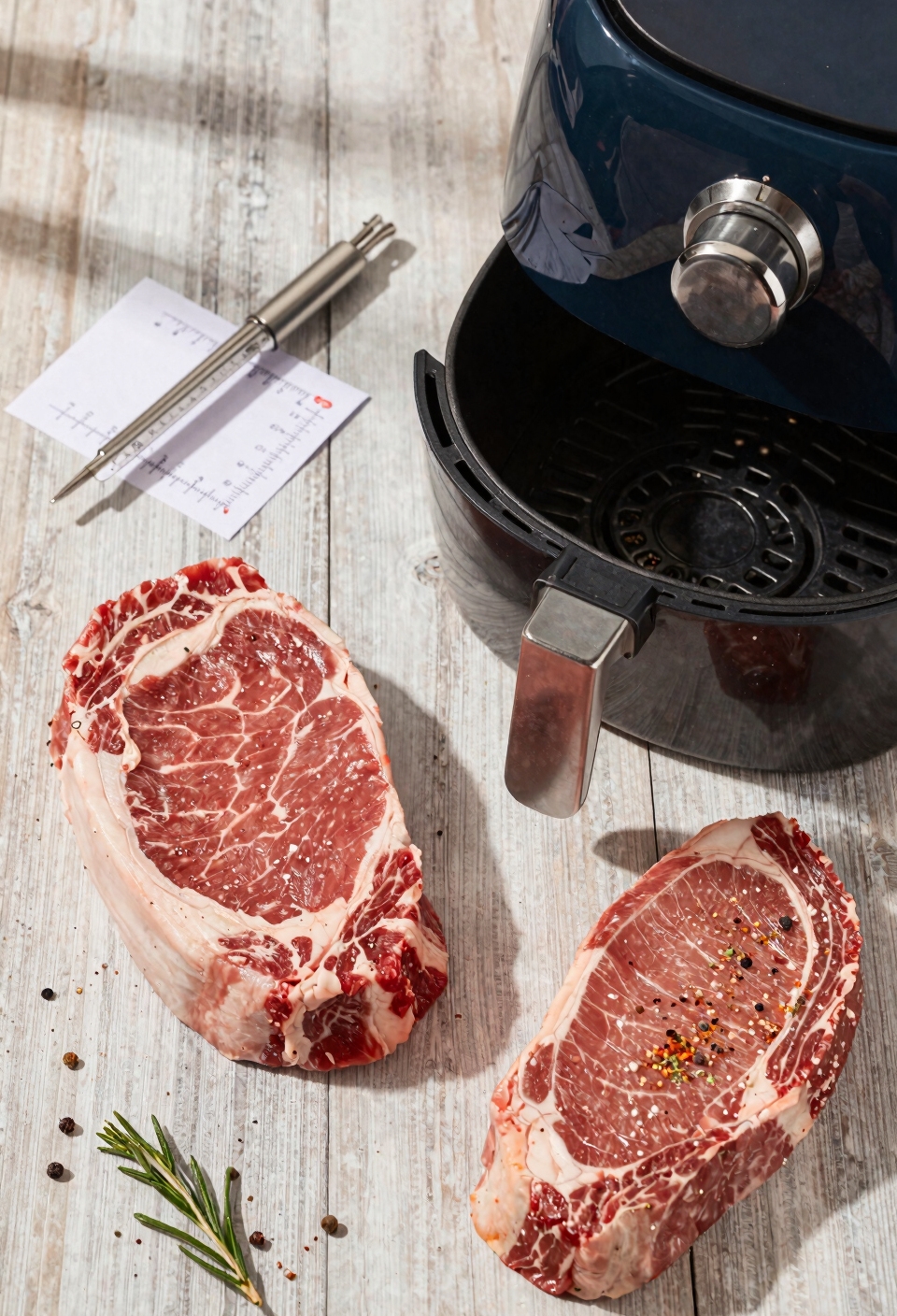
Now that you’ve mastered vegetables, let’s talk about the real star of the air fryer show—beef and pork. Here’s the thing: these proteins need precision. Your burger cooks at 370°F for 16-20 minutes, while a filet mignon demands 400°F for 18 minutes. Pork chops? Same heat, 12 minutes flat.
Now, marinade impact matters more than you’d think. A good marinade doesn’t just flavor—it seals in moisture during cooking. After you pull your meat out, don’t skip resting time. Let it sit for a few minutes; those juices redistribute, making everything tender and juicy instead of dry and disappointing.
Sirloin steaks cook fastest at 9-14 minutes. Thickness varies your timing, so adjust accordingly.
Poultry and Turkey: Safe Internal Temperatures
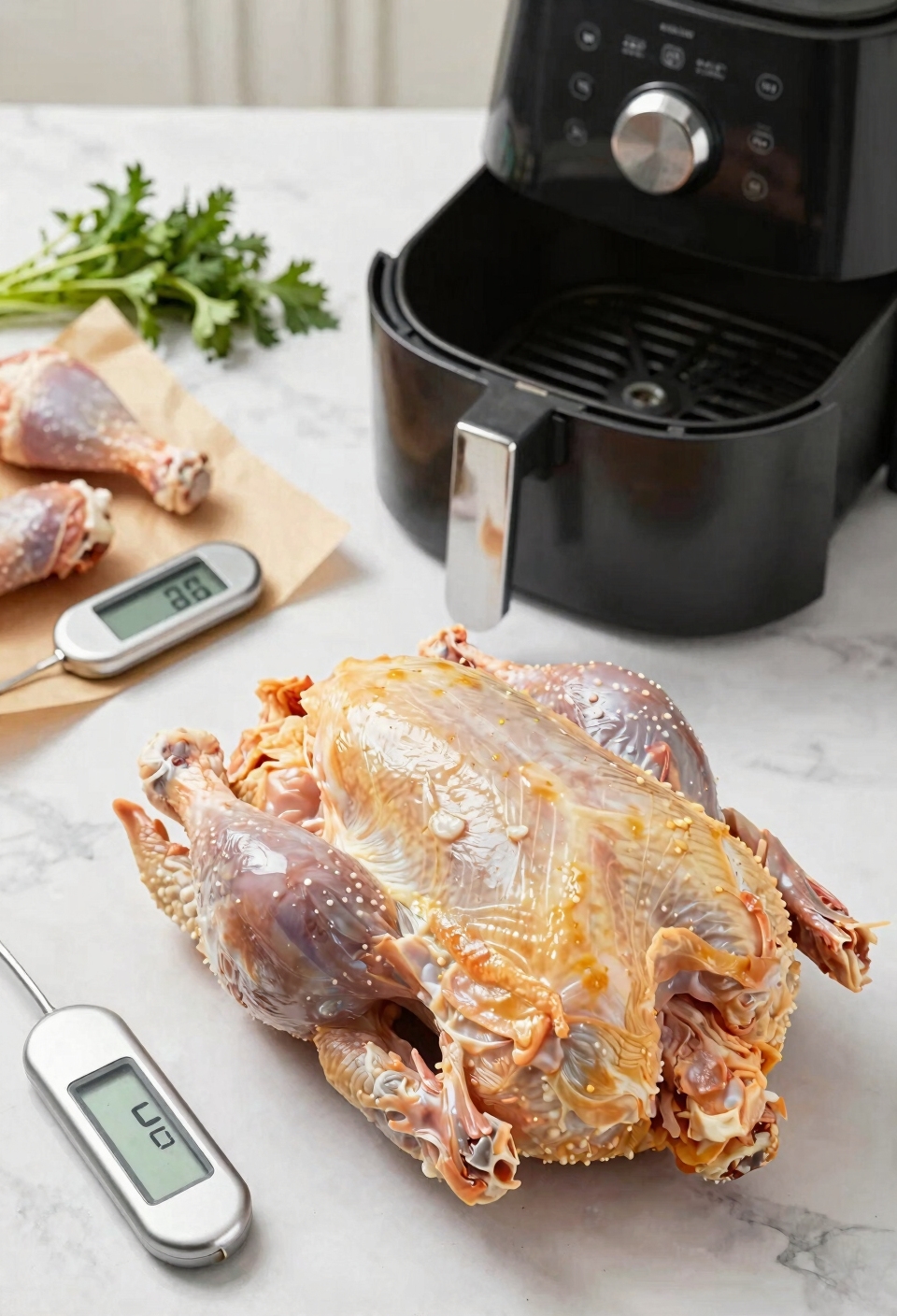
When you’re cooking chicken or turkey in the air fryer, there’s one number that matters more than temperature or time—165°F, measured in the thickest part of the meat. I can’t stress this enough: safe handling depends on hitting that internal temp, not just cooking until things look golden.
Now, here’s the thing about poultry. It cooks faster in an air fryer than a regular oven, which is amazing, but also means you need to stay vigilant. Pull out a meat thermometer—seriously, don’t skip this step—and check the thickest part of the breast or thigh.
Frozen chicken breasts? Try 380°F for 16-19 minutes. Turkey breast at 360°F for 45-55 minutes. Always verify those internal temps before serving. Food safety isn’t negotiable.
Frozen Foods and Quick-Cook Settings

Frozen foods are where the air fryer truly shines, and I’m not just saying that because I’m lazy (though I am). Fish fillets, fries, and egg rolls cook faster here than anywhere else. The rapid thawing happens almost instantly once that hot air starts circulating—no waiting around required.
Now, here’s the thing: most frozen items need an “air fry” setting, which means maximum air circulation. Fish sticks take 10-12 minutes at your air fryer’s default temperature. Thick-cut fries need 14-16 minutes. Even frozen desserts thaw and crisp simultaneously, which honestly feels like cheating.
You’ll want to check your food halfway through. Every machine runs differently, and wattage matters more than you’d think. Start checking early—you can always cook longer, but you can’t uncrisp something.
Converting Oven Recipes for Your Air Fryer
You’ve got a whole cookbook sitting on your shelf, and here’s the good news: you don’t need to toss it just because you bought an air fryer.
Here’s the thing: converting oven recipes is simpler than you’d think. Lower the temperature by 25°F and cut your cooking time by 20-25%. Ingredient ratios stay the same—don’t change how much salt or oil you’re using. What matters is pan placement. Arrange thicker pieces toward the outside edge so heat circulates evenly around everything.
Now, not every recipe works perfectly on the first try. Some foods cook faster than you’d expect, others need extra time. Start checking earlier than traditional recipes suggest. You’ll quickly learn your machine’s personality. That’s when the real magic happens.
Fixing Undercooked and Overcooked Results
Because air fryers cook so fast and hot, nailing the perfect doneness takes practice—and I’m not gonna lie, I’ve pulled out plenty of rubbery chicken and pale fries while figuring out my machine’s quirks. All right, here’s what I’ve learned: if something comes out undercooked, adjust timing by adding 2-3 minutes and checking again. For overcooked results, drop the temperature by 25°F next time. Turn techniques matter too—flip proteins halfway through, and switch your trays around so nothing gets forgotten in a hot spot. Your air fryer’s wattage affects speed, so higher-powered machines need slightly less time. Keep notes on what works, and you’ll master your machine faster than you’d think.
Pro Temperature Tips for Faster, Crispier Results
Now that you’ve got the basics down, let’s talk about leveling up your game—because temperature isn’t just about cooking food, it’s about controlling exactly how your air fryer performs.
Here’s the thing: preheating strategies matter more than you’d think. I know the manual says it’s optional, but those extra two minutes make a real difference for crispiness. You’re effectively giving your air fryer a head start.
For oil alternatives, try a light spray of cooking oil or an oil mister instead of drenching things. You’ll get that golden exterior without the soggy middle that makes you question your life choices.
Arrange thicker pieces toward the outside edge, and don’t overcrowd your basket. More space equals better air circulation, which means faster, crispier results every single time.
Frequently Asked Questions
Can I Cook Multiple Foods at Different Temperatures Simultaneously in My Air Fryer?
I’d recommend against it. You can’t cook foods at different temperatures simultaneously—you’ll need a temperature compromise. Consider layered cooking instead, placing items that require similar heat settings together for best results.
How Do I Know if My Air Fryer’s Wattage Affects Cooking Times and Temperature Settings?
Higher wattage air fryers—up to 1800W—cook markedly faster than lower 800W models. I’ve found that wattage variability directly impacts your cooking times; you’ll need to adjust based on power scaling, monitoring results carefully for peak doneness.
What Foods Should I Avoid Air Frying Due to Safety or Quality Concerns?
I’d avoid wet batters, delicate greens, and raw grains—they won’t cook properly. Skip acidic marinades that corrode your basket and cheese-heavy items that’ll drip and create mess.
Do I Need to Flip or Shake Food Halfway Through Cooking for Even Results?
Like a ship steering through choppy waters, your food needs turning frequency for balance. I’d shake or flip halfway through—it guarantees airflow access reaches every surface, giving you those golden, evenly cooked results you’re craving.
How Should I Clean My Air Fryer to Maintain Optimal Temperature Performance?
I’d recommend deep cleaning your air fryer regularly by wiping the basket and tray with warm, soapy water. Don’t forget gasket maintenance—clean the rubber seal gently to prevent heat leaks that’ll affect temperature consistency.
Conclusion
Now here’s the thing: you’ve got all the tools you need to master your air fryer. Temperature’s your secret weapon—nail it, and you’ll nail every meal. Stop guessing and start cooking with confidence. Your air fryer isn’t just a kitchen gadget; it’s your ticket to faster, crispier food that actually tastes amazing. Go forth and fry some air.