As an Amazon Associate, we earn from qualifying purchases. Some links on this site are affiliate links at no extra cost to you. Our recommendations are based on thorough research and editorial judgment.

Air Fryer Wattage Explained: What You Need to Know

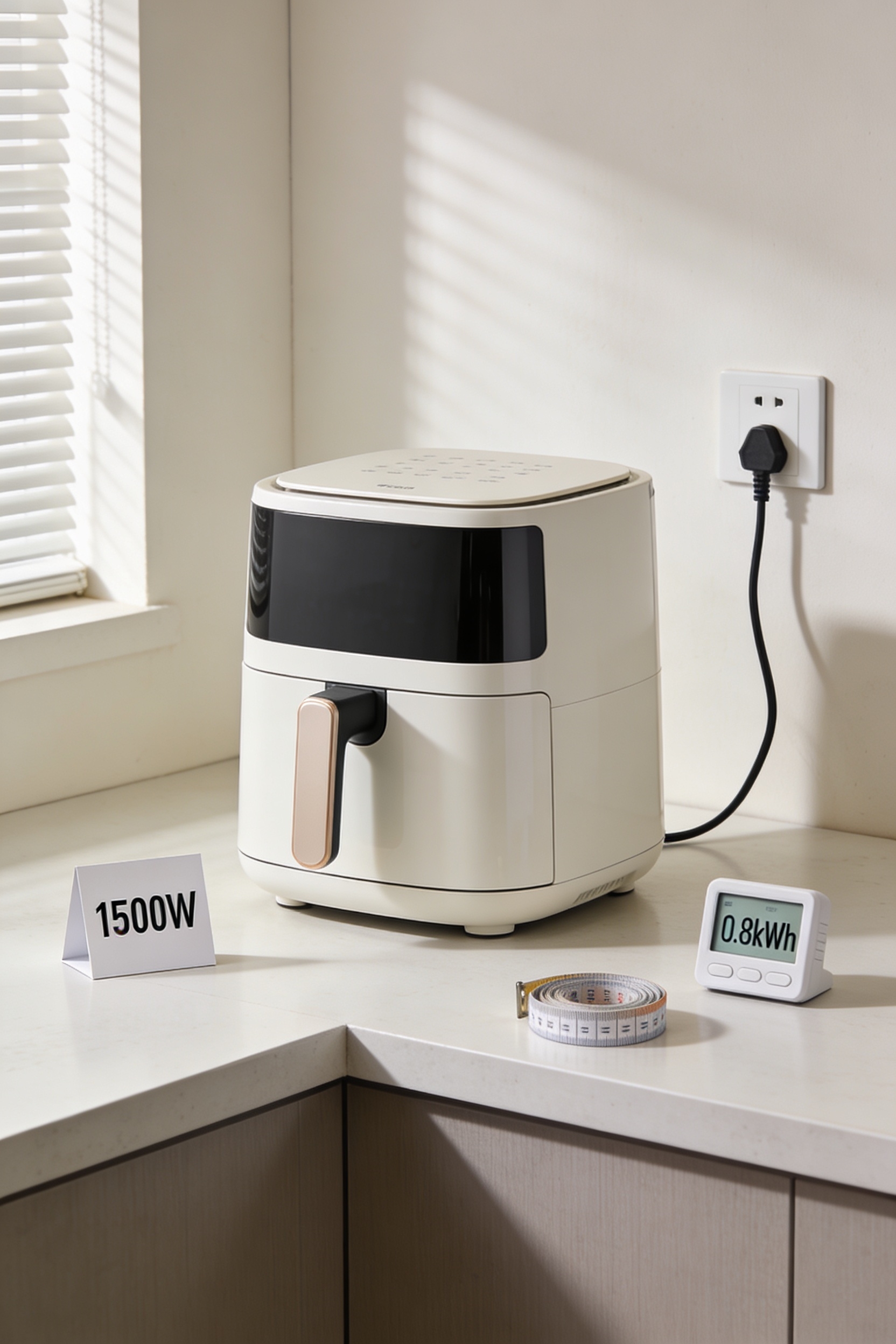
Wattage is basically your air fryer’s engine size—it determines cooking speed and electricity costs. Think of it this way: higher wattage means faster, more even cooking, but you’ll pay more per use. Most households do great with 1,400–1,600W, though compact models run 800W and larger units hit 2,000W. A 1,500W fryer costs roughly $0.23 per thirty-minute session, depending on your local rates. The sweet spot? Match wattage to your family size and cooking habits, then balance those speedy meals against your electric bill.
Key Takeaways
- Higher wattage means faster cooking and better heat distribution, but increases electricity consumption and monthly bills.
- Typical air fryer wattage ranges from 800W to 2,000W; most households benefit from 1,400W–1,600W models.
- Choose wattage based on household size: 1,200W–1,400W for one or two people, 1,700W–1,800W for larger families.
- A 1,500W air fryer running 30 minutes costs approximately $0.23; actual costs vary by local electricity rates.
- Find rated wattage in the product manual, specifications page, or labels on the back or underside of unit.
What’s Wattage and Why It Matters
Look, I didn’t think much about wattage until I started comparing air fryers and realized I was basically shopping blind. Wattage measures the power your air fryer consumes per second—it’s one of those electrical fundamentals that actually matters for your kitchen. Here’s why: higher wattage means faster cooking and better cooking performance, but it also means higher electricity bills. When you’re browsing models, you’ll see anything from 800 watts to 2,000 watts floating around. That number tells you how hard your fryer works and how quickly it’ll crisp up your food. Think of it like engine size in cars—bigger doesn’t always mean better, but it definitely changes how the machine performs. Understanding wattage helps you pick what actually fits your needs and budget.
Wattage by Air Fryer Size (800W to 2,000W)

Now that you know wattage matters, let’s talk about what actually shows up on the shelf. You’ll find compact models starting around 800W—perfect if you’re cooking for one or two people. Medium air fryers hit the sweet spot at 1,200W to 1,500W, handling everyday meals without breaking your power bill. Large units push toward 2,000W for families or batch cooking.
Here’s the thing: wattage directly impacts heat distribution and cooking speed. Higher-wattage models heat faster and more evenly, which means crispier results. They’re also typically louder, though design trends are finally addressing noise levels in newer models. For most households, I’d recommend landing somewhere between 1,400W and 1,600W. You get reliable performance without excess energy waste.
Choose Your Wattage by Family Size
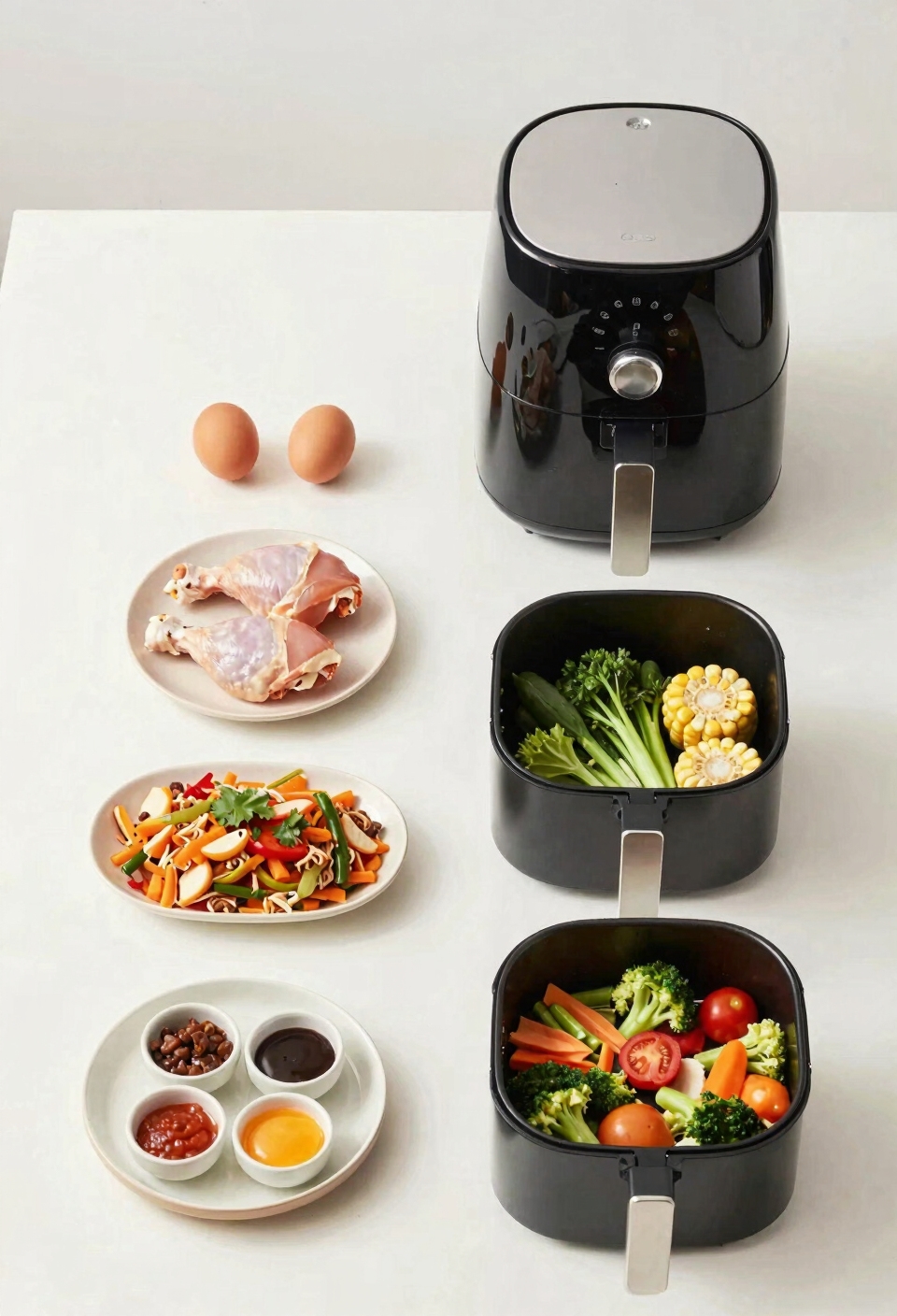
Your household size is probably the biggest clue for picking the right wattage. If it’s just you and a partner, I’d recommend sticking with 1,200–1,400W. That’s plenty for smaller portion sizes without wasting energy. Now, for a small family—say three or four people—bump up to 1,400–1,600W. This sweet spot handles everyday meal planning without overkill. Got a larger crew or love batch cooking? You’ll want 1,700–1,800W to power through bigger loads faster. Look, the real trick is matching your wattage to how you actually cook. Higher wattage means quicker meals and less time heating up, but it also means higher electricity bills. Pick what fits your family’s appetite and your meal planning style.
Calculate Wattage Cost: Energy Use and Monthly Bills
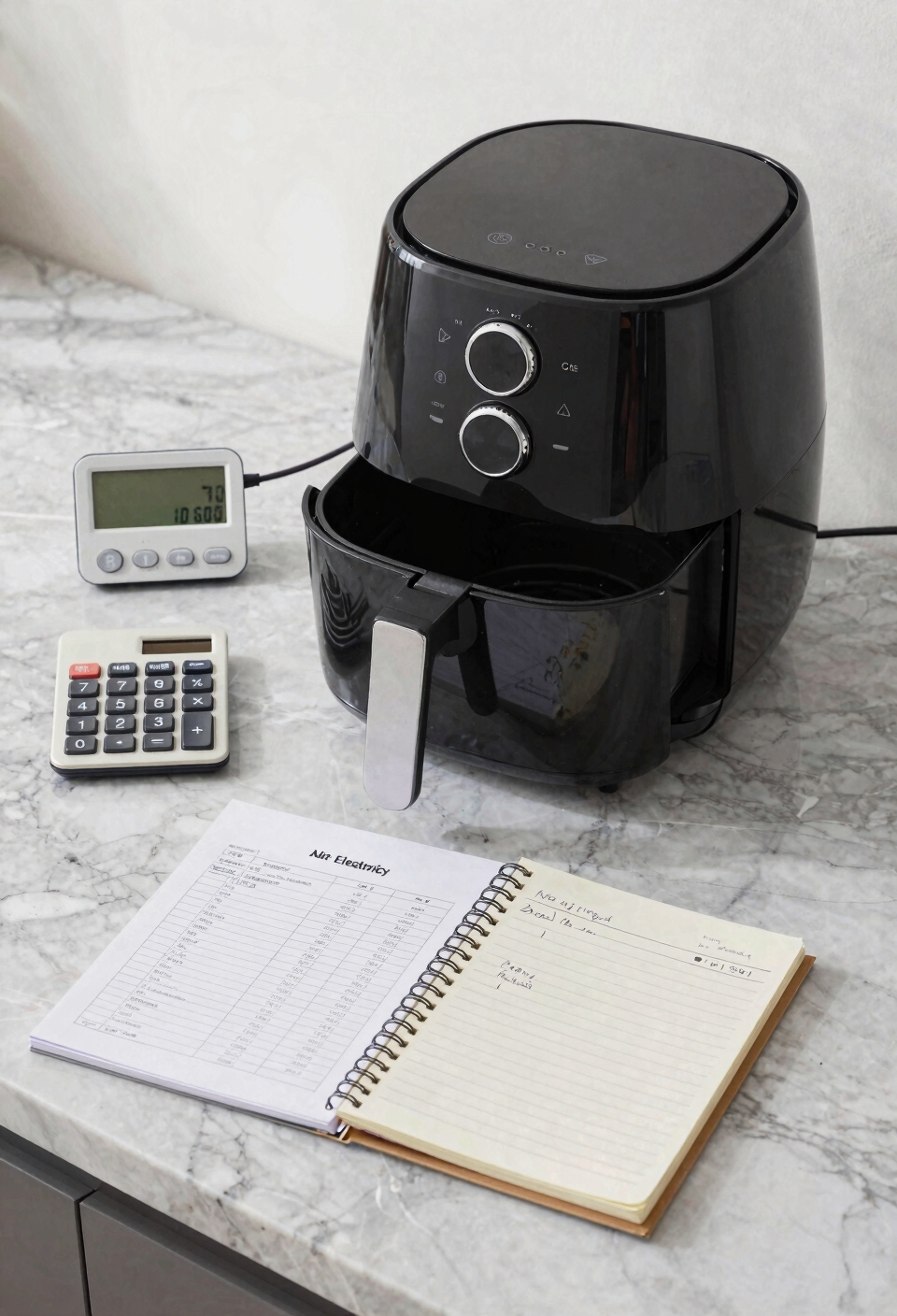
Once you’ve picked your wattage, it’s time to get real about what it’ll actually cost you. Here’s the thing: a 1,500W air fryer running 30 minutes daily costs about $0.23 per use. That’s roughly $45 monthly, or $75 if you’re using it every single day. Now, energy pricing varies by region, so your actual bill might differ. The trick is usage tracking—jot down how often you cook and for how long. A smaller 800W model running 30 minutes? Only $0.12 per session. See, higher wattage cooks faster but drains your wallet quicker. Track your patterns for a month, multiply by your local rate, and you’ll know exactly what this convenience costs.
Why Higher Wattage Means Faster Cooking (and Higher Bills)
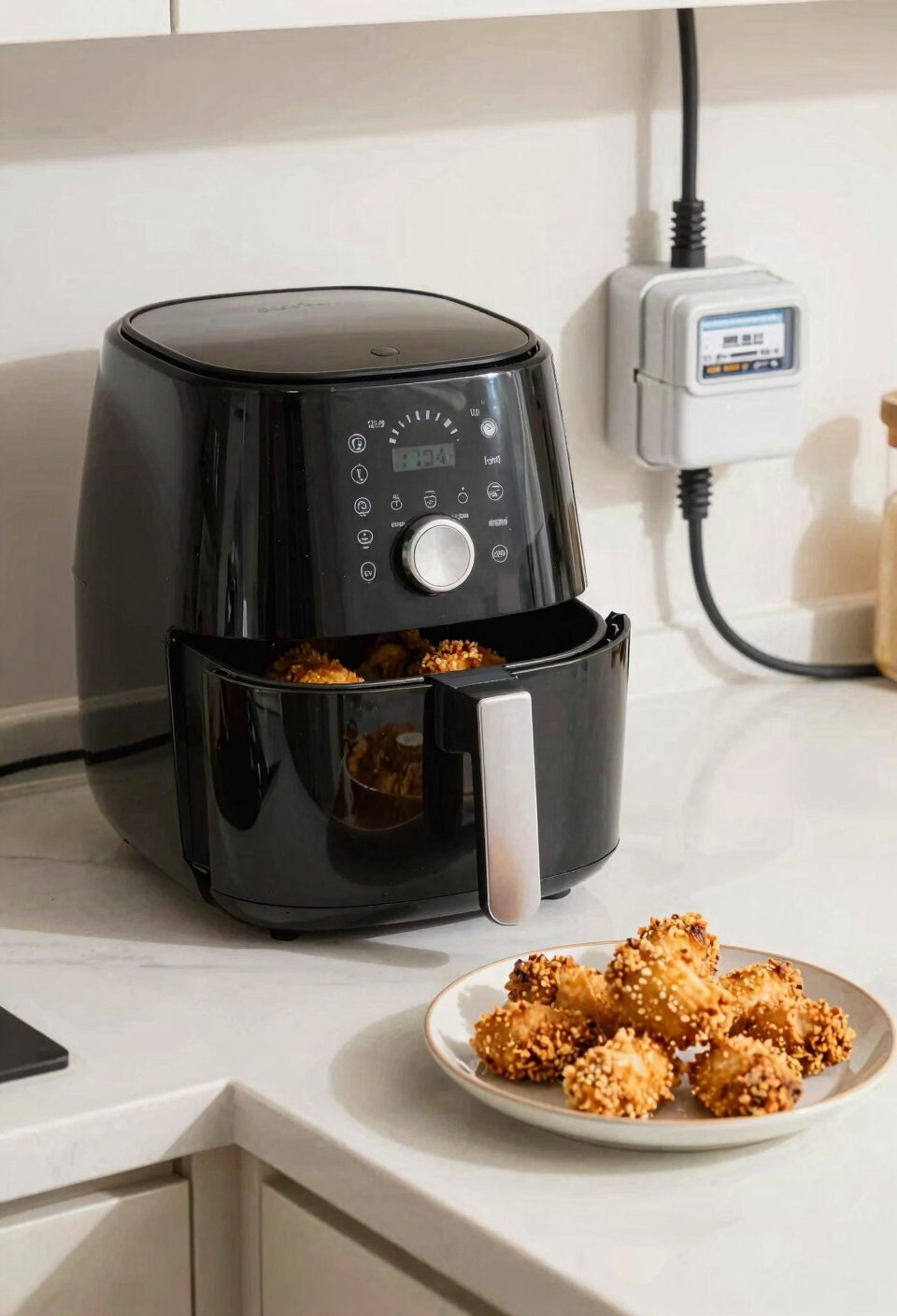
Let me break down the relationship between wattage and cooking speed, because it’s actually pretty straightforward: higher wattage air fryers heat up faster and maintain hotter temperatures, which means your food crisps up quicker. A 2,000-watt model gives you faster browning than a 1,200-watt one, plain and simple. That greater amperage pumps more energy into heating elements, so your shorter preheating times mean you’re cooking sooner. Now, here’s the trade-off: all that power drains your wallet faster too. You’ll see higher electricity bills with every use. But consider this—cooking faster sometimes means a longer lifespan for your unit since it’s working efficiently rather than struggling. You’re paying more per use but potentially saving on replacement costs down the road.
Find Your Model’s Rated Wattage and What It Means
Finding your air fryer’s rated wattage is easier than you’d think, and it’ll tell you everything about what your machine can actually do. Check your manual first—it’s usually right there on the specs page. Can’t find the manual? Look at the back of your unit or underneath. You’ll spot a label listing the wattage, typically between 800 and 2,000 watts.
Now, here’s why this matters for model identification. Knowing your exact wattage helps you understand cooking times and energy costs. It also has warranty implications, since operating outside manufacturer specifications could void coverage. If you’re considering a replacement or upgrade, that rated wattage tells you whether you’re getting a compact 1,200W unit or a powerful 1,800W beast. That’s your baseline for everything else.
Frequently Asked Questions
Does Air Fryer Wattage Affect Cooking Time and Food Quality Compared to Traditional Ovens?
I’d say yes—higher wattage improves heat distribution and crisp retention, letting you cook faster than traditional ovens. Your air fryer’s power directly impacts cooking speed and food quality through superior air circulation.
Can I Use My Air Fryer Safely on a Standard Household Electrical Circuit?
Yes, I’d safely plug your air fryer into a dedicated outlet, not shared circuits. Most household circuits handle 1,500W, but I’d verify your circuit capacity first—outlet placement matters to avoid overload risks.
How Does Running Watts Differ From Peak Wattage on Air Fryer Specifications?
I’ll explain the difference: peak wattage shows your air fryer’s maximum power during startup and heating, while running watts indicate the continuous power it uses during normal operation. Running watts are typically lower than peak wattage.
Will a Lower Wattage Air Fryer Take Significantly Longer to Cook Frozen Foods?
I’d say lower wattage air fryers are like tortoises versus hares—they’ll definitely take longer cooking frozen foods. The wattage comparison shows significant cooking impact time differences; lower wattage means slower heat penetration through frozen items.
Is It More Cost-Effective to Use an Air Fryer or Conventional Oven Daily?
I’d say air fryers are more cost-effective for daily use. They’re energy-efficient, consuming less power than ovens while cooking faster. Plus, their countertop convenience means you’ll skip preheating, maximizing your energy savings.
Conclusion
Now you’ve got the map. Your wattage determines how fast your air fryer works and what it costs to run—picture golden fries crisping in minutes versus watching them slowly transform. Match the wattage to your kitchen’s rhythm and your wallet’s reality. You’re not just buying an appliance; you’re investing in weeknight dinners that actually happen. Choose wisely, and you’ll cook faster, smarter, cheaper.