As an Amazon Associate, we earn from qualifying purchases. Some links on this site are affiliate links at no extra cost to you. Our recommendations are based on thorough research and editorial judgment.

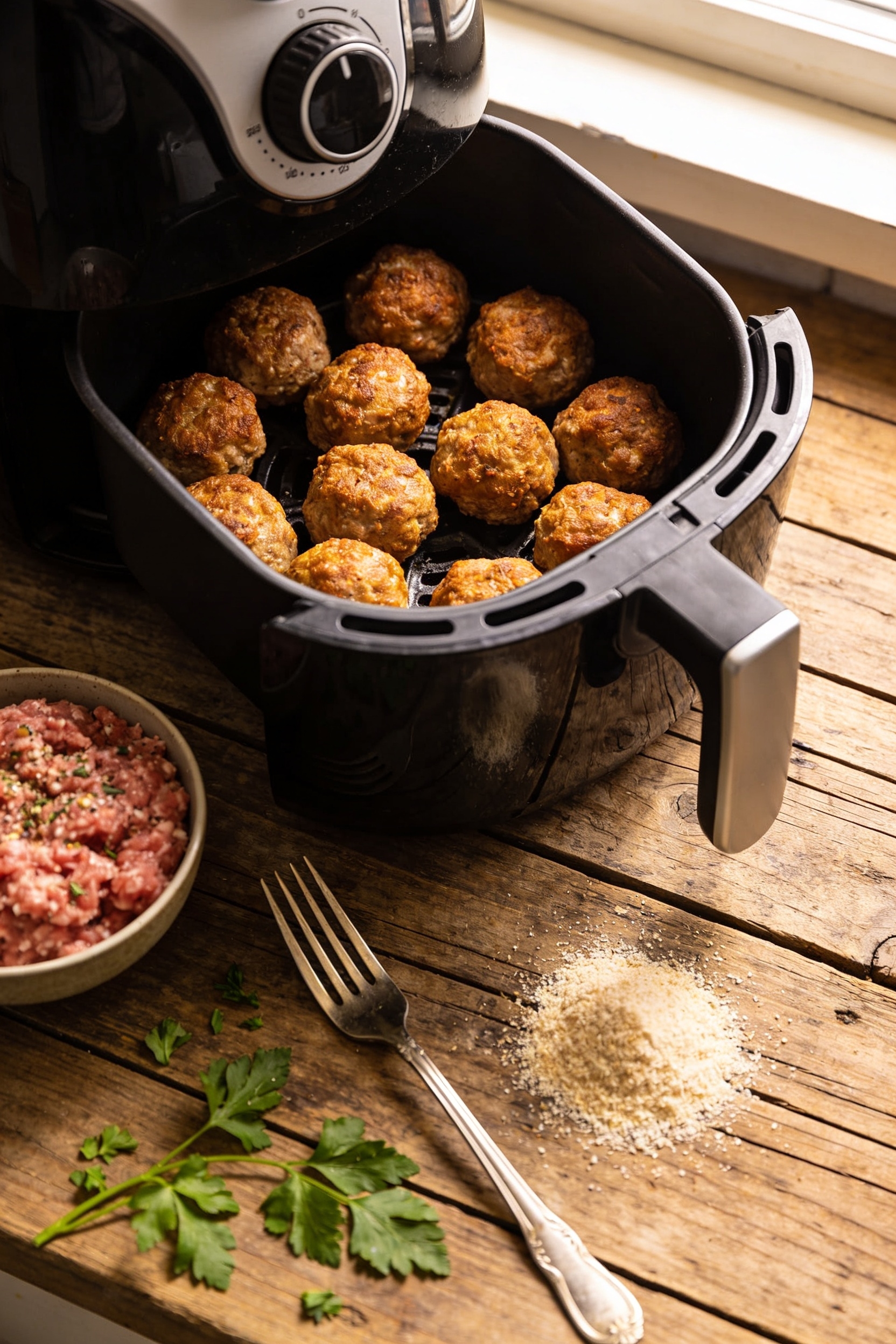
How to Cook Meatballs in an Air Fryer

Air fryer meatballs cook faster and crispier than stovetop versions—no joke. Preheat to 375°F, arrange fresh or frozen meatballs in a single layer with light oil spray, then cook 7–15 minutes for fresh (flipping halfway) or 8–20 for frozen. They’re done when they hit 160–165°F internally, depending on your meat type. Let them rest five minutes, then sauce them up. The real magic happens when you nail the details though.
Key Takeaways
- Preheat the air fryer to 375–400°F for 3–5 minutes, then arrange meatballs in a single layer with spacing.
- Cook fresh homemade meatballs for 7–15 minutes, flipping halfway through; frozen meatballs require 8–20 minutes.
- Check internal temperature with a meat thermometer: 165°F for poultry, 160°F for beef or pork.
- Chill shaped meatballs in the refrigerator for at least one hour before air frying for best results.
- Rest cooked meatballs for five minutes after cooking, then serve with marinara sauce, pasta, or preferred sides.
Gather Ingredients for Air Fryer Meatballs
Before you fire up that air fryer, you’ll want to pull together everything you need—and honestly, the ingredient list is delightfully short. Ground beef, pork, or poultry works great as your base protein. You’ll need about 1.5 to 2 pounds depending on how many meatballs you’re making.
Now, grab some pantry staples: breadcrumbs, eggs, and finely grated Parmesan cheese. If you’re out of panko, regular breadcrumbs work fine—that’s your grocery substitution right there. You’ll also want salt, pepper, Italian seasoning, and garlic. Fresh parsley is nice but totally optional.
Honestly? That’s it. You might already have most of this stuff hanging around your kitchen. The beauty of air fryer meatballs is their simplicity.
Decide: Fresh or Frozen Meatballs
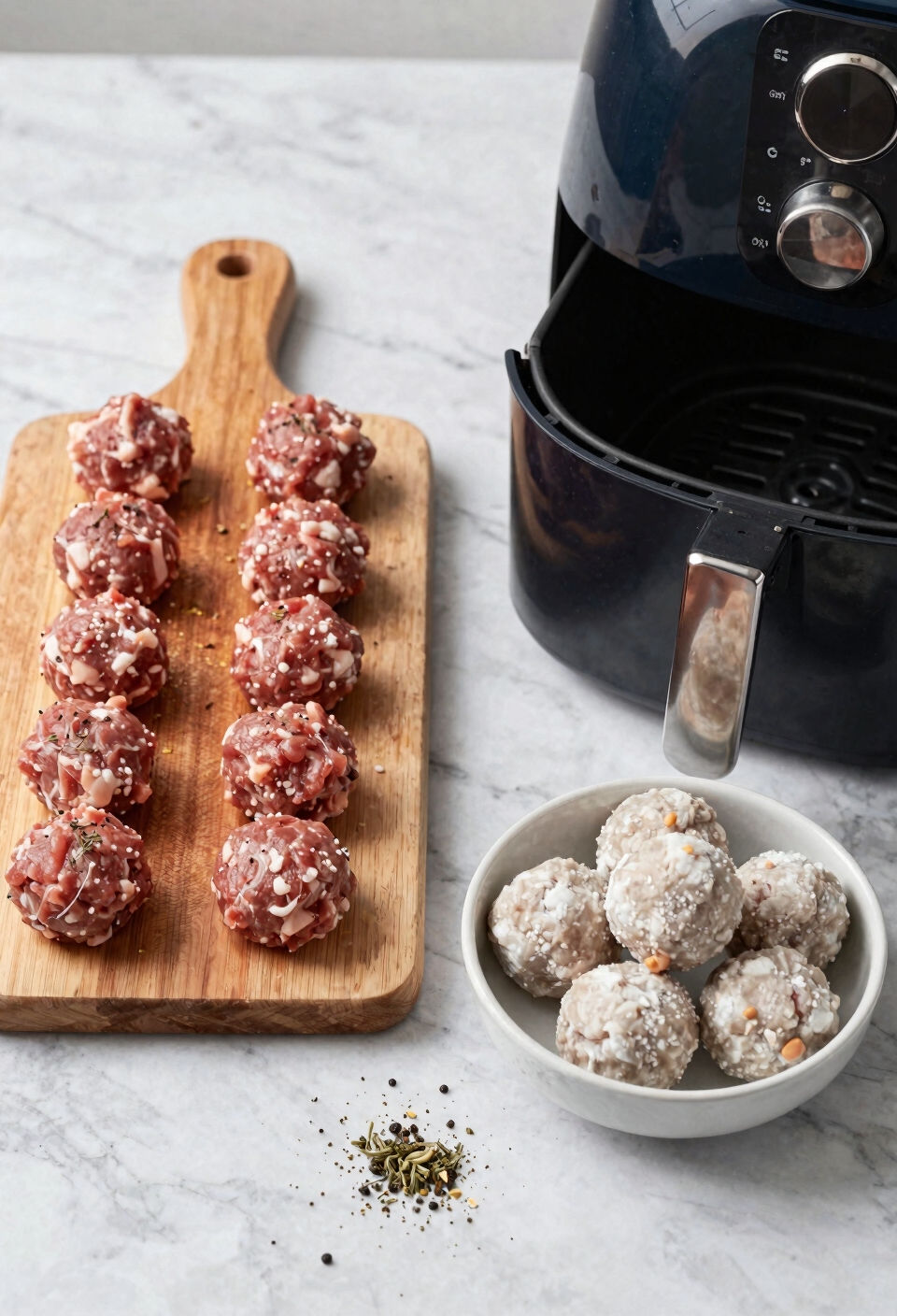
All right, now that you’ve got your ingredients lined up, here’s where you get to make a choice: are you cooking fresh meatballs you’ve just rolled, or are you pulling frozen ones straight from the freezer?
Here’s the thing: homemade vs. store bought each has real merit. Fresh meatballs you’ve made yourself cook faster—we’re talking 7-15 minutes—and you control exactly what goes in them. Store-bought frozen ones take longer, around 8-20 minutes, but they’re convenient when you’re short on time.
From a nutritional comparison standpoint, homemade wins if you’re watching sodium and additives. But frozen meatballs from quality brands aren’t terrible. Either way, your air fryer handles both beautifully. Just adjust your timing based on which you’re using.
Mix Your Meatball Base
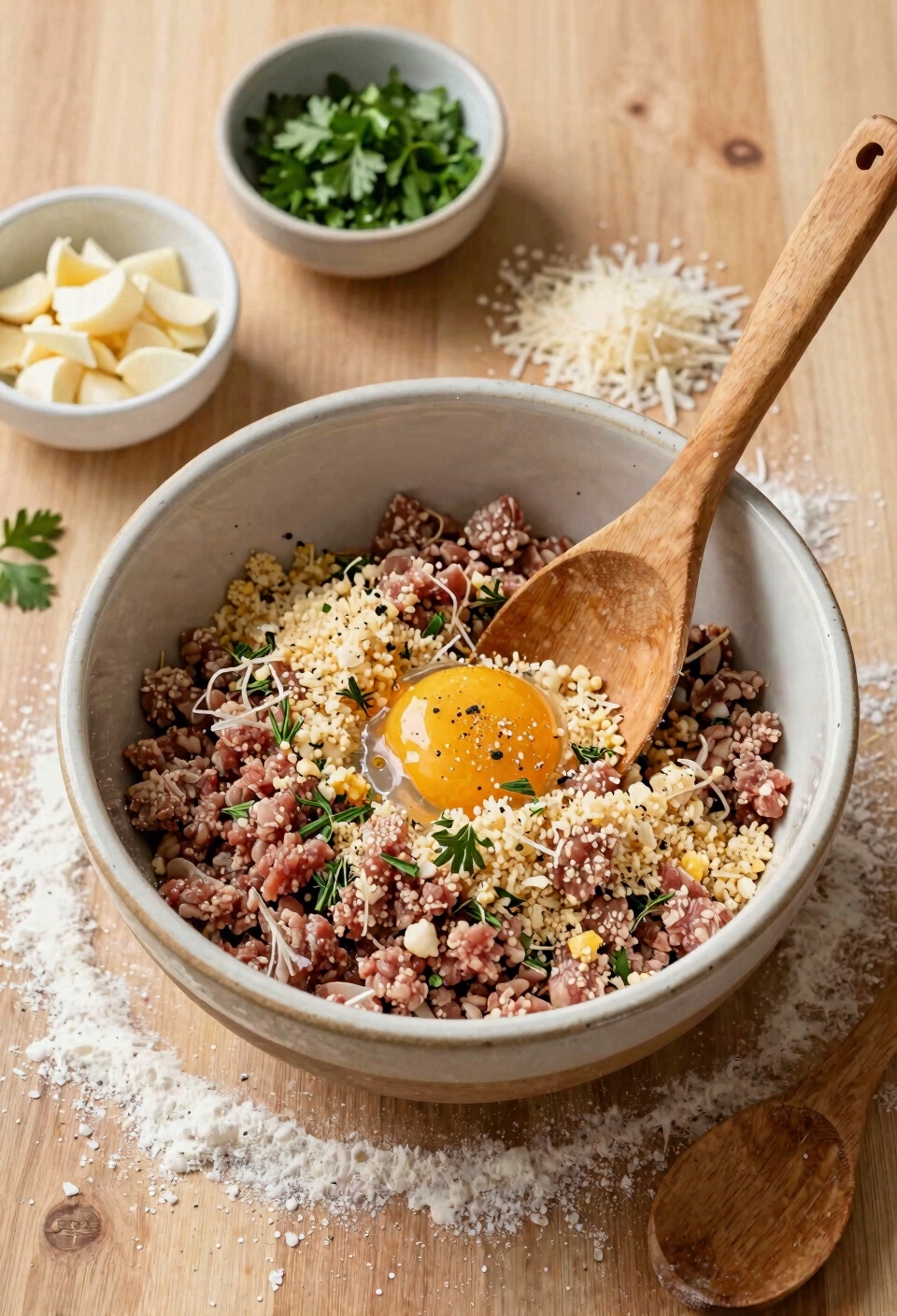
Gather your ground meat, breadcrumbs, eggs, cheese, and seasonings—this is where the magic starts. Now, here’s the thing: don’t overthink this step. Combine everything gently in a bowl, using your hands to mix without squeezing too hard. Overmixing creates dense, tough meatballs that nobody wants. If you’re exploring protein alternatives like turkey or plant-based options, follow the same approach—they’ll work just fine.
Seasoning balance matters here. I’d go with salt, pepper, Italian seasoning, and garlic, but taste as you go. Fresh parsley adds nice flavor too. Once everything’s incorporated, wet your hands slightly and start shaping. You can refrigerate the mixture for an hour or overnight, which helps everything hold together better during cooking.
Shape and Chill for Perfect Texture
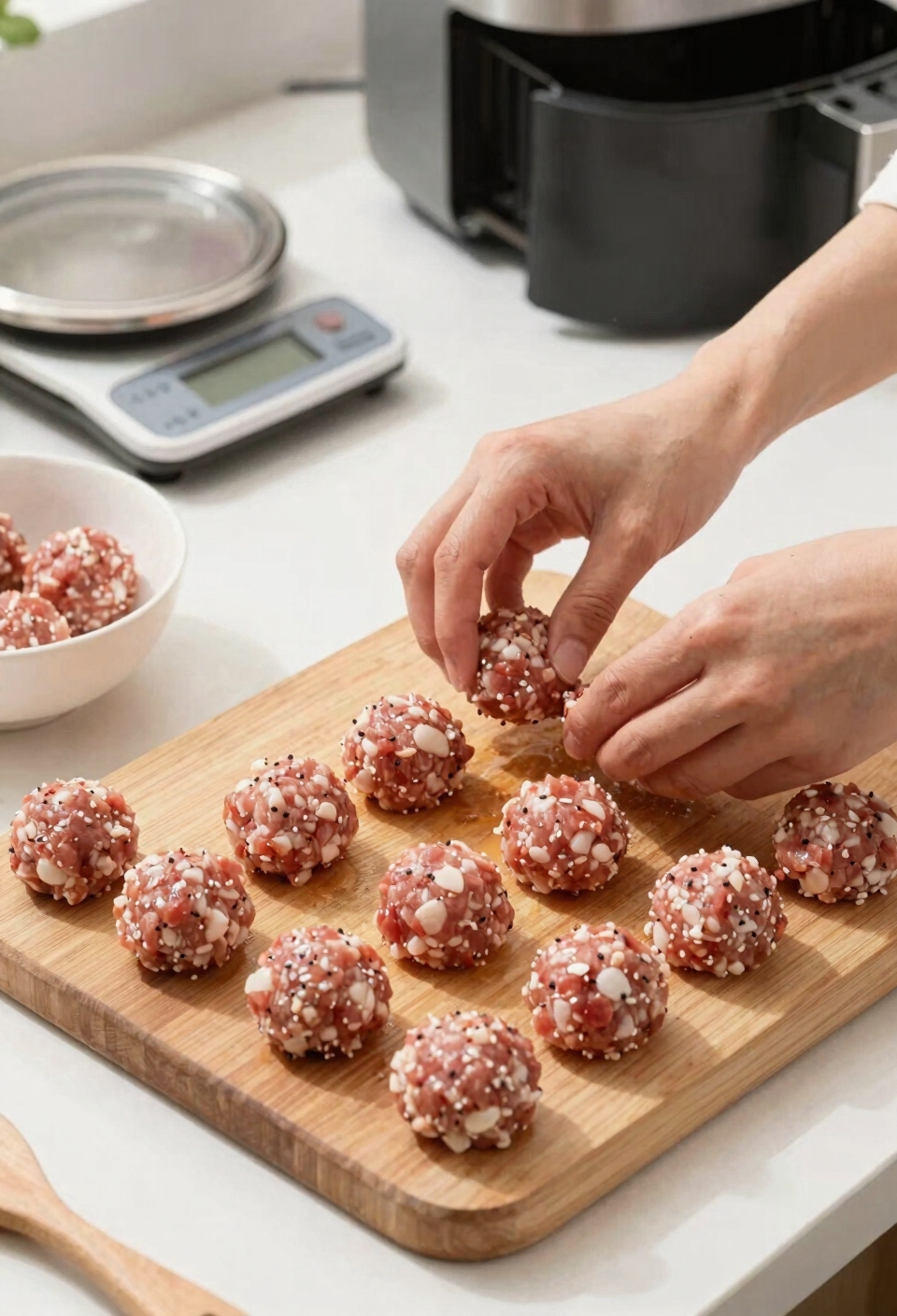
Now that your mixture is ready, it’s time to shape those meatballs into uniform, cookable spheres. I use an ice cream scoop—it’s honestly a game-changer for consistency. Wet your hands first; the mixture won’t stick as much. Aim for 1 to 2 inches in diameter, which gives you roughly 15-30 meatballs depending on your base amount.
Here’s where patience pays off: chill time is non-negotiable. Pop them in the fridge for at least an hour, though overnight works beautifully. This allows flavors to meld while helping your meatballs hold their shape during cooking. Cold meatballs won’t fall apart in the air fryer’s aggressive heat. Trust me on this one—I’ve learned the hard way.
Preheat Your Air Fryer and Arrange Meatballs
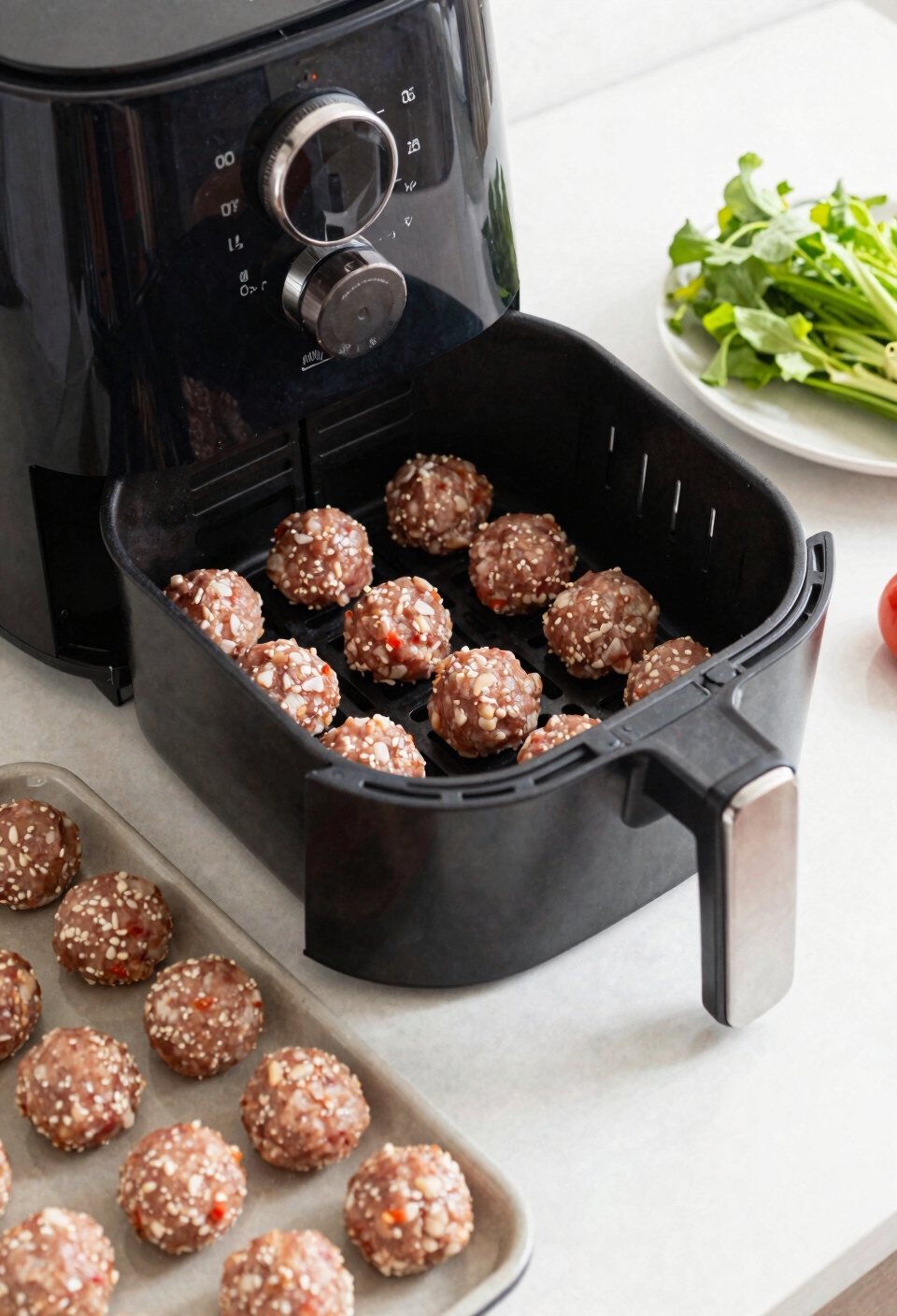
Your meatballs are chilled and ready—now it’s time to get your air fryer in gear. I’d recommend preheating at 375°F to 400°F, depending on your machine and how fast you want results. Most air fryers need about 3 to 5 minutes for the preheat duration, which gives you time to grab a light oil spray.
Once that’s done, arrange your meatballs in a single layer inside the basket placement area. Space them roughly half an inch apart so air can circulate properly around each one. Don’t crowd them—I’ve learned that lesson the hard way. If you’ve got more meatballs than fit comfortably, you’ll batch cook them instead. A light spray of oil on the basket prevents sticking and helps with browning too.
Cook Fresh Meatballs: Timing and Flipping Guide
Set your timer for 7 to 15 minutes, depending on how big your meatballs are and how hot you’re running things—larger ones and lower temperatures need more time, obviously. Around the 5 to 6 minute mark, flip them. This guarantees even surface caramelization on all sides and helps those airflow patterns work their magic inside your basket.
You’ll want to use a meat thermometer to check doneness. Stick it into the largest meatball’s center—you’re looking for 160 to 165°F minimum. That’s your safety baseline. I know it feels fussy, but it’s genuinely the only foolproof way. Don’t skip it.
Verify Internal Temperature for Food Safety
Checking the internal temperature isn’t optional—it’s the only way to guarantee your meatballs are actually safe to eat. I use a meat thermometer to verify doneness, inserting the temperature probe into the largest meatball’s center. You’re aiming for a minimum of 160-165°F, depending on your meat type. Ground poultry needs 165°F, while beef and pork hit their mark at 160°F. An internal thermometer takes the guesswork out of cooking. Now, here’s the thing: even if your meatballs look perfectly browned on the outside, the inside might not be fully cooked. That’s why I always check before serving. It only takes seconds and keeps everyone at your table safe from foodborne illness.
Rest Your Meatballs Before Serving
Once your meatballs hit that perfect 160-165°F internal temperature, I know you’re tempted to dive right in—but trust me, waiting just five minutes makes a real difference. During this texture rest, carry over cooking continues gently, allowing residual heat to finish cooking the centers without drying them out.
More importantly, the juices redistribute throughout each meatball. Cut into one too soon and you’ll watch those flavorful juices spill onto your plate instead of staying put. That five-minute pause isn’t wasted time—it’s the difference between dense, dry meatballs and ones that stay tender and juicy.
Let them sit undisturbed in the air fryer basket or on a plate. Your patience pays off with noticeably better texture and moisture in every bite.
Serve With Sauce and Sides
Now that your meatballs are rested and ready, it’s time to think about what brings them to life—and honestly, sauce is everything. A marinara pairing is your classic move, and you can heat it while your meatballs cook. I’m talking 10-15 minutes on the stovetop, so it’s warm and ready when you plate up.
Beyond sauce, side salads add freshness that cuts through the richness. A simple green salad or something with arugula works great. You could also go the carb route with pasta, garlic bread, or hoagie rolls if you’re feeling indulgent.
The beauty here? You’ve got options. Mix and match based on what you’re craving. Your air fryer meatballs work with basically anything, so don’t overthink it.
Frequently Asked Questions
Can I Cook Multiple Batches of Meatballs in an Air Fryer Without Preheating Between Batches?
Yes, I can cook multiple batches without reheating. Once your air fryer reaches peak temperature, batch timing remains consistent. You’ll only need minor temperature adjustment between batches to maintain even cooking results.
What’s the Best Way to Reheat Leftover Air Fryer Meatballs Without Drying Them Out?
I’d recommend gently steaming your leftover meatballs to preserve moisture retention. Place them in a covered microwave-safe dish with a splash of water or sauce, then heat for 2-3 minutes. This method keeps them tender and juicy.
Do I Need to Use Oil Spray if My Air Fryer Has a Non-Stick Basket?
I’d still recommend using oil spray even with a non-stick basket. It helps prevent sticking and promotes browning. Consider oil alternatives like cooking spray or brush-on options as coating choices for best results.
Can Frozen Meatballs Be Thawed Before Air Frying, or Should They Cook From Frozen?
You can thaw frozen meatballs beforehand, and I’d recommend it. Thawing benefits include more even cooking and better texture differences—they’ll brown more uniformly and cook faster than frozen varieties.
How Do I Prevent Meatballs From Sticking to the Air Fryer Basket During Cooking?
I’d spray the basket with oil or use parchment paper and silicone liners to prevent sticking. You can also add a light coating of cooking spray directly on your meatballs before air frying for extra insurance.
Conclusion
All right, you’ve mastered the art of air fryer meatballs. Your perfectly cooked, beautifully browned balls are ready to shine. I’m genuinely impressed with your dedication—you’ve taken tremendous time to learn the technique. Serve them sensationally with your favorite sauce, and savor the satisfaction of success. You’ll find yourself frequently frying these fantastic morsels. Trust me, you’re never going back to the oven.